

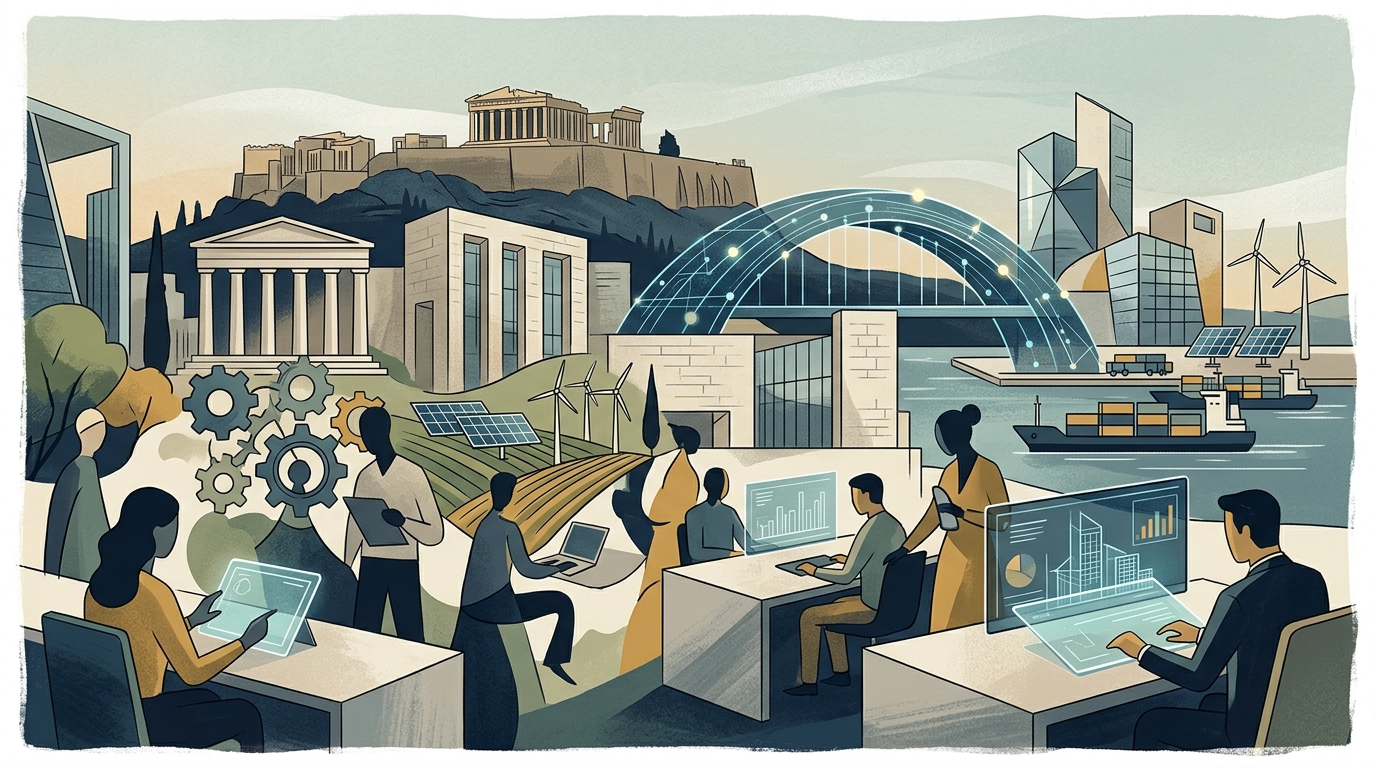
In a pivotal moment as we traverse the first half of 2026, Prime Minister Kyriakos Mitsotakis, through his statements to Capital.gr, is redefining the narrative of the Greek economy. The central message is clear: growth is not a dry statistical indicator but a tool that must translate into tangible benefits for the citizen. With eyes fixed on 2030, the government is attempting to synthesize fiscal discipline with a bold social agenda, aiming to shield the country against global uncertainties.
The Resilience Economy and the Investment Grade Status
The Greek economy in 2026 bears no resemblance to the fragile entity of the previous decade. Following the recovery of the investment grade and the consistent overperformance of tax revenues—primarily due to the crackdown on tax evasion through digitalization—Kyriakos Mitsotakis emphasizes that the country now possesses the "fiscal space" to return part of the wealth to society. This "dividend" is not presented as a temporary handout but as a structural intervention in the labor market and disposable income.
According to the Prime Minister, a strong economy allows for the reduction of employer contributions and further support for low-income retirees, while particular emphasis is placed on addressing the housing problem, which remains the "Achilles' heel" of the current period. The "Greece 2030" strategy focuses on creating high-skill jobs to permanently reverse the brain drain and transform it into a brain gain.
The Digital Transition and the Role of AI
One of the key pillars for Greece 2030 is the integration of Artificial Intelligence (AI) into public administration and the economy. Mr. Mitsotakis spoke extensively about how technology can make the state more citizen-friendly, reducing bureaucracy and accelerating the administration of justice. The use of AI tools in tax audits and healthcare is already a reality, with the goal of full digitalization of services by the end of the decade.
- Full digitalization of the Land Registry and urban planning services.
- Implementation of AI in natural disaster prediction and crisis management.
- Modernization of the National Health System (ESY) with digital patient records.
- Strengthening startup ecosystems through tax incentives.
The government is betting on "green" and "digital" growth as the two wings that will allow Greece to soar above the European average growth rate. The energy transition, with Greece transforming into an exporter of green energy to Central Europe, is an integral part of this vision.
Social Cohesion and Daily Challenges
However, the rhetoric of a strong economy often clashes with the reality of inflation and the cost of living. The Prime Minister admits that "inflation" remains the greatest enemy of social stability. The social dividend, therefore, aims to relieve middle and lower-income classes pressured by food and energy prices.
"We are not building an economy for the few, but a country that will provide opportunities for all. Greece 2030 will be a country with fewer inequalities and more justice," he stated.
Criticism from the opposition, as well as from some analysts, focuses on whether these provisions are sustainable in the long run or if they are communication tactics. Maximos Mansion's response is that sustainability is ensured by the increase in Foreign Direct Investment (FDI) and the reduction of public debt as a percentage of GDP, which continues at rates faster than predicted.
The 2030 Bet
In closing, Kyriakos Mitsotakis underlined that 2030 is not just a date on the calendar but a transformation milestone. Greece is called upon to prove that it can be a modern European democracy with strong institutions and an economy that does not rely solely on tourism but also on innovation, industry, and high-value-added services. The success of this venture will be judged by the government's ability to maintain political stability while implementing necessary reforms that often face resistance.





