

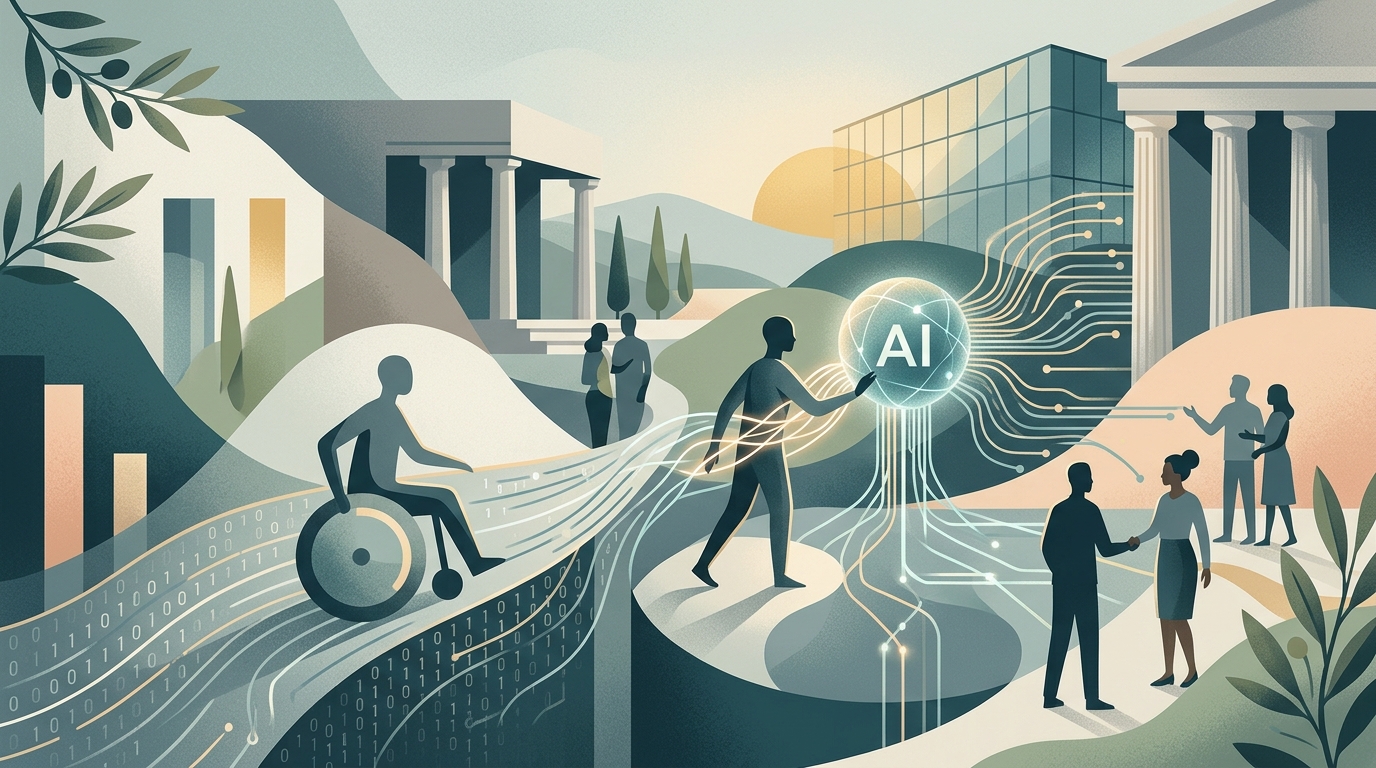
In an era where technological advancement is often met with skepticism or fear over job displacement, Arianna Felicetti, a prominent figure in Italian social policy, is bringing to the fore a different, deeply humanistic dimension of Artificial Intelligence (AI). During her recent addresses, Felicetti emphasized that AI is not merely a productivity tool but a potential catalyst for the full integration of people with disabilities into social and professional life. Her approach highlights the need to transition from simple "accessibility" to meaningful "empowerment."
Beyond Accessibility: AI as a Tool for Autonomy
The traditional concept of accessibility often focused on physical infrastructure, such as ramps or specially designed spaces. However, in the digital age, barriers are often invisible. Felicetti points out that AI can function as a "digital assistant" that adapts to the unique needs of each individual. For instance, computer vision systems can now describe environments in real-time for the visually impaired, while advanced natural language processing allows individuals with motor disabilities to control their surroundings exclusively through voice or even eye movements.
The significance of this evolution lies in the reclamation of autonomy. When technology can convert text to speech or speech to text with near-human accuracy, communication barriers begin to crumble. Felicetti stresses that Italy, as an EU member state, must lead this effort, ensuring that these innovations are not a privilege for the few but a universal right.
A Revolution in the Labor Market and Inclusive Employment
One of the central pillars of Felicetti's argument concerns the labor market. Historically, people with disabilities have faced disproportionately high unemployment rates due to the difficulties of adapting workplaces. AI is overturning this status quo. Through AI-enhanced remote work tools, geographical and physical constraints are minimized. Furthermore, AI can help "augment" worker capabilities, allowing them to perform tasks previously deemed impossible.
- Predictive Support: Software that anticipates user needs and reduces task execution time.
- Personalized Learning: Training platforms that adapt content based on the learner's specific cognitive or sensory needs.
- Neurotechnology: Brain-computer interfaces opening new pathways for individuals with severe motor disabilities.
However, Felicetti warns that technology alone is not enough. A cultural shift is required from employers. AI must be used to highlight talent rather than impose new forms of digital surveillance that could further marginalize vulnerable groups.
Ethical Dilemmas and the Risk of "Algorithmic Exclusion"
Despite the optimism, Felicetti's analysis does not overlook the risks. A critical issue is algorithmic bias. If the data used to train AI systems does not include sufficient representation of people with disabilities, the algorithms may reproduce stereotypes or fail to recognize their needs. For example, an automated AI screening system might reject a candidate with atypical speech or movement patterns, perceiving it as an "error" rather than a difference.
Felicetti strongly advocates for "inclusive design" from the very beginning of technological development. This means that developers and tech companies must work closely with the disability community. Ethical AI is not just a matter of regulations, such as the EU AI Act, but a matter of social justice.
Conclusion: Towards a Human-Centric Digital Future
Arianna Felicetti's intervention in Italy serves as a powerful reminder that technology is the means, not the end. Artificial Intelligence offers a historic opportunity to build a society where disability is no longer a barrier to self-actualization. The success of this endeavor will be judged by our ability to combine technological innovation with political will and social empathy. As she poignantly notes, "the challenge is not to make machines more human, but to use machines to make our society more human for everyone."





