

Greek shipping, the undisputed global leader of the seas, has for decades occupied a paradoxical position: it possessed the world's largest fleet but lacked a domestic shipbuilding base capable of supporting it. Today, in 2026, the landscape is shifting dramatically. The new national plan for the rebirth of the shipbuilding industry is not merely an attempt to revive old infrastructure, but a radical redefinition of the sector through Artificial Intelligence (AI) and a bold package of tax incentives.
From the Hammer to the Algorithm: The Digital Mutation
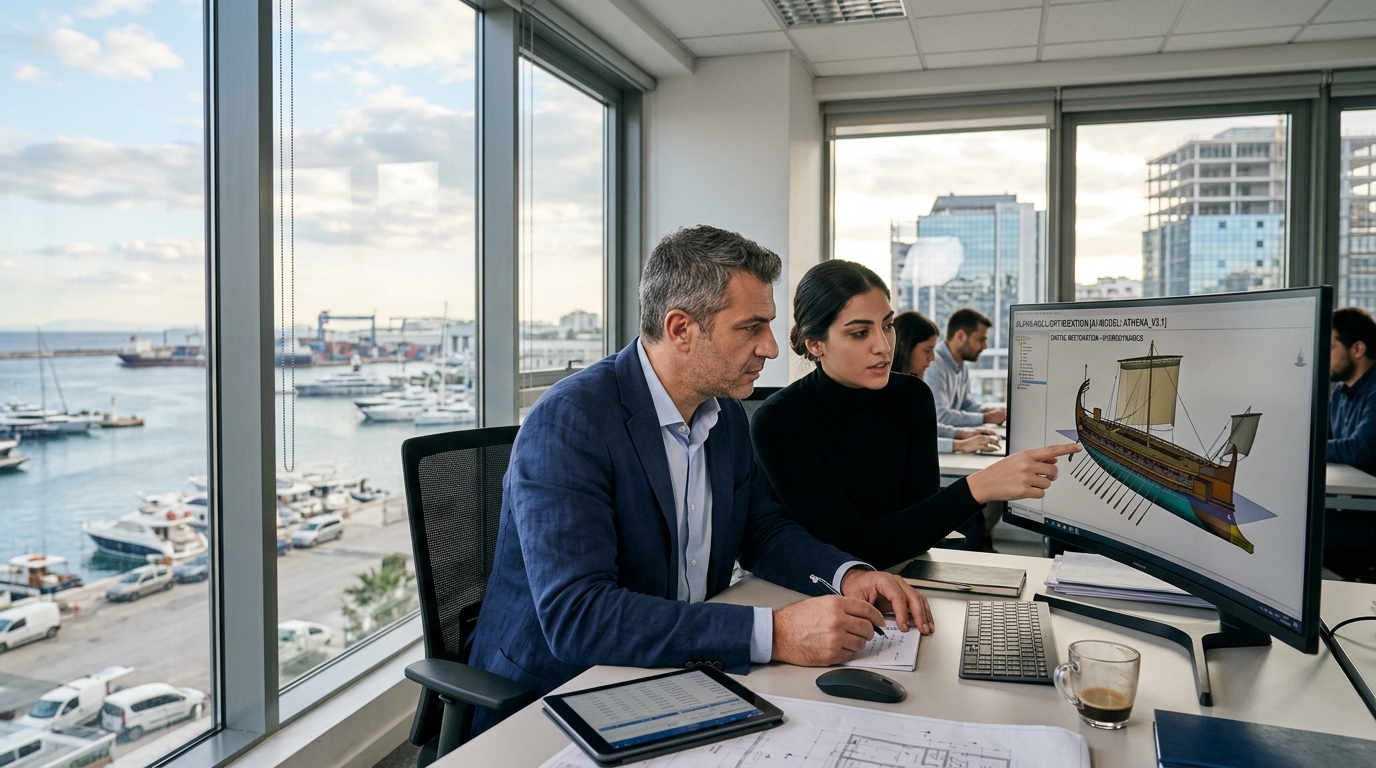
The heart of the new plan beats in digital transformation. Shipyards in Elefsina, Skaramangas, and Syros are now integrating "Digital Twin" technologies. These are virtual replicas of vessels that allow engineers to simulate every aspect of construction and operation before the first steel plate is even cut. The use of AI in shipbuilding is not limited to design. Predictive maintenance systems analyze real-time data from ship sensors, forecasting failures before they occur, drastically reducing costs and downtime in dry docks.
Furthermore, robotic automation, guided by sophisticated computer vision algorithms, is now taking over the most hazardous and precision-demanding welding and painting tasks. This not only increases worker safety but ensures a construction quality that can compete with Asian giants like South Korea and China in the realm of specialized, high-value-added vessels.
Tax Incentives and Strategic Investments
To support this technological pivot, the government is establishing a special tax regime for "Smart Shipbuilding Zones." Investments in AI equipment and green technologies will enjoy a 200% super-deduction of expenses, while a zero-tax policy is planned for the first five years of operation for new high-tech units within shipyards. The plan also includes the creation of a "Maritime AI Innovation Hub," where universities, startups, and shipyards will collaborate to develop autonomous navigation software and energy management systems.
- Super-deduction of R&D expenses in the maritime technology sector.
- Subsidies for retraining the workforce in digital skills.
- Public-Private Partnerships (PPPs) for infrastructure modernization.
- Creation of "green" shipyards with a zero carbon footprint.
The Geopolitical Dimension and the Green Transition
The rebirth of Greek shipyards is not just an economic issue; it is a geopolitical one. In a period of instability in the Eastern Mediterranean, Greece's ability to build and maintain both commercial and defense vessels constitutes a strategic advantage. Artificial Intelligence plays a decisive role here as well, enabling the development of Unmanned Surface Vessels (USVs) and underwater surveillance systems.
"Greece can no longer only be the world's captain; it must also become the architect of the future of the seas," state sources from the Ministry of Maritime Affairs.
Finally, the challenge of decarbonizing shipping presents the ideal opportunity. Greek shipyards aim to become the global center for retrofitting vessels with dual-fuel engines (LNG, ammonia, hydrogen). With the help of AI, optimizing ship hydrodynamics and installing energy-saving systems becomes faster and more accurate, offering the Greek industry a comparative advantage that traditional shipbuilding could never provide.





