

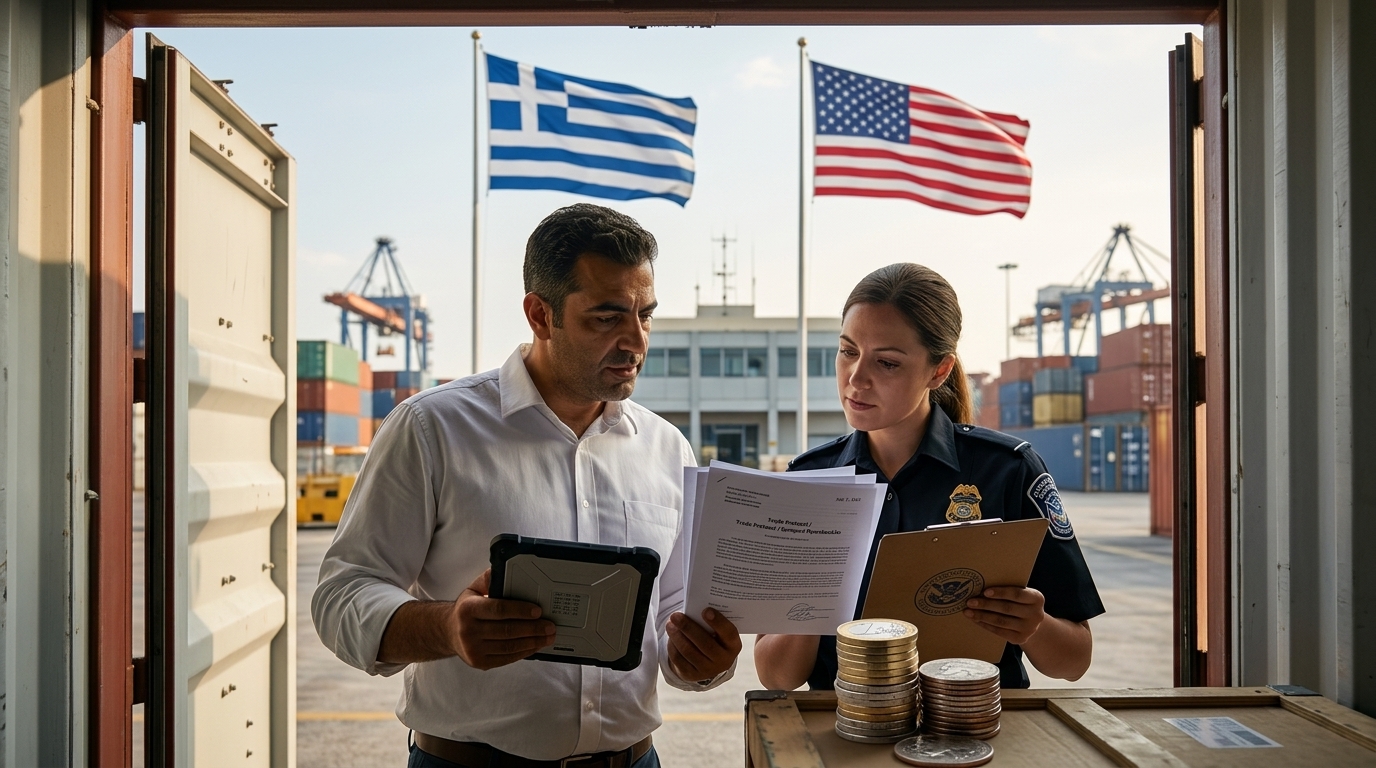
July 1, 2026, marks a new era in transatlantic trade relations as the long-awaited agreement between the European Union and the United States officially enters into force. For Greece, a country traditionally balancing between export-oriented growth and the protection of local production, these changes are not merely bureaucratic adjustments but a structural shift in the business landscape. The agreement aims to smooth over frictions inherited from the previous decade, eliminating tariffs on a wide range of products while opening new quotas that could significantly favor Greek exports.
The Steel and Aluminum Conundrum
For Greek heavy industry, steel and aluminum represent the most critical points of the deal. Despite the official launch, the full repeal of the "Section 232" tariffs previously imposed by Washington remains an unfinished task. The new agreement converts these tariffs into a system of Tariff-Rate Quotas (TRQs), allowing specific quantities of Greek aluminum and steel to enter the US duty-free. However, Greek industrial leaders express concerns about whether these quotas are sufficient to meet the rising demand, particularly in green energy and infrastructure projects across the United States.
The Greek side, led by major groups like Mytilineos and Viohalco, is closely monitoring the technical details. The "green" dimension of the agreement—which promotes the production of low-carbon metals—offers a comparative advantage to Greek plants that have already invested in modernization. Nevertheless, uncertainty persists regarding whether Washington might use environmental criteria as a new form of protectionism in the future.
Agri-food Sector: The Battle for PDO Products
In the food and beverage sector, the agreement brings mixed emotions. On one hand, the reduction of administrative burdens and the simplification of customs procedures make it easier for Greek producers of olive oil, wine, and canned fruits to reach the American market. The US is the top destination for Greek bottled olive oil outside the EU, and any reduction in export costs directly translates into increased competitiveness.
However, the major sticking point remains the protection of Protected Designation of Origin (PDO) products, with Feta cheese being the primary example. The agreement does not definitively resolve the issue of American producers using the name "feta." While the EU pushes for stricter protection of geographical indications, the US side treats many of these terms as "generic." This means Greek businesses must continue to invest heavily in branding and legal protection to differentiate the authentic Greek product from American imitations.
Digital Trade and New Technologies
A less publicized but extremely important aspect of the deal involves cooperation on new technologies and Artificial Intelligence. The convergence of standards between the EU and the US will allow Greek startups and tech companies to offer their services across the Atlantic with fewer regulatory hurdles. The agreement provides for the creation of common frameworks for data security and the ethical use of AI, favoring the growing Greek innovation ecosystem.
"This agreement is not the end of the road, but the beginning of a new negotiation on more stable ground," sources from the Ministry of Foreign Affairs noted.
In conclusion, July 1, 2026, finds Greek entrepreneurship in a position of cautious optimism. The removal of tariffs on many products is a victory, but the real challenge lies in the details of quotas and the protection of our products' national identity. Companies that manage to adapt quickly to the new realities and leverage the "green" provisions of the agreement will be the ones to benefit most from this new transatlantic cycle.





