

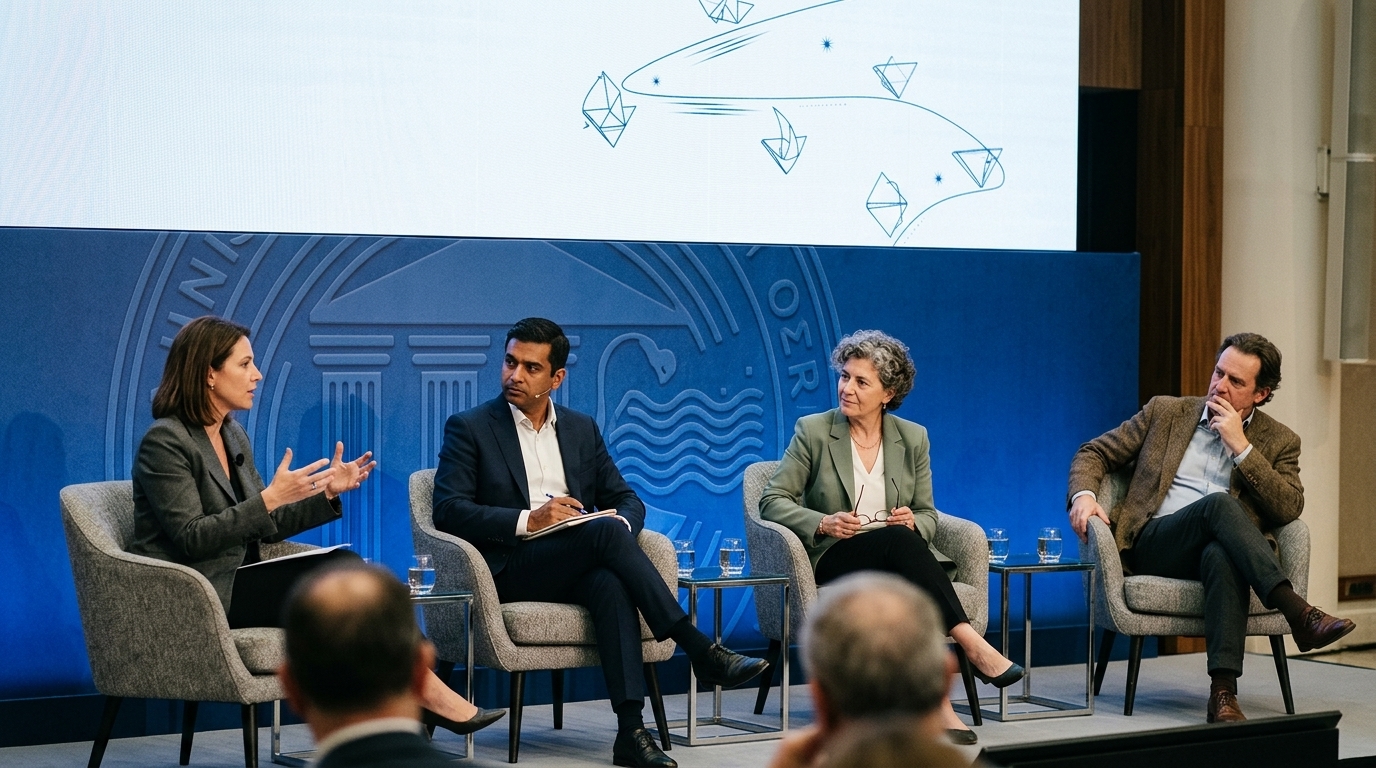
The era of hype and experimentation with Artificial Intelligence (AI) is drawing to a close, making way for a much more demanding phase: that of business execution. Within the framework of "Business Transformation v.5," Greek enterprises are now called upon to prove that investing in technology is not just about prestige or innovation for innovation's sake, but about the fundamental reshaping of their operating models and the generation of measurable value. The transition from Proof of Concepts (PoCs) to full scaling represents the major bet for 2026.
The Transition to the "Era of Execution"
For over two years, the boards of major companies in Greece and abroad have been consumed by discussions regarding the potential of Generative AI. Today, the agenda has shifted. The question is no longer "what can AI do?" but "how will we integrate it into daily operations without disrupting profitability?" This 5.0 version of business transformation is characterized by a shift toward realism. Leading companies, as highlighted by recent business cases in the Greek market, are focusing on four central pillars: data quality, automation through AI agents, talent upskilling, and ethical governance.
Data: The Fuel and the Brake of Growth
The old adage "garbage in, garbage out" has never been more relevant. Greek businesses are realizing that AI is only as good as the data it is trained on. The challenge for many organizations in Greece remains the fragmentation of information into different "silos." To move to version 5.0, a company must first achieve data integration (Data Fabric). Without a clean, accessible, and secure database, AI models produce "hallucinations" that can cost both reputation and money. Investment in cloud infrastructure and data governance tools is now the top priority for Chief Information Officers (CIOs).
AI Agents: The New Generation of Digital Collaborators
If 2024 was the year of chatbots, 2026 is the year of AI Agents. Unlike simple conversational systems, AI Agents have the ability to take action: booking appointments, processing insurance claims, analyzing complex legal documents, or optimizing supply chains in real-time. In Greece, sectors such as banking, energy, and retail are already experimenting with such agents acting as "co-pilots" for employees. The promise is significant: reduction in operating costs and a simultaneous increase in service speed. However, their integration requires a radical change in workflows, as machines cease to be mere tools and become active team members.
The Human Factor and the Talent Gap
Perhaps the greatest challenge of Business Transformation v.5 is not technological, but cultural. The shortage of specialized talent in Greece is a given, but the solution lies not only in hiring. Upskilling and reskilling existing staff is the only way forward. Employees must learn to collaborate with AI, understand its limitations, and focus on higher-value tasks that require critical thinking and empathy. Companies that manage to instill security and foster a culture of continuous learning will be the ones to survive the new cycle of competition. AI does not replace people, but people who use AI will replace those who do not.
Conclusions for the Greek Market
The Greek business scene stands at a critical crossroads. It possesses agility and an innovative spirit but often lacks capital and scale. Business Transformation v.5 offers an opportunity for "leapfrogging"—skipping obsolete development stages by directly adopting the most advanced solutions. Success, however, will be judged on execution. As recent case studies show, the difference between success and failure lies in leadership commitment and the ability to turn technological capability into business results.





