

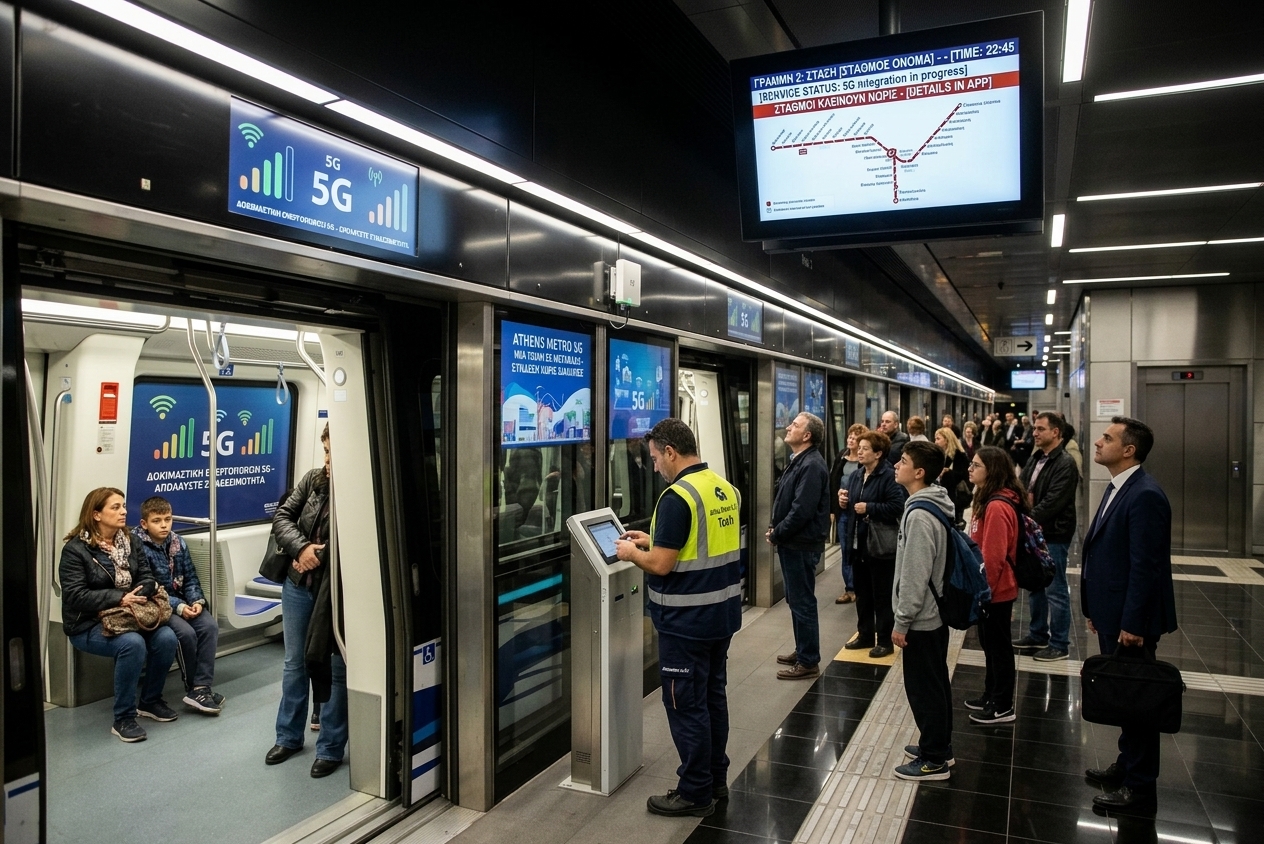
Athens, a city constantly striving to balance its profound historical heritage with the exigencies of a modern metropolis, is currently undergoing a significant phase of infrastructure upgrading. Starting today, Tuesday, May 5, 2026, through Thursday, May 21, commuters using Metro Line 2 (the Red Line) will face changes in the operating hours of three pivotal stations: "Attiki," "Stathmos Larissis," and "Metaxourgeio." These stations will close at 21:40 from Sunday to Thursday to facilitate works concerning both commuter safety and the digital evolution of the transit network.
The Imperative of Rail Maintenance
The first component of these works involves rail replacement, a process that often goes unnoticed by the average passenger but serves as the backbone of railway safety. After decades of service, rails undergo natural wear and tear due to high loads and the sheer frequency of daily schedules. Replacing them is not merely routine maintenance; it is a vital intervention aimed at reducing vibrations, limiting noise pollution in surrounding neighborhoods, and, most importantly, preventing structural failures or accidents.
The selection of this specific time window (post-21:40) is a strategic move to minimize public inconvenience, as late-night traffic on weekdays is significantly lower compared to peak hours. However, for those working in the hospitality and service sectors who rely on Line 2, this adjustment necessitates a redesign of their nightly commute. STASY (the operator of Athens' fixed-track transport) recommends using alternative means, such as existing bus lines that mirror the metro route during these closure periods.
The Digital Revolution Underground: 5G Integration
The second, and perhaps more technologically significant, aspect of the project is the installation of infrastructure for the 5G network. In an era where connectivity is increasingly viewed as a fundamental utility, the lack of signal in metro tunnels has been a long-standing grievance for Athenians and tourists alike. The installation of antennas and fiber optics within the tunnels is a technically demanding feat, as engineers must ensure that the new equipment does not interfere with the trains' signaling and safety systems.
Bringing 5G to the Metro is about more than just streaming entertainment or allowing remote work during a commute. It lays the groundwork for the "Smart Metro" of the future. With the high speeds and low latency of 5G, STASY will be able to implement real-time network monitoring systems, enhancing emergency response times and allowing for superior passenger flow management. This investment aligns Athens with other European capitals, such as London and Paris, where subterranean connectivity is no longer a luxury but a standard expectation.
Challenges and Social Impact
Despite the clear long-term benefits, any infrastructure project that disrupts daily life raises valid concerns. The areas surrounding Stathmos Larissis and Metaxourgeio are densely populated and home to numerous small businesses. The early closure of the Metro could potentially impact late-night commercial activity. Furthermore, the need for transparent and timely communication from the authorities is paramount to ensure that passengers are not caught off guard at the station gates.
"Modernization is rarely a painless process, but it is the only path toward a sustainable city. The temporary inconvenience of these two weeks will be repaid with safer travels and an Athens that is digitally present everywhere," notes a source close to STASY management.
In conclusion, the works on Line 2 serve as a reminder that the city is a living organism requiring constant care and updating. The rail replacement ensures the structural and operational integrity of the transit system, while 5G opens the door to new technological possibilities. Passengers are asked for their patience, recognizing that the Metro of tomorrow will be faster, safer, and fully interconnected.





