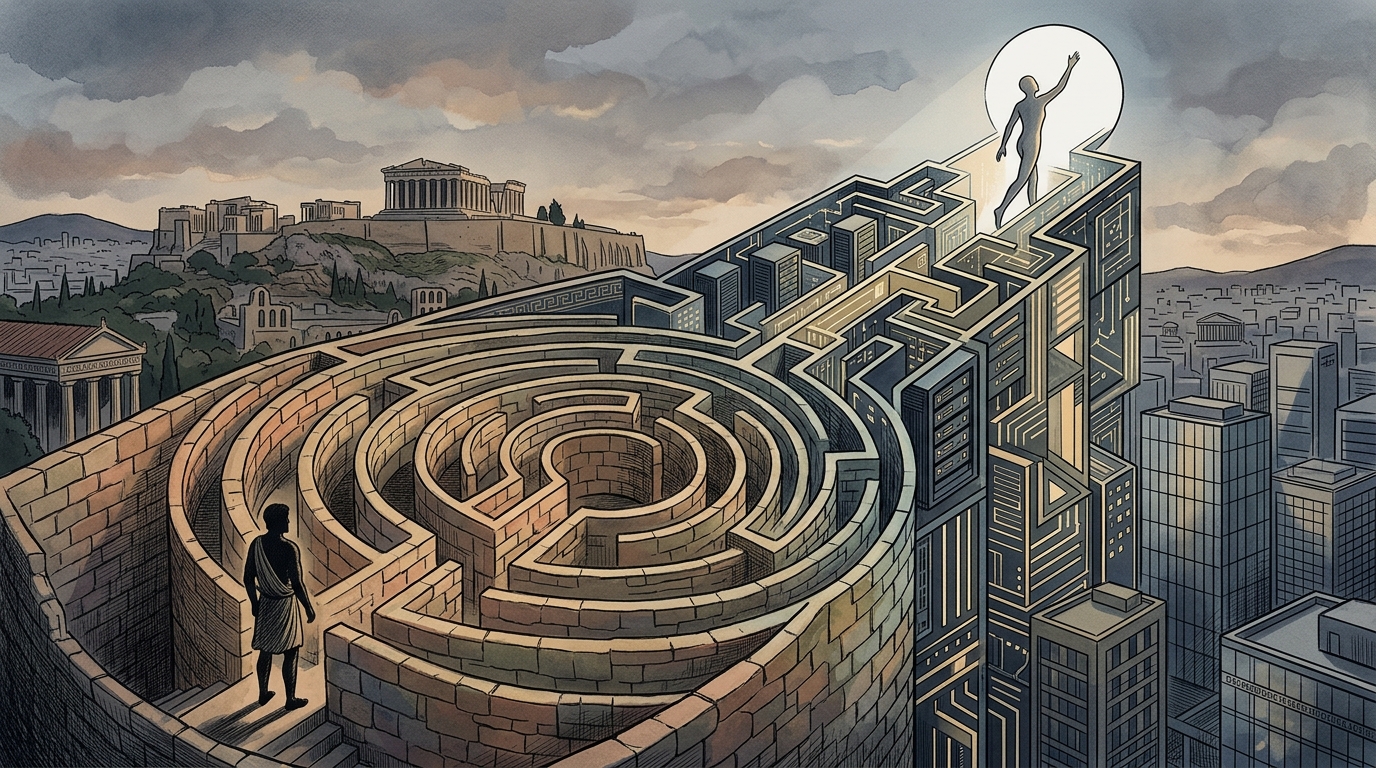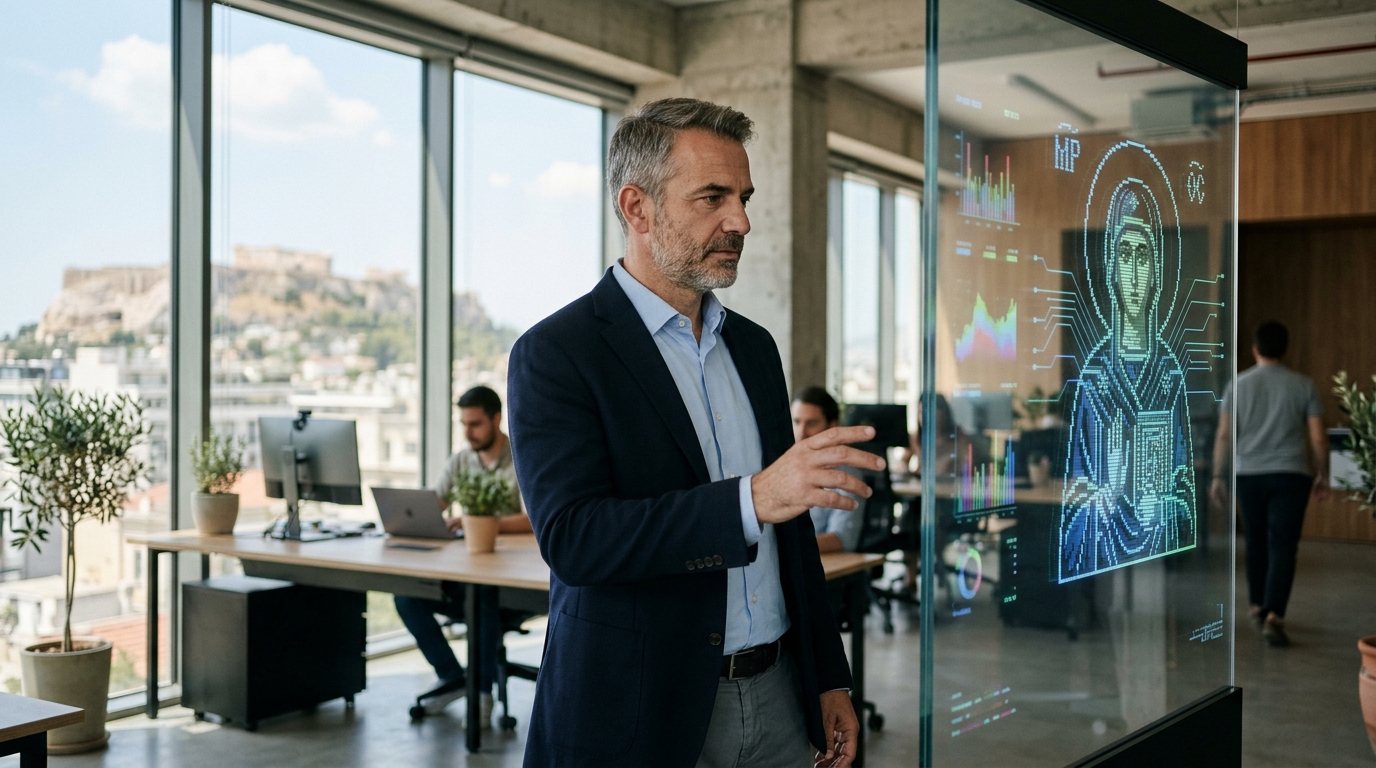
At the heart of the Orthodox tradition, the icon is never a mere decorative element or a work of individual artistic expression. It is a "window into the eternal," a liturgical act that requires prayer, fasting, and strict adherence to dogmatic rules. However, the advent of Generative Artificial Intelligence (AI) brings this tradition face-to-face with an unprecedented challenge: the automated production of "sacred" images that lack spiritual depth and human participation.
Theology of the Image vs. The Algorithm
The fundamental difference between an iconographer and an AI model lies in the intent and the source of creation. For the Church, the hagiographer is a mediator who conveys the experience of the Church onto canvas or wood. The process is a synergy between God and man. In contrast, Artificial Intelligence operates through statistical probabilities. It analyzes millions of existing images and synthesizes new pixels based on mathematical patterns.
The result is often visually stunning but theologically hollow. AI can replicate the "style" of Panselinos or Theophanes the Cretan, but it is incapable of understanding the dogmatic significance behind color, line, and light. As theologians and artists point out, an image produced by a machine is not an "icon" in the theological sense, but an "idol" — a hollow simulation that alienates tradition by turning it into just another consumer product of the digital age.
The Distortion of the Canon and the Risk of Kitsch
One of the greatest risks of using AI in iconography is the gradual erosion of the iconographic canon. AI models, trained on vast datasets ranging from Renaissance art to modern comics, tend to "contaminate" the Byzantine style with elements foreign to it. We often observe AI-generated images featuring excessive emotionalism, Western-style naturalism, or anatomical details that Orthodox art deliberately transcends to signify the transfigured state of the saints.
This "aesthetic alienation" leads to a type of religious kitsch. When the production of an image takes seconds instead of months of spiritual and physical labor, the value of sacredness is diminished. The ease of production floods the internet and places of worship with images that, while looking "Byzantine," lack the internal rhythm and spiritual clarity that characterize authentic works.
The Spiritual Dimension of Craftsmanship
Iconography is, above all, a form of ascesis (spiritual discipline). The iconographer subordinates their will to the tradition of the Church. Every brushstroke is a prayer. Artificial Intelligence eliminates this process. The absence of human struggle, effort, and spiritual vigilance renders the final product a "mechanical construct."
- Loss of Uniqueness: Every hand-painted icon is unique, bearing the trace of the artist's personal relationship with the divine.
- Automation of Worship: Using AI images in liturgical contexts raises questions about the authenticity of the worship experience.
- Spiritual Sloth: Dependence on machines to create sacred symbols may lead to a spiritual atrophy within the community itself.
In conclusion, the challenge of Artificial Intelligence in iconography is not merely technical but deeply existential. The Church and artists are called to set boundaries, recognizing that technology can be a helpful tool (e.g., in archiving or study) but never the creator of the sacred. Preserving iconographic tradition requires protecting the human person as the only true bearer of the divine image.