

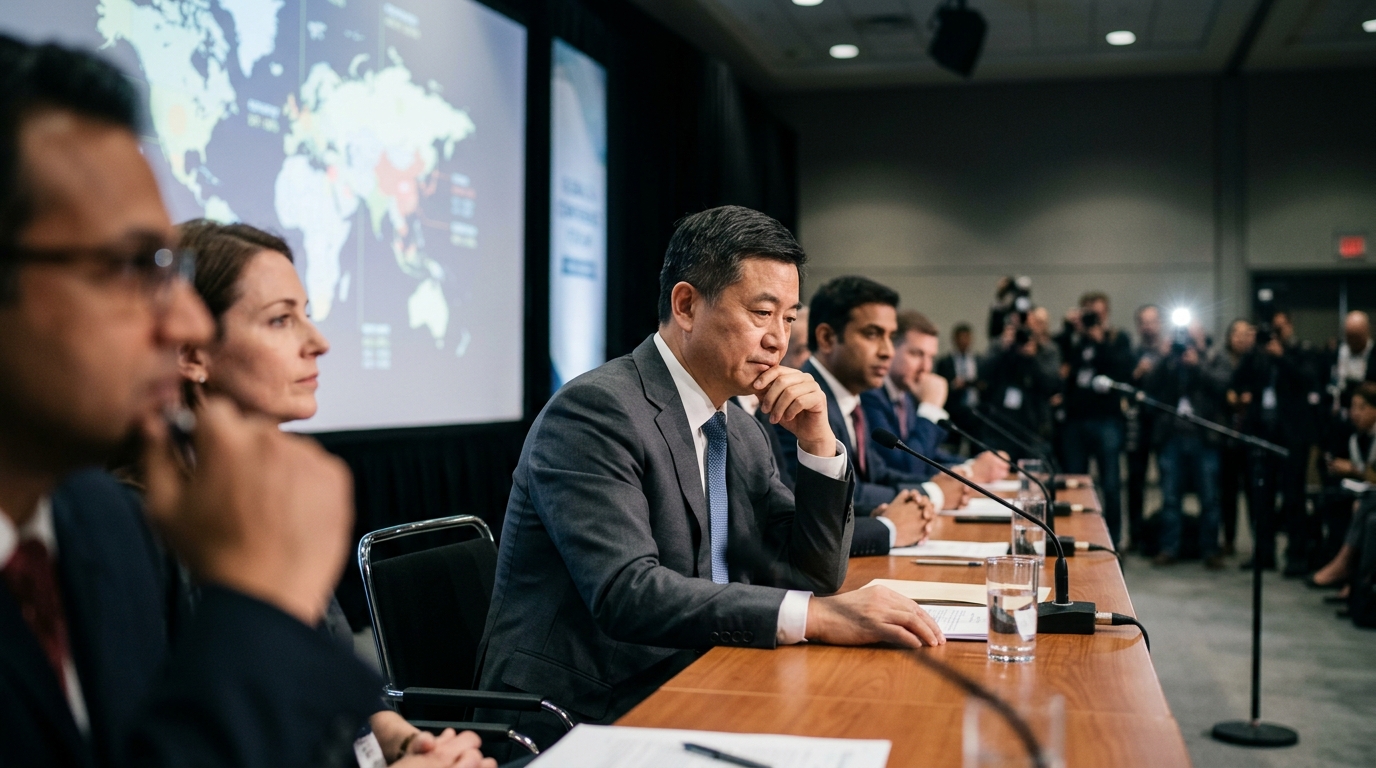
In the global chess game of technology, a checkmate move seems to be unfolding in the East. While the Western world still regards OpenAI's GPT-4o or Anthropic's Claude as the "gold standard" of artificial intelligence, major Chinese tech firms, led by ByteDance (the parent company of TikTok), have begun to turn their backs on these advanced models. This decision is not merely a technical choice; it is a strategic pivot reshaping the global map of innovation.
The Economics of Scale and the Price War
The first and most obvious reason for this shift is cost. In China, the AI market has entered a phase of extreme price competition. While using OpenAI's APIs remains relatively expensive for mass application, Chinese companies like DeepSeek and Alibaba have slashed the prices of their own models by up to 90%. For a company like ByteDance, which handles billions of user requests daily, resource optimization is vital.
Utilizing domestic models allows these corporations to offer AI services at a fraction of a dollar, making the technology accessible even to the smallest enterprises. This "democratized" access to AI within China creates an ecosystem that does not depend on Silicon Valley's pricing policies.
Geopolitical Pressure and Digital Sovereignty
Beyond the economic aspect, geopolitics plays the most decisive role. OpenAI's recent decision to block API access from China acted as a catalyst. Chinese firms realized that dependence on US technology is a "time bomb" at the foundation of their operations. With the US imposing increasingly strict restrictions on the export of high-end chips (such as those from NVIDIA), China has been forced to develop its own complete value chain.
"Technological independence is no longer an option, but a prerequisite for survival for any Chinese conglomerate that wants to lead in the 21st century," analysts in Beijing note.
The shift toward ByteDance's "Doubao" model or Baidu's "Ernie Bot" is not just about evading sanctions. It is about building digital sovereignty where data, algorithms, and hardware remain within borders, protected from the fluctuations of Washington-Beijing diplomatic relations.
Cultural and Linguistic Superiority
A point often missed by Western analysts is specialization. Although GPT-4 is impressive, it has been trained primarily on English-language data and Western values. Chinese models show clear superiority in understanding the Chinese language, idioms, and, most importantly, the country's regulatory framework. Compliance with the strict rules of the Cyberspace Administration of China (CAC) is easier when the model is designed from the ground up with these constraints in mind.
Furthermore, integrating AI into everyday applications like WeChat or Douyin requires a deep understanding of local consumer behavior, something Silicon Valley models struggle to achieve with the same precision. "Homegrown AI" is now more effective for the Chinese market than any imported solution.
The Future: A Bifurcated World
As we reach the second half of 2026, this trend indicates that we are heading toward an AI "Splinternet." On one side, a Western block based on open-source models (like Llama) and closed models from Microsoft and Google. On the other, a Chinese ecosystem that is self-sufficient, extremely cheap, and tailored to the needs of the Global South.
The decision of Chinese giants to abandon the most advanced American models may ultimately prove to be the turning point where China stopped following and began defining its own rules in the game of intelligence.





