As US President Donald Trump and Chinese President Xi Jinping prepare for a state dinner at the White House this Thursday, artificial intelligence has moved to the top of the diplomatic agenda. Executives from OpenAI and Nvidia are confirmed to attend, highlighting the critical role of tech leadership in national security discussions.
A Cold War Model for the AI Era
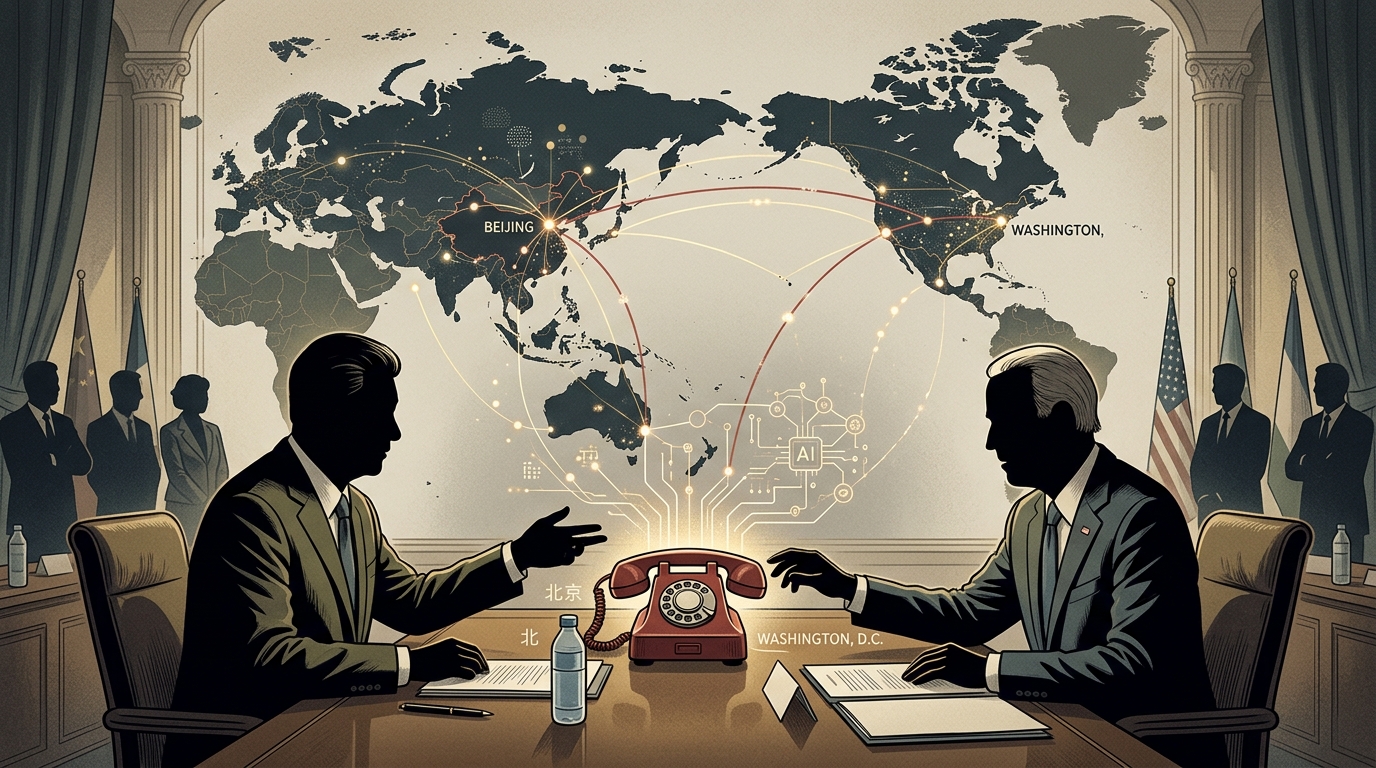
The centerpiece of the US proposal is an AI notification system, drawing parallels to the Cold War-era hotline with Moscow. This mechanism would allow both nations to alert one another regarding AI-related national security incidents. Treasury Secretary Scott Bessent and Chinese Vice Premier He Lifeng first announced the concept, but implementation remains weeks away.
Administration officials indicate that several hurdles persist before the system becomes functional:
- Establishing clear benchmarks for what constitutes a national security incident.
- Securing an explicit commitment from China, which has remained noncommittal.
- Developing enforcement measures to ensure reciprocal transparency rather than one-sided reporting.
The Search for an 'AI Czar'
Internal deliberations within the Trump administration are also contributing to the timeline. The President is currently weighing candidates for a new "AI Czar" role to lead an "AI Force" responsible for interagency coordination. Potential candidates include Bessent, Commerce Secretary Howard Lutnick, and former officials Michael Kratsios and Sean Cairncross.
The push for Bessent is partly inspired by historical precedent; former Treasury Secretary Hank Paulson credited a similar hotline with preventing a financial catastrophe during the 2008 crisis by stabilizing China's holdings of US debt.
Hardware and Trade Tensions
The geopolitical maneuvering is set against a backdrop of complex trade relations. While the US seeks security safeguards, it is also maintaining a trade truce. Trump has shown reluctance to halt exports of Nvidia’s high-end H200 chips to China. Proponents of continued exports argue that restrictions only incentivize Chinese competitors like Huawei to accelerate their own chip development—a milestone Huawei has reportedly already reached with its commercially available AI hardware.