In the June 29, 2026, edition of Bloomberg Tech's "The China Show," a somber yet essential portrait of the global geopolitical chessboard was painted. As we move through the latter half of the decade, the "decoupling" that began as a mere trade dispute has evolved into a full-scale structural bifurcation of global technological ecosystems. China, under the pressure of continuous Western export restrictions on advanced semiconductors, has not only survived but has flourished by developing a parallel reality that challenges Silicon Valley's long-standing hegemony.
The Semiconductor War: SMIC's Counter-Offensive
The central theme of the analysis was the unexpected resilience of the Chinese chip industry. Despite US efforts to limit China's access to sub-7nm technology, SMIC (Semiconductor Manufacturing International Corporation) appears to have stabilized mass production at the 5nm node, utilizing older DUV methods with innovative multi-patterning modifications. This achievement, while less economically efficient than ASML’s EUV methods, allows Beijing to power its domestic military and industrial engines with cutting-edge AI capabilities.
According to Bloomberg analysts, Washington's "Small Yard, High Fence" strategy is now facing a new challenge: technological nationalism. China has mobilized hundreds of billions of yuan via its "Big Fund III," aiming for complete supply chain self-sufficiency. Dependence on Western Electronic Design Automation (EDA) tools is gradually waning as domestic alternatives gain traction within Chinese Big Tech giants like Huawei and Baidu.
The EV Empire and Green Hegemony
Another critical point of the broadcast was China's global dominance in electric vehicles (EVs) and battery technology. In 2026, tariffs imposed by the European Union and the United States have failed to dampen the momentum of companies like BYD and Xiaomi Auto. Instead, these firms have responded by establishing massive manufacturing hubs in "neutral" zones such as Mexico, Hungary, and Vietnam, effectively bypassing trade barriers.
"China is no longer just exporting products; it is exporting industrial infrastructure and standards," the discussion noted.
The West finds itself in a profound dilemma: protect domestic automakers or accelerate the green transition using cheaper, more advanced Chinese solid-state battery technology. This decision is no longer purely economic but deeply political, as energy becomes the new currency of power in the 21st century.
Artificial Intelligence with "Chinese Characteristics"
Finally, "The China Show" focused on the ideological divide in Artificial Intelligence. While the West grapples with copyright issues and the ethics of Large Language Models (LLMs), Beijing has enforced strict regulations ensuring that AI "reflects socialist core values." This has led to the creation of models that are exceptionally efficient in fields like synthetic biology, climate modeling, and surveillance, yet remain strictly curated in terms of political discourse.
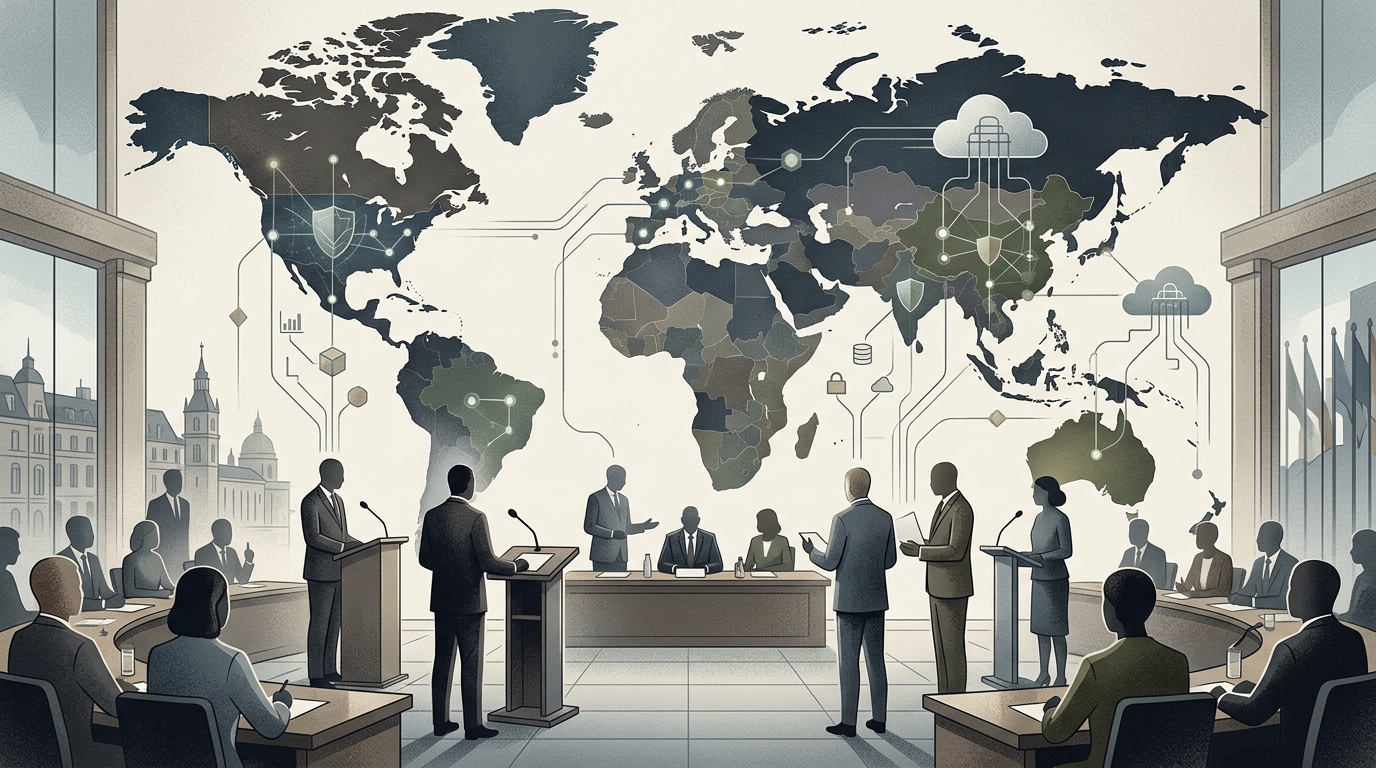
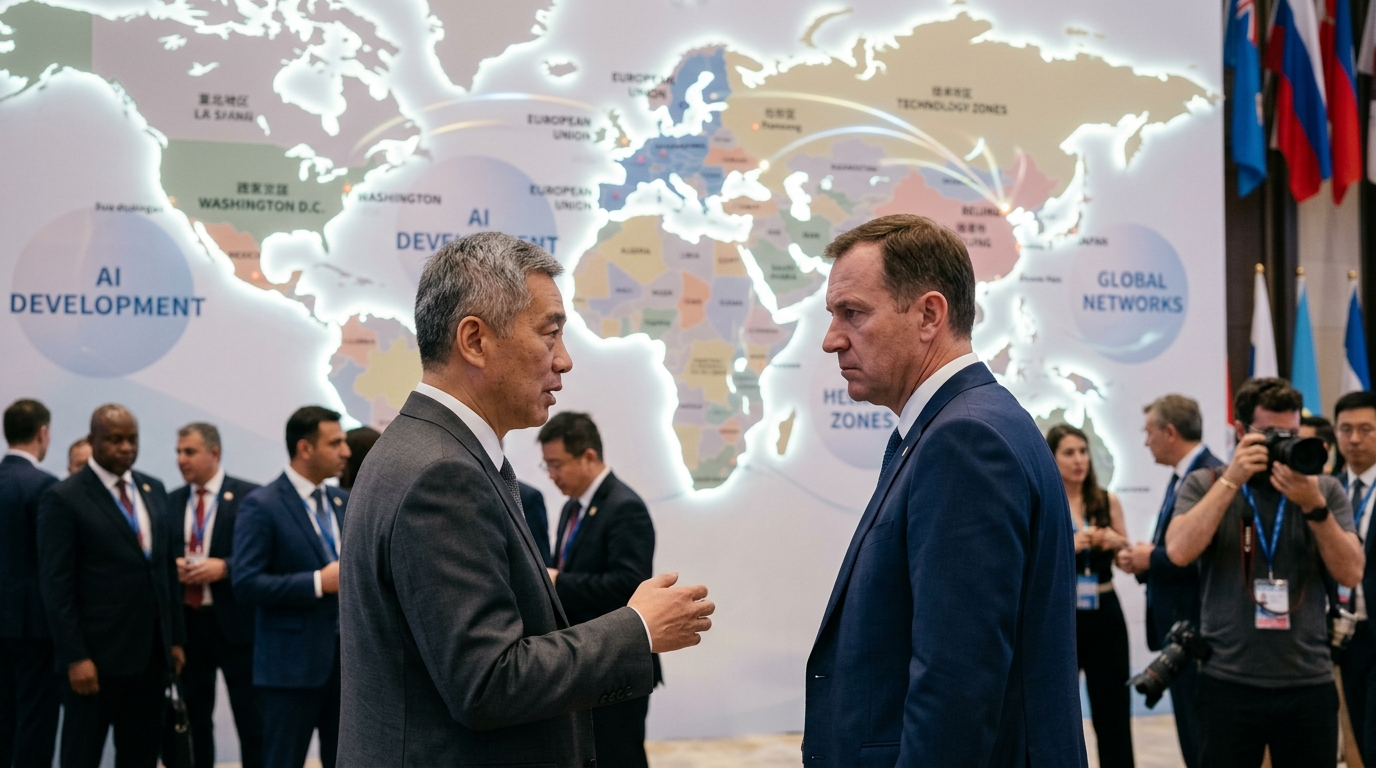
China is actively exporting these models to the "Global South" via its Digital Silk Road initiative. By offering AI infrastructure to nations in Africa and Southeast Asia, Beijing is carving out a new sphere of influence where technological dependence translates directly into diplomatic alignment. The world of 2026 is no longer a single global market, but two competing networks that rarely interoperate.
Conclusion: Europe at the Crossroads
For Europe, these developments necessitate a delicate balancing act. The need for strategic autonomy is more urgent than ever. As the US demands stricter alignment against China, the economic reality of dependence on Chinese supply chains remains a hard truth. 2026 marks the end of globalization as we knew it and the beginning of an era where technology is the primary weapon of geopolitical power.