

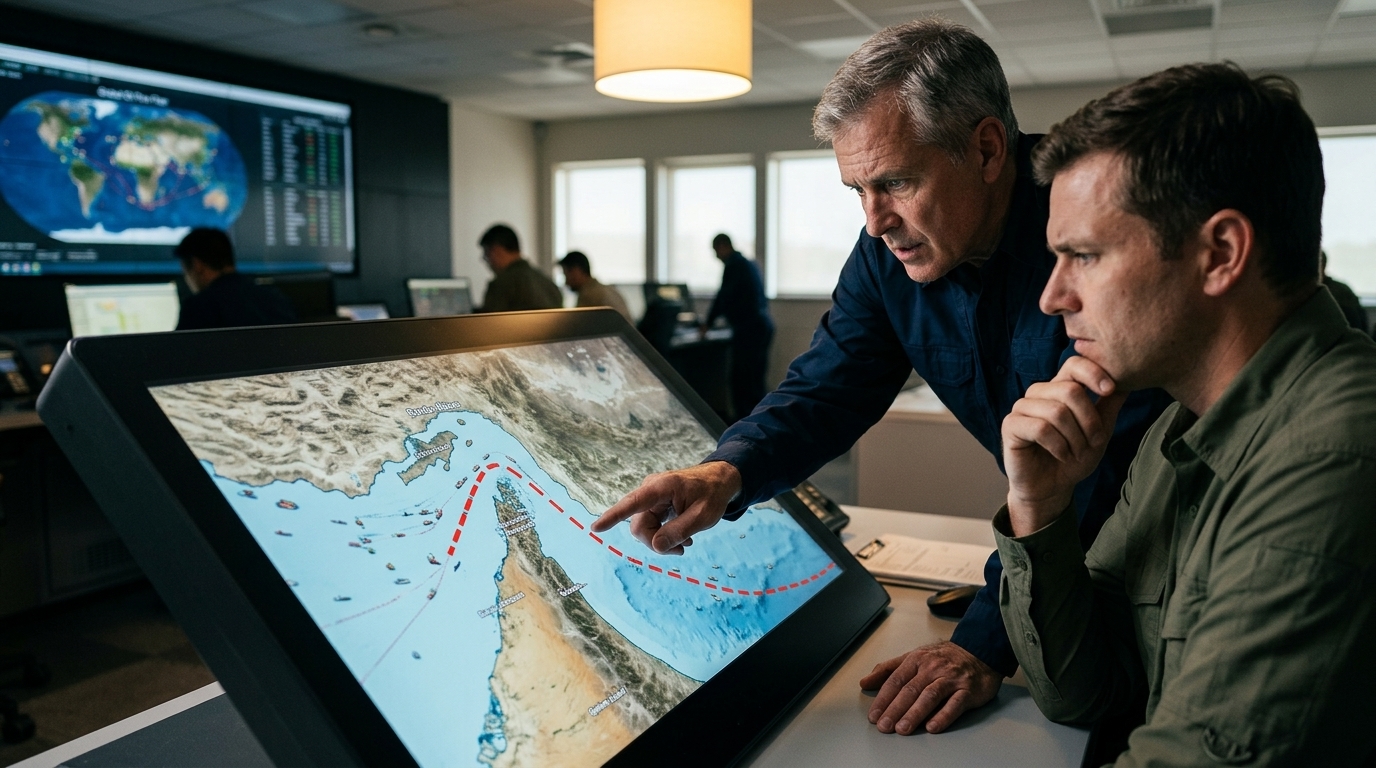
The history of global energy in the 20th and 21st centuries has largely been written upon the waters of a narrow passage, just 33 kilometers wide at its narrowest point. The Strait of Hormuz, the vital artery connecting the Persian Gulf with the Gulf of Oman and the Arabian Sea, has always been the barometer of global economic stability. However, as we move through 2026, the rhetoric surrounding this geostrategic chokepoint has shifted fundamentally. It is no longer about a temporary price spike; it is about a permanent shift in risk perception.
Fatih Birol, the Executive Director of the International Energy Agency (IEA), was explicit in his recent assessments: the credibility of the Strait of Hormuz as a guarantor of energy flow has suffered a blow that is unlikely to heal. This realization stems not just from recent geopolitical tensions between Iran and the West, but from a deeper understanding that reliance on single "choke points" is now incompatible with the national security of major economies.
The Geopolitics of Insecurity
For decades, freedom of navigation in the Strait of Hormuz was taken for granted, protected by an informal but robust framework of international guarantees and the presence of the U.S. Fifth Fleet. Today, that image has fractured. The weaponization of the strait as a tool of leverage and asymmetric warfare has turned the oil and liquefied natural gas (LNG) trade into a constant exercise in crisis management. Approximately 20% of global oil consumption and 25% of LNG passes through this point. A permanent threat there means that markets are no longer just pricing the product, but the possibility of its total cessation.
This shift is leading to a "de-globalization" of energy. States like China, India, and EU member nations are now seeking alternatives that bypass the region entirely. This includes the construction of new pipelines through Saudi Arabia and the United Arab Emirates toward the Red Sea and the Gulf of Oman, despite the immense costs and technical challenges involved.
The Permanent Shift in the Energy Market
Birol's analysis highlights three main pillars where the market is changing permanently:
- Strategic Reserves: OECD countries are raising the minimum safety thresholds for their strategic petroleum reserves, turning storage from a passive necessity into an active investment strategy.
- Acceleration of the Green Transition: Insecurity in the Strait of Hormuz serves as the strongest catalyst for decoupling from fossil fuels. Solar and wind energy, though they have their own challenges, are not susceptible to blockades in distant straits.
- Emergence of New Producers: Demand for oil and gas from North and South America (USA, Brazil, Guyana) and Africa is rising, as these sources are considered geopolitically "safer," despite higher extraction costs in some cases.
"We are not just seeing a spike in prices. We are seeing the redefinition of what 'secure supply' means. The Strait of Hormuz is no longer a trade route; it is a geopolitical landmine," IEA analysts note.
The Role of Technology and Diversification
The permanent loss of faith in Hormuz is also driving technological innovation. AI-driven grid management and decentralized energy production are becoming national security priorities. When a single waterway can paralyze the global economy, the argument for a decentralized, renewable-heavy energy system becomes irrefutable. Furthermore, the rise of the "Middle Corridor" and other overland trade routes reflects a world that is literally trying to find a way around the Middle East's volatility.
Conclusion: A New Era of Energy Resilience
The threat to the Strait of Hormuz marks the end of the era of "easy" energy. The world is entering a phase where energy security trumps economic efficiency. Consumers will be asked to pay the "risk premium" of this new reality, while governments must accelerate investments in technologies that offer genuine energy sovereignty. Fatih Birol’s warning is a wake-up call: geography remains destiny, but technology and strategic diversification are the only tools we have to navigate it.





