

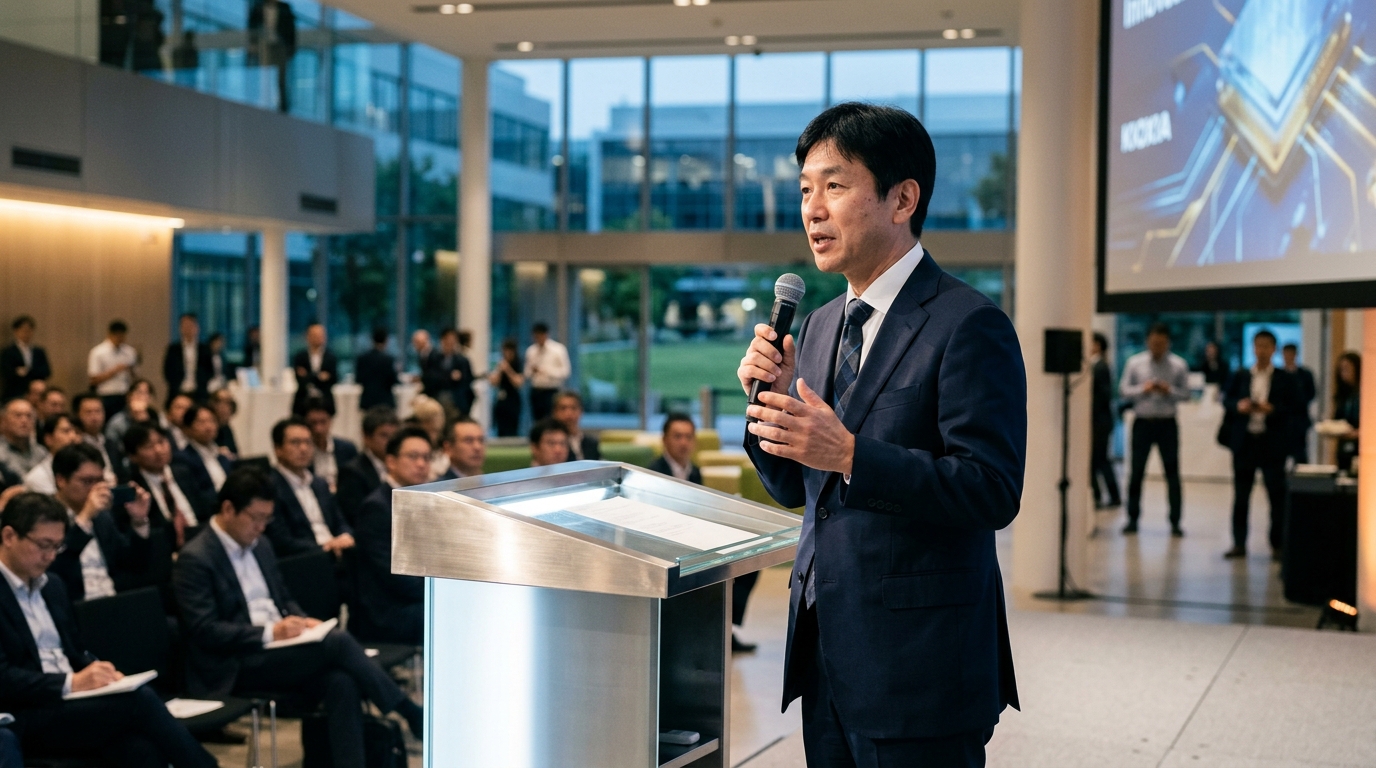
Kioxia Holdings Corp., the Japanese NAND flash memory giant born from the spin-off of Toshiba Memory, is now at the heart of one of the most impressive corporate turnarounds of the decade. After periods of intense uncertainty and low semiconductor prices, the company has announced its intention to list its shares in the US, capitalizing on the record profits driven by the AI industry's insatiable hunger for high-performance storage.
The Transformation of the Memory Market
For years, the NAND memory market was considered the "poor relative" of processors (CPUs) and graphics cards (GPUs). However, the advent of Generative AI has radically changed the landscape. Large Language Models (LLMs) require not only massive computing power but also instantaneous access to oceans of data. This has skyrocketed demand for Enterprise SSDs (Solid State Drives), where Kioxia holds a dominant position.
The current global memory shortage, caused by production cuts made by major players (Samsung, SK Hynix, Micron) last year and a sudden surge in demand, has driven prices to historic highs. Kioxia, having optimized its production lines, is now enjoying profit margins that once seemed unthinkable for the commodity sector.
Why Wall Street?
The decision to list in the US rather than Tokyo is a strategic move with deep implications. Wall Street offers access to a much larger capital pool and, more importantly, to investors familiar with the high valuations of tech companies. While the Japanese stock market has recovered, the "premium" valuation sought by Kioxia and its shareholders (led by Bain Capital) can only be achieved in the Nasdaq or NYSE environment.
- Access to international institutional capital focused on AI.
- Strengthening the company's position against competition from South Korea and the US.
- Ability to raise capital for the next generation of manufacturing facilities (fabs).
Geopolitics and the Supply Chain
This move is not just financial, but also deeply geopolitical. In the context of the US-China competition for semiconductor dominance, Japan is emerging as a critical partner for Washington. A strong Kioxia, listed in the US, reinforces the security axis of the G7 supply chain, reducing reliance on Chinese data storage technology.
"We are not just seeing a stock market move, but the validation of memory as a strategic resource for the AI century," industry analysts note.
Despite the optimism, challenges remain. The semiconductor market remains cyclical, and the risk of oversupply always looms when companies begin to invest heavily in new production capacity. However, for Kioxia, the timing of the listing seems perfectly synchronized with the peak of the current cycle.





