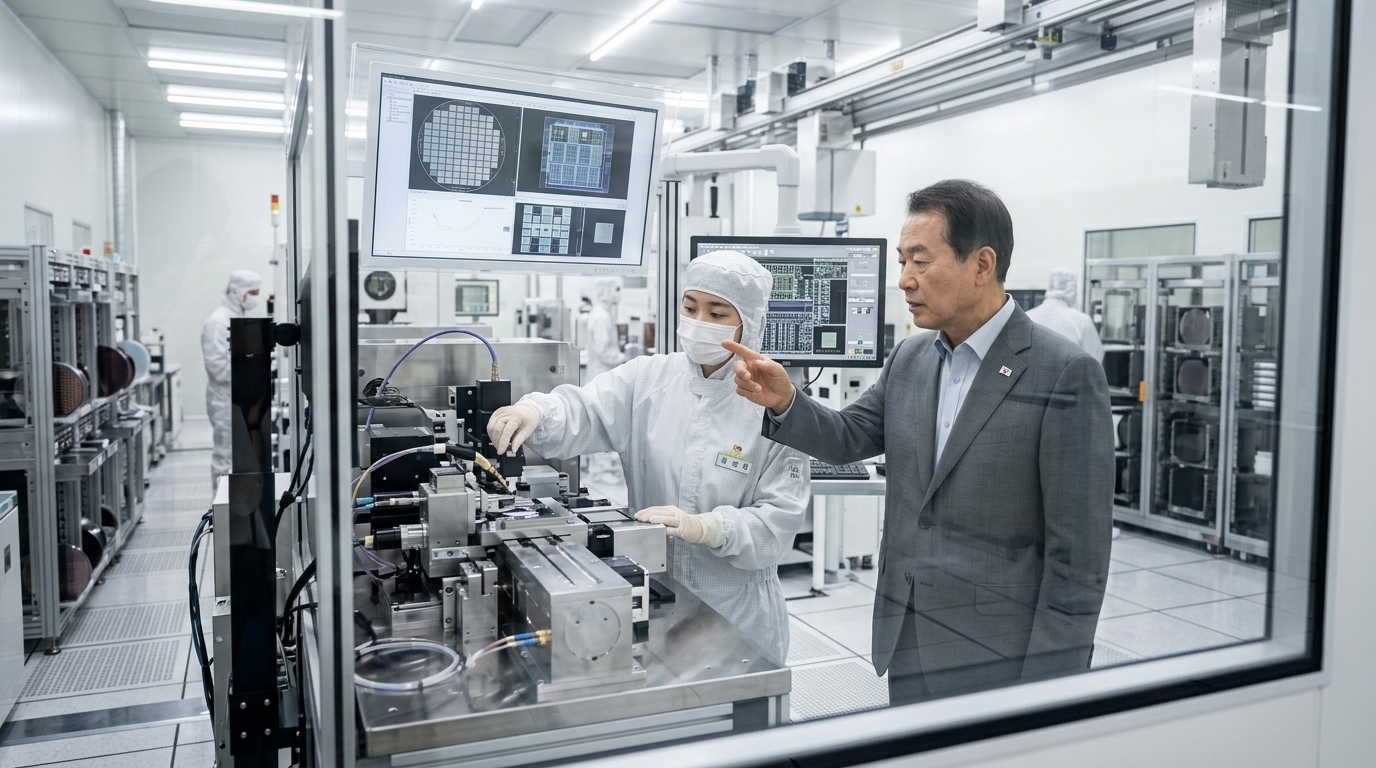
In an era where technological supremacy is synonymous with national security, South Korea has decided to play the most expensive card in industrial history. With an astronomical investment plan reaching $880 billion (approximately 622 trillion won), Seoul is attempting to fortify its position as the world's semiconductor "iron dome," directly responding to aggressive subsidies from the United States and China.
The Gyeonggi Mega Cluster: The World's Largest Industrial Zone
The heart of this endeavor beats in Gyeonggi Province, surrounding Seoul. The plan envisions the creation of a "Semiconductor Mega Cluster," which will include 13 new fabrication plants (fabs) and three research centers by 2047. The scale is unprecedented globally, aiming for the region to produce 7.7 million wafers per month by 2030.
Samsung Electronics and SK Hynix, the two pillars of the Korean economy, have committed to investing the lion's share of these funds. Samsung plans to spend approximately $378 billion on new production units, while SK Hynix aims for investments totaling $92 billion. The remaining amount will come from smaller suppliers, equipment manufacturers, and government support for infrastructure.
The Battle for High Bandwidth Memory (HBM) and AI
The driver behind this investment frenzy is the explosion of Artificial Intelligence (AI). Memory chips are no longer just storage components; they are the critical factor allowing NVIDIA's processors to operate at AI speeds. SK Hynix currently holds the lead in the HBM (High Bandwidth Memory) market, almost exclusively supplying NVIDIA's most advanced systems.
However, Samsung is striking back. The company seeks not only to reclaim the memory crown but also to compete with Taiwan's TSMC in the foundry sector (manufacturing chips for third parties). Seoul's strategy is clear: to control the entire value chain, from design to the final packaging of AI chips.
"Semiconductors are the lifeblood of our industry. In this war, defeat is not an option," President Yoon Suk Yeol recently stated, highlighting the existential nature of the investment.
Geopolitical Balancing Act: Between Washington and Beijing
South Korea's move is also a careful geopolitical maneuver. With the US CHIPS Act offering billions to bring production to American soil and China seeking full self-sufficiency, Seoul risks becoming "homeless." By investing massively at home, the country ensures it remains indispensable to both poles.
Yet, there is the issue of China, which remains South Korea's largest trading partner. Korean firms must balance US pressure to restrict technology exports to Beijing with their need to maintain their production units there. The Mega Cluster serves as a "life insurance policy": if conditions in China become prohibitive, the production power will have already been relocated within domestic borders.
Challenges: Energy, Water, and Talent
Despite the billions, the road is not without obstacles. Operating such a cluster requires enormous amounts of electricity and water. The government has promised the construction of new nuclear reactors and power transmission networks to meet these needs, though this has sparked reactions from environmental groups.
Furthermore, there is the challenge of human capital. The shortage of specialized engineers is a global phenomenon, and South Korea is no exception. The plan includes the creation of specialized university programs, but the country's aging population poses a long-term threat to the industry's sustainability.
Conclusion: A Bet for the 21st Century
The $880 billion investment is more than a business move; it is a declaration of national sovereignty. In a world fragmenting into technological blocs, South Korea chooses to become its own pole. The success of this endeavor will determine whether Seoul remains the "chip capital" or succumbs to the pressures of the superpowers.