

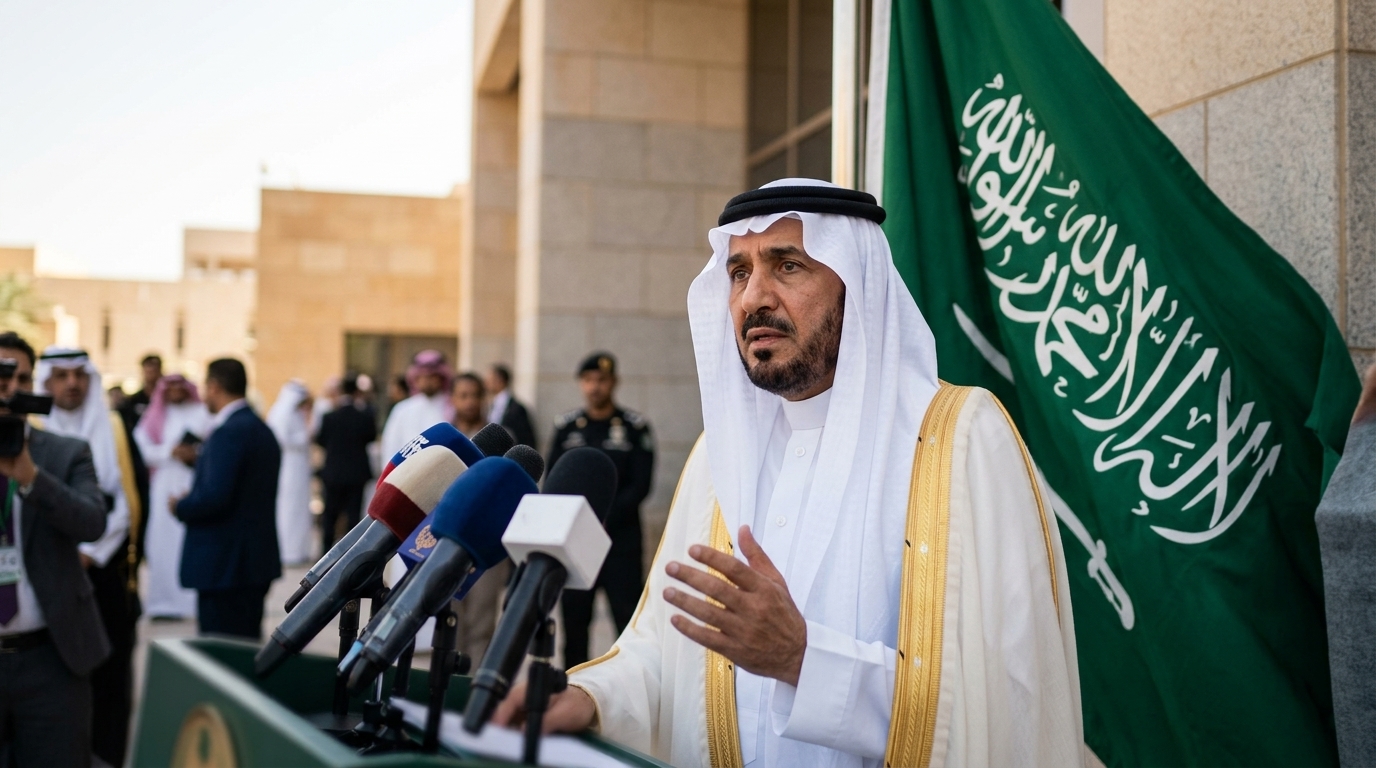
In an era where the Middle East is striving to balance technological progress with age-old geopolitical rivalries, the recent drone strike near the United Arab Emirates' (UAE) Barakah Nuclear Power Plant has triggered an immediate and forceful reaction from Riyadh. The Saudi Ministry of Foreign Affairs issued a stern statement, characterizing the attack as a "terrorist act" directed not only at the UAE but at global energy stability and the safety of civilian infrastructure.
The strike, which caused a fire in an area adjacent to the plant’s facilities, placed regional security forces on high alert. Although no radiation leaks or major structural damage to the reactors themselves were reported, the fact that a nuclear power plant was targeted—directly or indirectly—represents a dangerous escalation that alters the security landscape of the Persian Gulf.
The Strategic Importance of the Barakah Plant
The Barakah Nuclear Power Plant is more than just a power generation facility; it is a symbol of the Arab states' transition into the post-oil era. Utilizing four Korean-designed APR-1400 reactors, the plant meets a significant portion of the UAE's electricity needs, drastically reducing the country's carbon footprint. For Riyadh, the security of Barakah is inextricably linked to its own national security, as the two nations share common borders and visions for economic diversification through programs like "Vision 2030" and "Net Zero 2050."
Saudi Arabia, which is planning its own peaceful nuclear program, views this attack as a threat that could deter foreign investors and undermine the region's image as a safe haven for cutting-edge technologies. Riyadh’s statement emphasized that the UAE is a "sisterly country" and that any attempt to destabilize it would be met with unity from the Gulf Cooperation Council (GCC).
The Rise of Asymmetric Warfare and Drones
This incident highlights the growing threat of asymmetric warfare in the region. Drones, due to their low cost and the difficulty of detecting them with traditional radar systems, have become the weapon of choice for non-state actors and proxies seeking to inflict disproportionate damage on critical infrastructure. The use of Artificial Intelligence to guide such swarms makes defense even more complex.
According to security analysts, the attack near Barakah underscores the need for a new security architecture in the Middle East, one based on advanced AI-enhanced Counter-Unmanned Aircraft Systems (C-UAS). Saudi Arabia has invested billions in such systems following the 2019 Aramco attacks, and the current condemnation serves as a warning to regional rivals that tolerance for such provocations has reached its limit.
Diplomatic Implications and the International Stance
The international community is watching with bated breath. The International Atomic Energy Agency (IAEA) has repeatedly stressed that nuclear facilities must remain outside the scope of military conflicts. Targeting—even the vicinity of—a nuclear plant violates fundamental norms of international law and endangers millions of civilians across the entire region.
Riyadh's move to lead the diplomatic condemnation shows an effort to reassert its leadership in the Arab world. At the same time, it sends a message to the West that the security of energy routes and nuclear infrastructure in the Gulf is a global responsibility. If the region sinks back into a cycle of attacks, the impact on energy prices and the global economy will be immeasurable.
In conclusion, the attack near the Barakah plant is not just a local incident. It is a reminder of the fragility of peace in an age where technology can be used both to save the planet (clean energy) and to destroy it. The unity between Saudi Arabia and the UAE on this issue represents the first line of defense against a new generation of borderless threats.




