

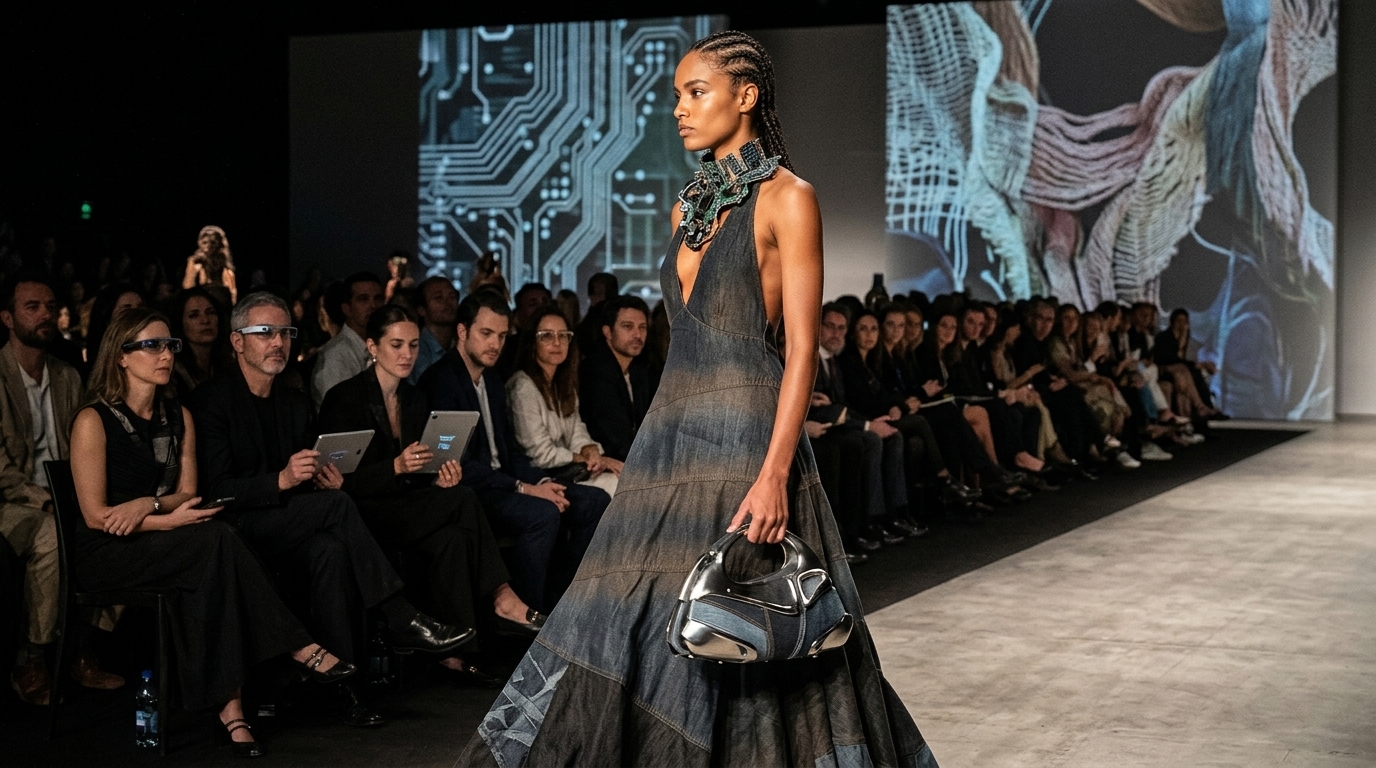
For decades, Silicon Valley prided itself on its aesthetic indifference. Mark Zuckerberg’s gray t-shirt and Steve Jobs’ black turtleneck were not just clothing choices; they were manifestos of an ideology that prioritized efficiency over appearance. However, as we navigate through 2026, the landscape has shifted dramatically. Technology no longer just wants to solve problems; it wants to be desirable, to be worn on runways, and to grace the covers of Vogue. The pivot of tech giants toward fashion and "coolness" is not a superficial makeover, but a strategic survival move in the era of ubiquitous artificial intelligence.
The End of the Hoodie Era
The traditional image of the programmer in a hoodie and sneakers is giving way to a new generation of leaders who frequent the Met Gala and collaborate with luxury powerhouses like LVMH and Hermès. The reason is simple: technology has reached a saturation point. When every smartphone can do everything and every AI chatbot offers similar capabilities, differentiation no longer comes from technical specifications (specs), but from the emotion and social status the product confers. Apple was the first to grasp this with the Apple Watch, but now Meta, Google, and even Nvidia are following the same path.
Meta’s recent partnership with Ray-Ban for its smart glasses is the perfect case study. Unlike Google Glass, which failed spectacularly because it looked like a medical peripheral, Ray-Ban Meta glasses are first and foremost stylish sunglasses and secondarily an AI device. Their success proved that consumers are willing to "wear" technology, provided it doesn't undermine their personal aesthetic. Today, in 2026, we see AI being integrated into jewelry, fabrics, and accessories that do not betray their digital nature at first glance.
AI as a Luxury Accessory
Why this obsession with fashion now? The answer lies in the nature of artificial intelligence. AI is, by definition, invisible. For it to be perceived by the consumer as a tangible product, it needs a "body." And what better body than a luxury object? Tech giants realize that to convince people to adopt AI wearables that record their lives 24/7, they must transform these devices into objects of desire. It is no longer about a gadget; it is about a piece of the user's identity.
- The Apple and Hermès collaboration is expanding into new wearables that blend health sensors with artisanal leathers.
- Humane and Rabbit, despite initial hurdles, are redesigning their hardware with the help of world-class fashion designers.
- Nvidia is funding digital fashion houses to create garments for metaverse and augmented reality environments.
This convergence is creating a new market, "Tech-Luxe," where value is defined not by gigabytes, but by exclusivity and design. Tech companies are now hiring Creative Directors from Paris and Milan, acknowledging that engineering alone is not enough to win the hearts of mainstream consumers.
Cultural Dominance and the New Lifestyle
The pivot toward "cool" is also an attempt by companies to distance themselves from negative publicity regarding data privacy and antitrust issues. By associating their brand with creativity, art, and fashion, they attempt to build a more "human" and friendly profile. When the public views AI not as an impersonal algorithm but as a tool helping a designer create a unique gown, resistance to the technology softens.
"Fashion is the language of the moment, and technology desperately wants to speak that language to avoid being seen as obsolete," notes an industry analyst.
In conclusion, Silicon Valley doesn't just want to sell us devices; it wants to define our lifestyle. In the future, the most advanced technology will be the one that isn't visible at all, hidden inside a chic blazer or a pair of timeless glasses. The battle for AI supremacy will be fought not only in data centers but also in the storefronts of Fifth Avenue.





