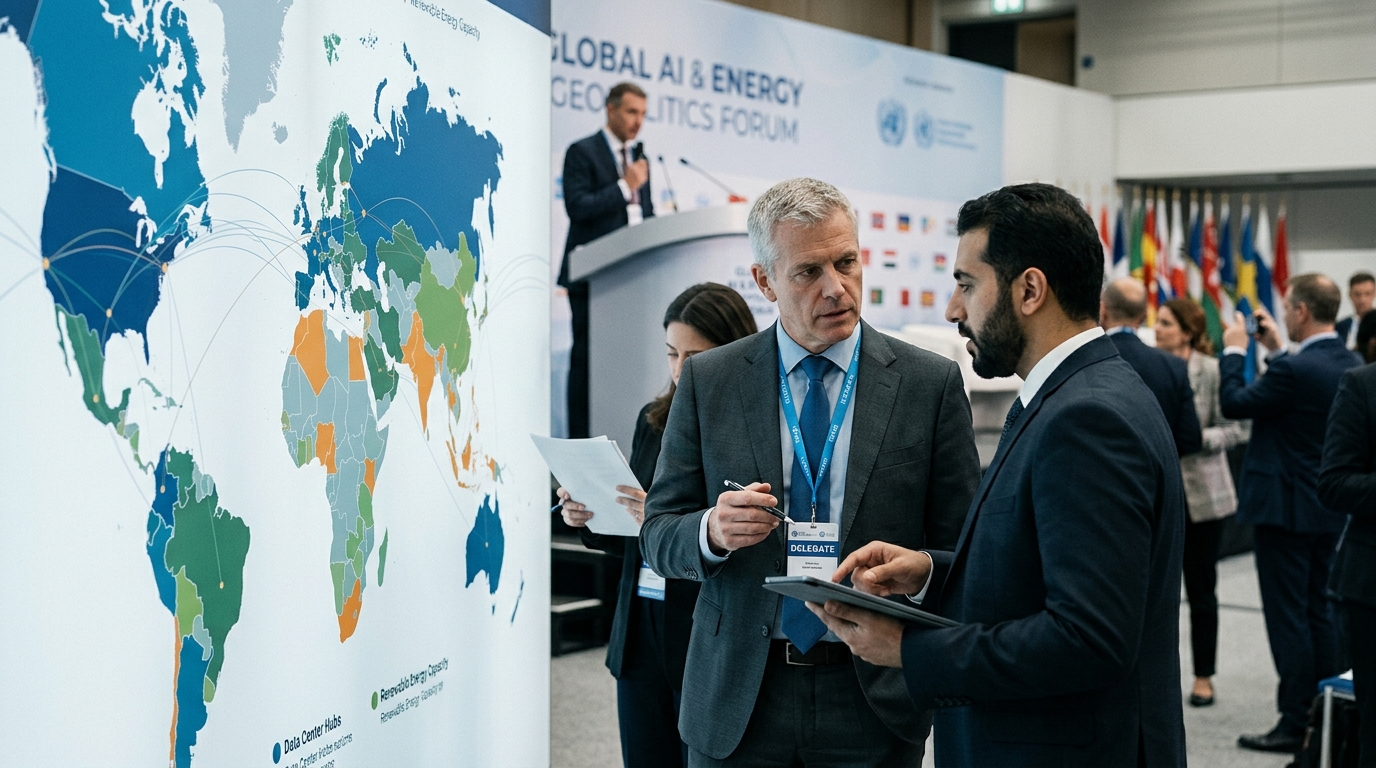
As we navigate through the second half of 2026, the global geopolitical chessboard bears little resemblance to the 20th century. The era where power was measured exclusively in barrels of crude oil is fading. In its place, a new world order is emerging, where dominance is defined by access to critical minerals, semiconductor manufacturing, and, above all, the ability to manage Artificial Intelligence (AI) through massive energy infrastructures. Welcome to the era of the ‘Electro-states’.
The Transition from Oil to Terawatts
The term ‘Electro-state’ describes nations that will dominate the global stage not through fossil fuels, but through control of the clean energy value chain. This includes the mining of lithium, cobalt, and rare earths, the manufacturing of solar panels and wind turbines, and the development of advanced electricity transmission grids. However, the defining difference in 2026 is the linkage of this energy to computational power.
Artificial Intelligence has become the single greatest accelerator of energy demand. The data centers housing Large Language Models (LLMs) and autonomous decision-making systems require amounts of energy comparable to the consumption of entire nations. Consequently, a modern Electro-state is not just one that produces energy, but one that can efficiently convert that energy into ‘intelligence’.
China, the West, and the Mineral Race
China holds a clear lead in this new race. By controlling over 60% of global critical mineral processing, Beijing has created a dependency for the West that is deeper than that toward OPEC in the 1970s. The response from the US and the EU, through legislative initiatives like the Inflation Reduction Act and the European Critical Raw Materials Act, aims at ‘de-risking,’ but progress is measured in decades, not years.
“Energy geopolitics is no longer just about the flow of liquid fuels, but about the stability of electrons and the purity of silicon crystals,” note analysts at Eurasia Review.
This confrontation is forging new alliances and rivalries. We are witnessing the rise of ‘green protectionism,’ where countries impose tariffs and export restrictions on technology and raw materials to shield domestic industries. The Global South, from Chile to the Democratic Republic of Congo, finds itself at the center, striving to avoid the trap of ‘resource neo-colonialism’ and demanding technology transfer instead of mere raw material exports.
AI as Both Tool and Threat
While AI consumes vast amounts of energy, it is simultaneously the key to solving the energy crisis. AI systems are already being used to optimize smart grids, predict renewable energy output, and discover new materials for batteries that do not rely on scarce lithium.
However, inequality in access to AI is creating a new ‘digital and energy divide.’ Nations lacking the infrastructure to power their own AI models will find themselves at a disadvantage, dependent on the ‘digital empires’ of the US and China. Sovereignty in the 21st century will be decided by who can keep the lights on and the processors running without collapsing the planet's climate.
Conclusions for the Future
The rise of Electro-states signals the end of globalization as we knew it. We are in a period of ‘fragmented power,’ where security is synonymous with supply chain autonomy. Governments must invest not only in infrastructure but also in diplomatic relations based on reciprocity and technological cooperation. The road to 2030 will be fraught with challenges as humanity attempts to balance the insatiable need for progress with the finite boundaries of nature.