

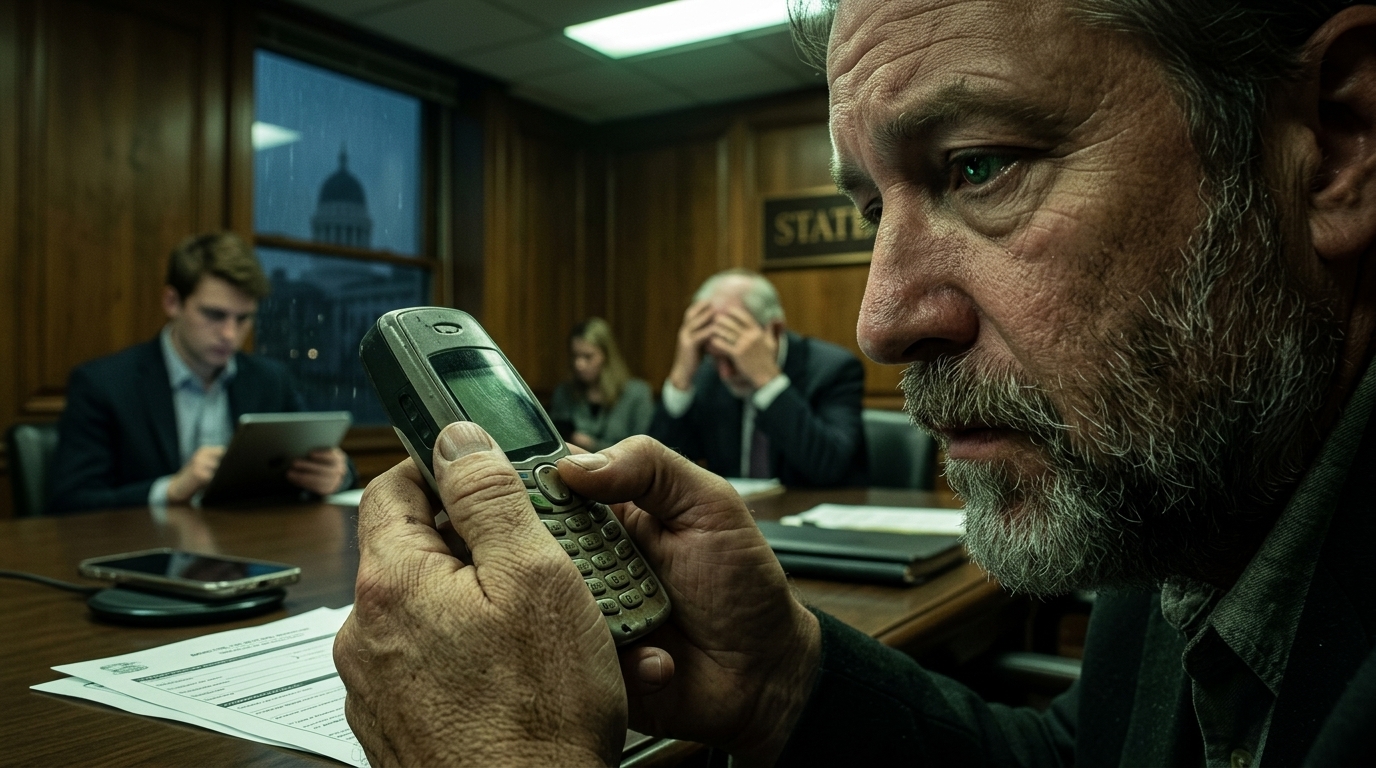
The United States political landscape in 2026 has reached a tipping point where digital reality no longer merely supplements traditional strategy—it often consumes it. The recent news surrounding the implosion of Graham Platner’s Senate campaign in Maine serves as a clarion call regarding how technological isolation and the misuse of AI can alienate even a politician’s closest allies. Simultaneously, the battle for the digital 'town square' rages on, with Meta’s Threads gaining significant ground against Elon Musk’s X, while the arrival of the 'Trump Phone' marks the ultimate commodification of political identity through hardware.
The Fall of Graham Platner: When AI Replaces Human Contact
The case of Graham Platner in Maine is not just a failed campaign; it is a case study in what happens when a candidate believes they can govern through algorithms and digital personas. Platner, a Democrat who attempted to position himself as the voice of a new generation, saw his entire staff resign in a mass exodus. The allegations are startling: the candidate reportedly used AI tools to generate content that bore little resemblance to reality, while his behavior was described as autocratic and disconnected from the actual needs of Maine voters.
The use of AI in campaigns has become commonplace, but Platner took it a step further. Instead of using AI for data analysis or logistical efficiency, he used it to replace human judgment and interpersonal connection. His failure highlights a fundamental truth: in politics, authenticity remains the most valuable currency. When voters—and campaign staff—realize that behind the message there is no human being, but rather an algorithm fueled by narcissism, trust collapses instantly. This debacle serves as a warning for future candidates: technology is a tool, not a substitute for leadership.
Threads vs. X: The Great Digital Migration
While local politics in Maine faces a reckoning, the global digital landscape is shifting dramatically. Meta’s Threads, once dismissed as a mere Twitter clone, has successfully stabilized as the preferred platform for those seeking a more 'normal' social media experience. Mark Zuckerberg’s strategy to integrate Threads into the Instagram ecosystem has paid off, creating a steady stream of users who wish to avoid the volatility and toxicity that frequently dominates X.
On the other side of the spectrum, Elon Musk’s X continues its trajectory as a battlefield for absolute free speech—or, as its critics argue, an echo chamber for extremist voices. The departure of major advertisers and the constant flux of content moderation rules have turned X into a platform catering to a specific, hardcore audience. The battle between Threads and X is more than a commercial rivalry; it is a clash of two distinct visions for how humanity should communicate in the 21st century. Threads offers the perceived safety of a curated environment, while X offers the unpredictable, often chaotic nature of unbridled expression.
The Trump Phone and the Politics of Hardware
Perhaps the most striking development is the arrival of the 'Trump Phone.' This is not merely a device branded with the former president’s name; it is an attempt to construct a parallel technological ecosystem. Pre-loaded with apps like Truth Social and promising protection from 'Big Tech censorship,' the device represents the ultimate expression of political polarization. We are no longer just disagreeing on ideas; we are now using entirely different hardware to process them.
This move echoes previous attempts like the 'Freedom Phone,' but with the Trump brand’s weight, its commercial viability is significantly higher. The creation of devices targeting specific political demographics is a concerning development, as it reinforces 'digital bubbles.' If a user receives their news, communicates, and organizes within a device designed to confirm their existing biases, the possibility of meaningful dialogue with the opposing side is virtually extinguished. It turns the smartphone into a partisan badge, further fragmenting the national discourse.
Conclusion: The Need for Digital Ethics
These three events—Platner’s collapse, the rise of Threads, and the Trump Phone—are linked by a common thread: the crisis of mediation. In our quest to bypass traditional institutions and the complexities of human interaction, we are finding ourselves in technological dead ends. Politics in 2026 demands a new digital ethics, where technology serves democracy rather than undermining it. Without such a framework, the 'uncanny valleys' we inhabit will only grow deeper, segregating citizens into digital silos that make consensus impossible.





