

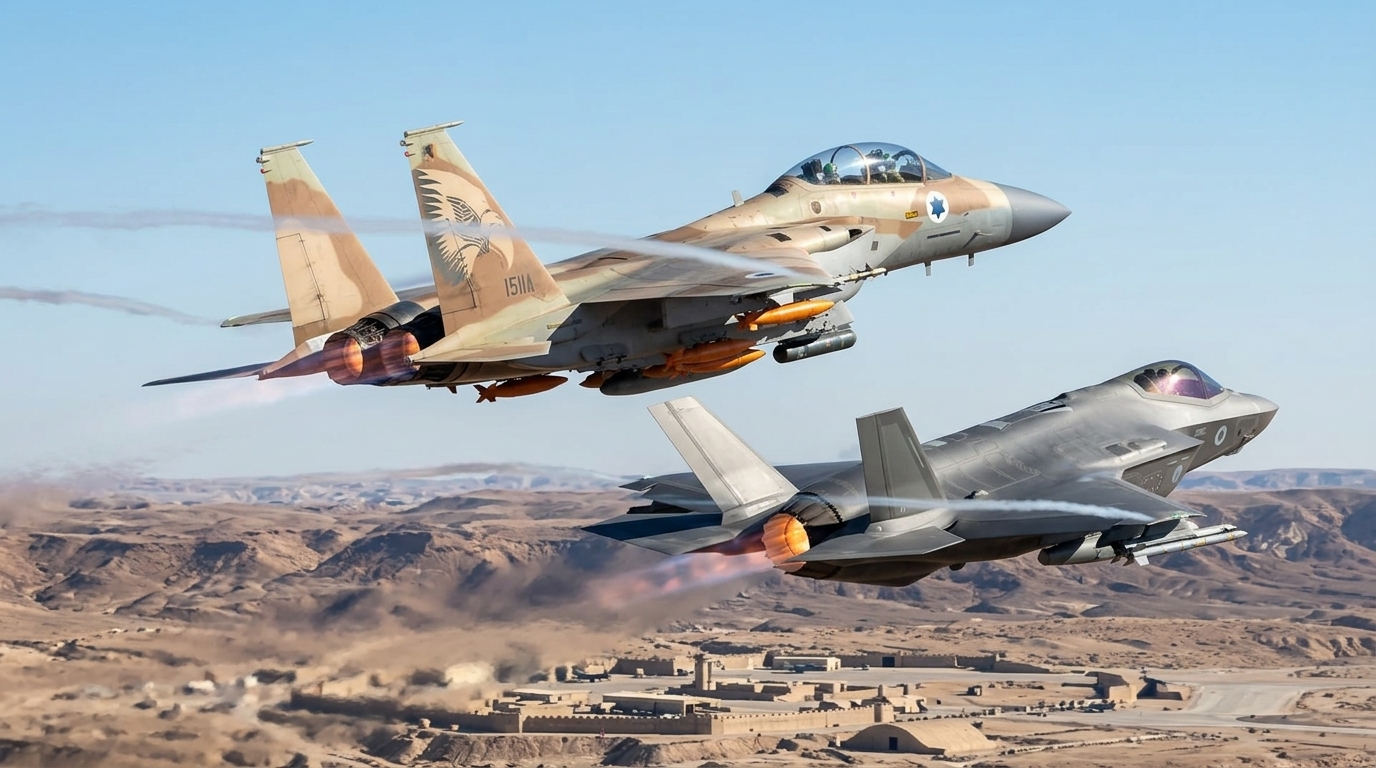
In an era of rapid geopolitical shifts, Israel is making a move that is not merely a military upgrade but a clear declaration of strategic dominance. The final approval for the purchase of two new squadrons of advanced fighter jets—the stealth F-35 'Adir' and the formidable F-15IA—marks the beginning of an armament program that is projected to reach a staggering €100 billion over time. This agreement, the result of long-standing consultations with Washington, is not just about the quantity of aircraft, but the Qualitative Military Edge (QME) that Israel seeks to maintain over any regional adversary.
The Doctrine of Dual Dominance: Stealth and Firepower
Israel's decision to invest simultaneously in two different platforms reflects a deep understanding of modern aerial warfare. The F-35 Lightning II, known in Israel as the 'Adir' (The Mighty One), represents the spearhead for penetration operations. With its stealth capabilities, it can neutralize enemy air defenses without being detected, while simultaneously acting as a 'flying hub' for collecting and distributing intelligence. The new batch of aircraft will bring the total number of Israeli F-35s to 75, allowing the IAF (Israeli Air Force) to operate on multiple fronts simultaneously.
However, the F-35, despite its technological superiority, has limitations in the weapon load it can carry internally to maintain its stealth profile. This is where the F-15IA (Israel Advanced) comes in. Based on the American F-15EX Eagle II, the F-15IA is a 'missile truck.' With the ability to carry a massive volume of munitions, longer range, and advanced electronic systems, the F-15IA will serve as the heavy artillery of the skies. The combined action of the F-35s (locating and 'blinding' the enemy) and the F-15IAs (destroying targets with massive strikes) creates an invincible duo aimed directly at Iran's strategic infrastructure.
The Geopolitical Chessboard and the US Factor
The timing of the deal is not accidental. As tension within the 'Axis of Resistance' reaches a fever pitch, Israel needs to ensure its deterrent power remains unquestioned. The funding for this giant program relies heavily on US Foreign Military Financing (FMF), which amounts to $3.8 billion annually. Despite occasional political friction between the Netanyahu government and the White House, defense cooperation remains the solid foundation of the relationship between the two countries.
By approving this sale, Washington sends a message to both Tehran and Moscow: the commitment to Israel's security is strategic and long-term. Furthermore, the deal bolsters the US defense industry, with Lockheed Martin and Boeing securing orders that will keep production lines active for the next decade. For Israel, integrating domestic technology—from electronic warfare systems to advanced missiles—into the American aircraft is vital, as it allows the IAF to maintain its autonomy and tailor its assets to the specific needs of the Middle Eastern theater of operations.
Artificial Intelligence and the Future of War
A less highlighted but extremely critical aspect of this acquisition is the integration of Artificial Intelligence (AI). The new F-15IAs and upgraded versions of the F-35 use AI algorithms to process vast amounts of sensor data in real-time. This allows pilots to make split-second decisions, identifying threats that would be impossible to detect by traditional means. Digital superiority is transformed into physical dominance on the battlefield.
In conclusion, the €100 billion armament program is not just a reaction to current threats, but a proactive investment for 2030 and 2040. Israel is preparing for a world where conflicts will be faster, deadlier, and technologically more complex. The acquisition of these aircraft ensures that, regardless of political changes in the region, the Israeli Air Force will remain the undisputed master of the skies, capable of striking any target, anywhere, at any time.





