

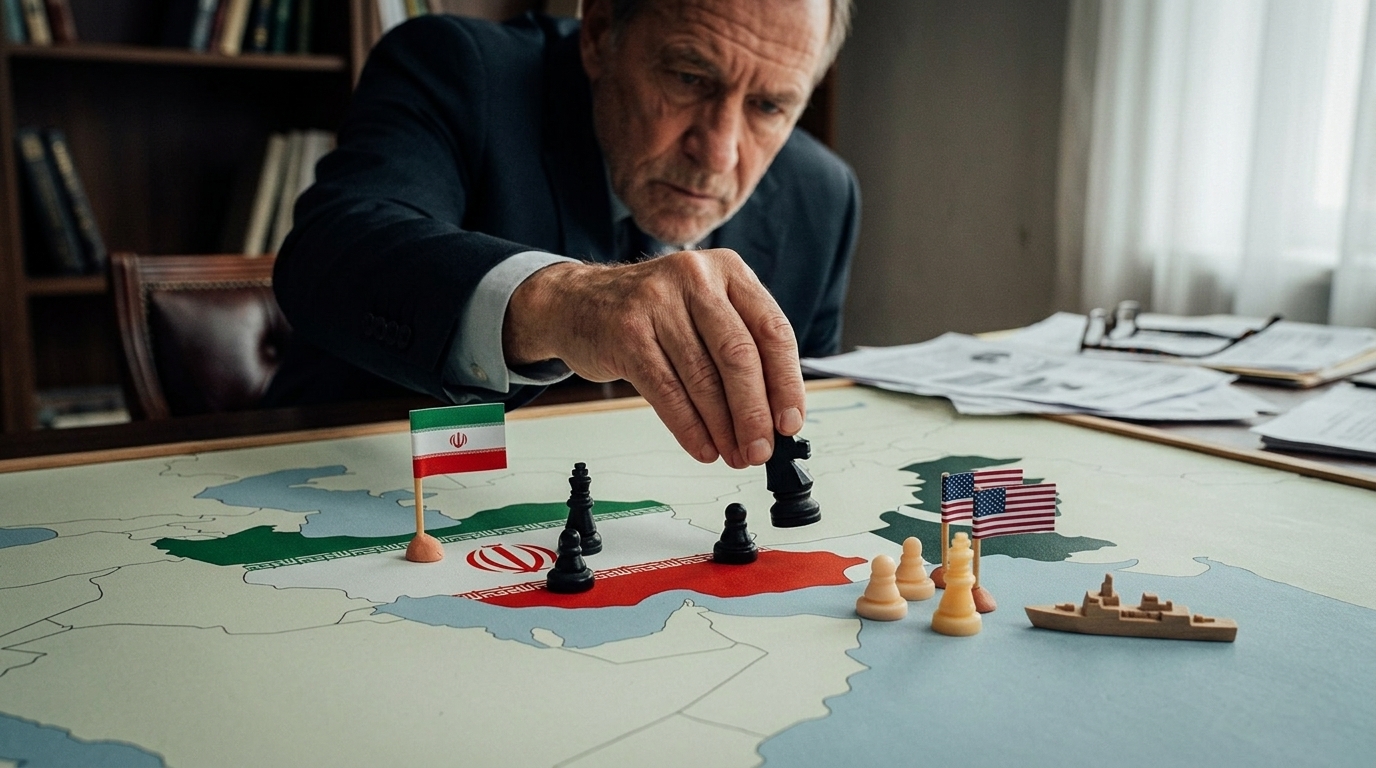
The Middle East is once again on the precipice of an uncontrollable conflagration as the rhetoric between Tehran and Washington reaches a fever pitch. Recent statements from top Iranian officials regarding "painful strikes" against American interests are not merely a verbal escalation; they reflect a profound shift in Iran's strategy of "active deterrence." The Strait of Hormuz, through which one-fifth of global oil consumption passes, is transforming into a global geopolitical noose that threatens to strangle the world economy.
The Chessboard of Deterrence and the Risk of Miscalculation
The current tension is not a bolt from the blue. It is the result of years of accumulated mistrust, sanctions, and a shadow war. Iran, facing suffocating economic pressure, appears to be opting for a tactic of "controlled escalation." By directly threatening US bases in the region and the freedom of navigation, Tehran seeks to force the international community to intervene for the easing of sanctions. However, this strategy is fraught with danger. In such a high-tension environment, a miscalculation by a local commander or a misinterpretation of a military maneuver could spark a conflict that neither side truly desires.
The United States, for its part, has bolstered the presence of the 5th Fleet, sending a clear message that the protection of maritime routes is a "red line." The US Navy's use of unmanned vessels and advanced AI surveillance systems in the region has changed the game, allowing for real-time monitoring of Islamic Revolutionary Guard Corps (IRGC) movements. Nevertheless, the asymmetric nature of the threat—utilizing fast attack craft, mines, and kamikaze drones—makes the complete protection of tankers an extremely difficult equation.
Oil as a Geopolitical Weapon
The economic dimension of this crisis is perhaps the most immediate threat to the West. Energy markets react convulsively to every statement from Tehran. The price of Brent crude has already seen an uptick as investors price in the risk of a total disruption of flow through Hormuz. If Iran partially implements its threats to obstruct navigation, analysts warn of prices that could exceed $120 per barrel, triggering a new wave of global inflation.
- Importance of the Strait: Over 20 million barrels of oil pass through daily.
- The Role of China: As the largest buyer of Iranian oil, Beijing plays a critical role as an "arbiter" in behind-the-scenes consultations.
- European Concern: The EU, attempting to decouple from Russian gas, is extremely vulnerable to any disruption in energy supply from the Gulf.
The weaponization of energy is not a new tactic, but in the current context, with the global economy struggling to recover from successive crises over recent years, such a shock could prove fatal. Central banks, already battling high interest rates, would find themselves in a deadlock if energy prices derail once again.
The Digital and Technological Dimension of the Conflict
Beyond the straits and traditional military forces, another war is being waged in cyberspace. Iran has invested significantly in offensive cyber capabilities, targeting critical infrastructure in the US and among its allies. Threats of "painful strikes" could very well involve cyberattacks on power grids, financial institutions, or supply chain systems. The use of artificial intelligence to create sophisticated phishing attacks or to identify vulnerabilities in industrial control systems represents a new, dark reality.
"The conflict of the 21st century will not be decided solely by who has the most cannons, but by who can digitally blind the opponent and paralyze their economy without a single shot being fired," says a security expert.
In conclusion, the escalation of tension between Iran and the US is not a local dispute. It is a systemic crisis testing the resilience of the global order. Diplomacy appears to have reached a stalemate, as neither side wants to appear weak to their domestic audience. However, the cost of an all-out conflict would be so unbearable that, ultimately, the necessity for survival may force the players back to the negotiating table, however reluctantly.





