

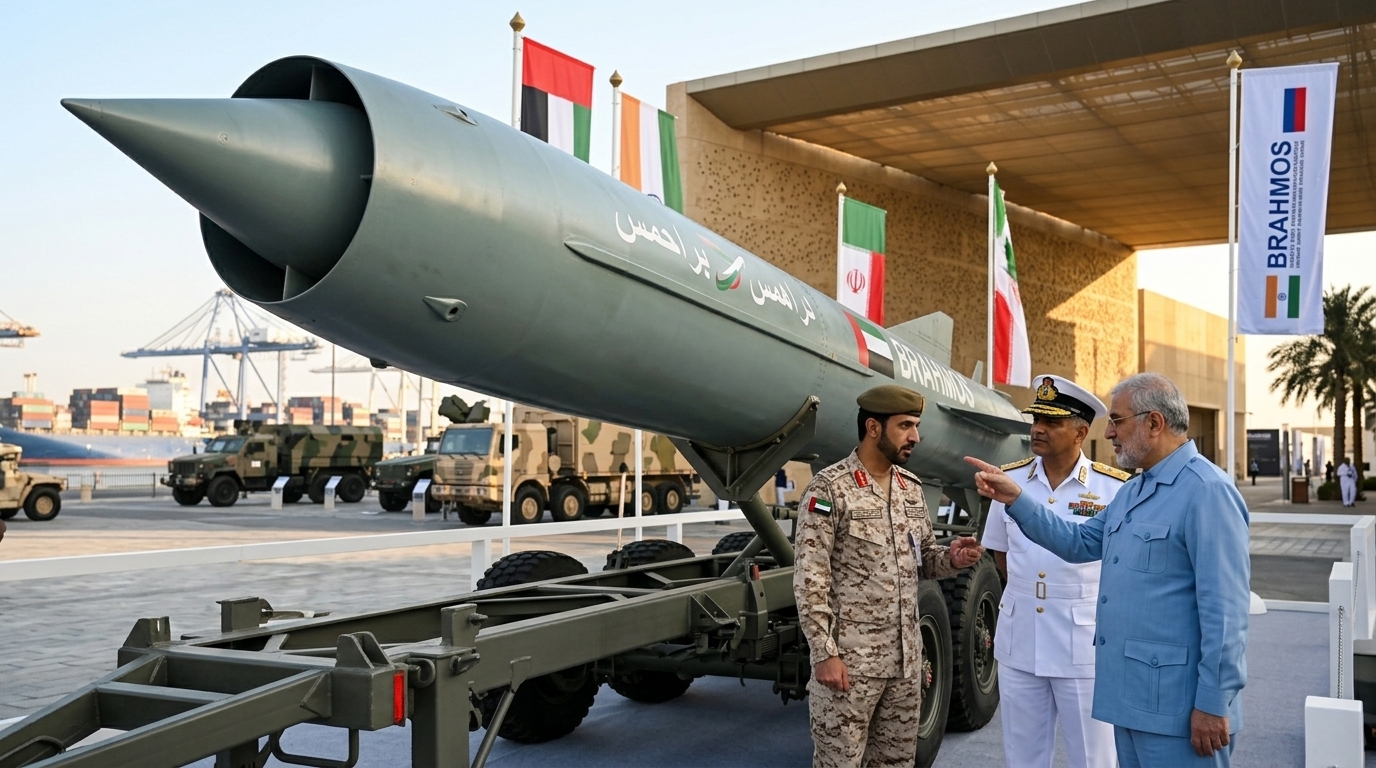
The global geopolitical landscape is witnessing a historic shift as India and the United Arab Emirates (UAE) enter the final stages of negotiations for the sale of BrahMos supersonic cruise missiles, according to Reuters. This development is far more than a multi-billion dollar commercial transaction; it signals India’s emergence as a major exporter of cutting-edge defense technology and highlights the UAE's desire to diversify its strategic partners beyond the traditional Western sphere of influence.
The Technological Superiority of BrahMos
The BrahMos missile, a joint venture between India’s Defence Research and Development Organisation (DRDO) and Russia’s NPO Mashinostroyeniya, is widely considered the world’s fastest supersonic cruise missile. Traveling at speeds of Mach 3—nearly three times the speed of sound—the BrahMos offers a tactical advantage that is exceptionally difficult for current air defense systems to intercept. Its versatility, with versions capable of being launched from land, sea, and air, makes it a multi-purpose tool for any modern military force.
For the UAE, acquiring such weaponry bolsters its deterrent capabilities in a region characterized by increasing instability and competition. Abu Dhabi has been steadily pursuing strategic autonomy in recent years. Following complications in procurement deals for US F-35s, the UAE demonstrated that it would not hesitate to turn to alternative sources, such as France (Rafale), China, and now India, to secure its national interests.
India’s Transformation into a Global Defense Player
For New Delhi, the deal with the UAE is the "crown jewel" of Prime Minister Narendra Modi’s "Make in India" initiative. India, historically the world’s largest arms importer, has set an ambitious target: to reach $5 billion in defense exports by the end of 2026. The sale of BrahMos to the Philippines in 2024 paved the way, but a deal with a Gulf power like the UAE elevates India into the "major league" of global suppliers.
This pivot has profound economic and diplomatic implications. India is utilizing defense diplomacy to forge stronger ties across the Indo-Pacific and the Middle East, presenting itself as a reliable alternative that does not come with the stringent political conditions often imposed by Washington. Furthermore, the domestic production of such systems strengthens the country's industrial ecosystem, creating high-tech jobs and fostering advanced technological research.
Challenges and the "Russian Connection"
However, the path to finalizing the deal is not without obstacles. The fact that BrahMos is an Indo-Russian joint venture complicates matters due to Western sanctions against Moscow. Washington monitors these transactions closely through the Countering America's Adversaries Through Sanctions Act (CAATSA). Although India has received waivers in the past (notably for the S-400 system), exporting a system containing Russian technology to a third country remains a delicate diplomatic exercise.
Moreover, the regional balance of power is sensitive. Strengthening the UAE with supersonic weapons could trigger reactions from Iran or even alarm Pakistan, which traditionally maintains close ties with the Gulf but views India’s growing influence with concern. New Delhi must balance its export ambitions with the necessity of maintaining stability in a region upon which its own energy security depends.
Conclusion: A New Era for New Delhi
The BrahMos-UAE deal is more than just a missile purchase. It is the declaration of an emerging superpower that it is ready to take a leading role in global security. If successfully concluded, it will solidify the India-UAE relationship as one of the most important strategic axes of the 21st century, while simultaneously forcing traditional defense industry players to rethink their strategies in the face of competition from the Global South.





