

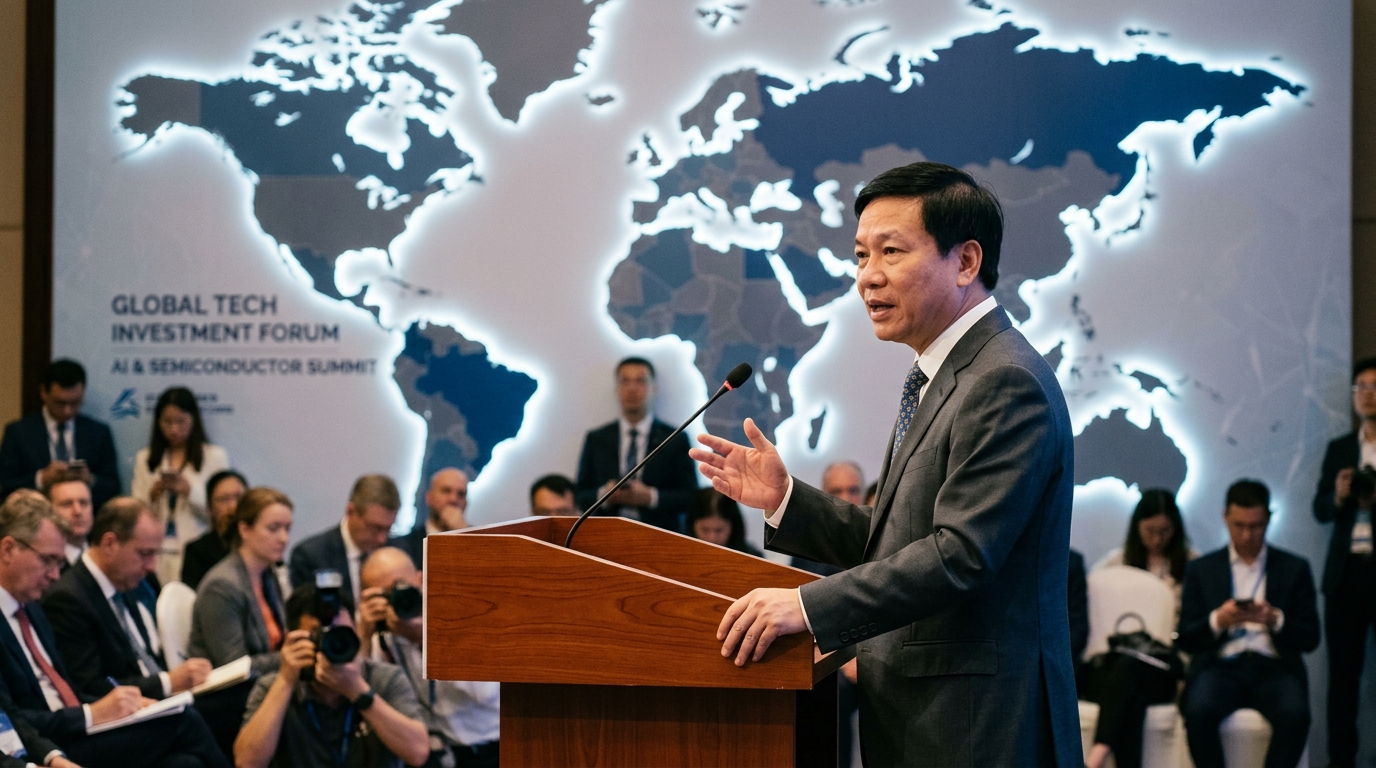
In the heart of Southeast Asia, Ho Chi Minh City (HCMC) is no longer just Vietnam's historical and commercial center; it is evolving into a critical theater of geopolitical and technological competition. Against the backdrop of global supply chain realignment, the city's leadership has launched an ambitious campaign to attract international investment across three pillars: Artificial Intelligence (AI), semiconductors, and green technologies. This move is not merely an economic choice but a strategic imperative for survival and ascent within the global hierarchy of power.
The Strategic Role of Semiconductors
The semiconductor industry lies at the core of "chip diplomacy." HCMC, already hosting major players like Intel at the Saigon Hi-Tech Park (SHTP), seeks to transition from simple assembly and testing to high-value design and manufacturing. The recent upgrade of Vietnam-US relations to a "Comprehensive Strategic Partnership" in 2023 paved the way for closer cooperation with US giants such as Nvidia and Marvell. However, the challenge remains the shortage of skilled labor. The city needs thousands of engineers over the next decade to support this ecosystem, necessitating massive investments in education and R&D. The goal is to create a "Silicon Shield" that makes Vietnam indispensable to the global tech economy.
AI: The New Digital Frontier
Artificial Intelligence is viewed as the "accelerator" for the city's economy. The Vietnamese government has set a target for the country to become one of the top four players in ASEAN regarding AI. In HCMC, AI application is not limited to the private sector. Plans are underway for a "Smart City" framework where AI manages traffic flow, public safety, and administrative services. The quest for funding focuses on building data centers and cloud computing infrastructure, which are essential for training Large Language Models (LLMs) and developing localized applications that respect the nuances of the Vietnamese language and culture. This digital sovereignty is a key priority for the local administration.
Green Transition and Sustainability
Parallel to the tech boom, HCMC faces the stark realities of climate change, being one of the most vulnerable cities globally to rising sea levels. "Green finance" is vital. The city is seeking investments for renewable energy, electric buses, and advanced waste management systems. International investors now demand strict ESG (Environment, Social, Governance) criteria, and the city is striving to align with these standards to remain attractive. The transition to a circular economy is not just an environmental necessity but a prerequisite for exporting products to the European Union, which is increasingly implementing carbon border adjustment mechanisms.
Geopolitical Balancing and Structural Hurdles
Ho Chi Minh City's efforts take place in an exceptionally complex geopolitical environment. Vietnam follows so-called "Bamboo Diplomacy" — flexible yet firm — attempting to balance its relations with both China and the United States. While the "de-risking" of Western companies from China benefits Vietnam, the country remains reliant on Chinese raw materials and components. Furthermore, the city's infrastructure, from the power grid to seaports, requires urgent upgrades to sustain increased industrial activity. Recent legislative moves, such as "Resolution 98," provide HCMC with specific mechanisms and autonomy to attract strategic investors, marking what many call a "golden opportunity" for the region.
- The city aims to attract $10-15 billion in high-tech investment by 2030.
- Focus is on creating a full semiconductor value chain, from design to foundry.
- Green growth is being linked to the digital economy in a "twin transformation" strategy.
- The talent gap remains the single largest bottleneck for rapid scaling.
"Ho Chi Minh City is not just asking for capital; it is looking for partners to co-build the future of technology in Southeast Asia," a city official recently noted at an international forum.




