

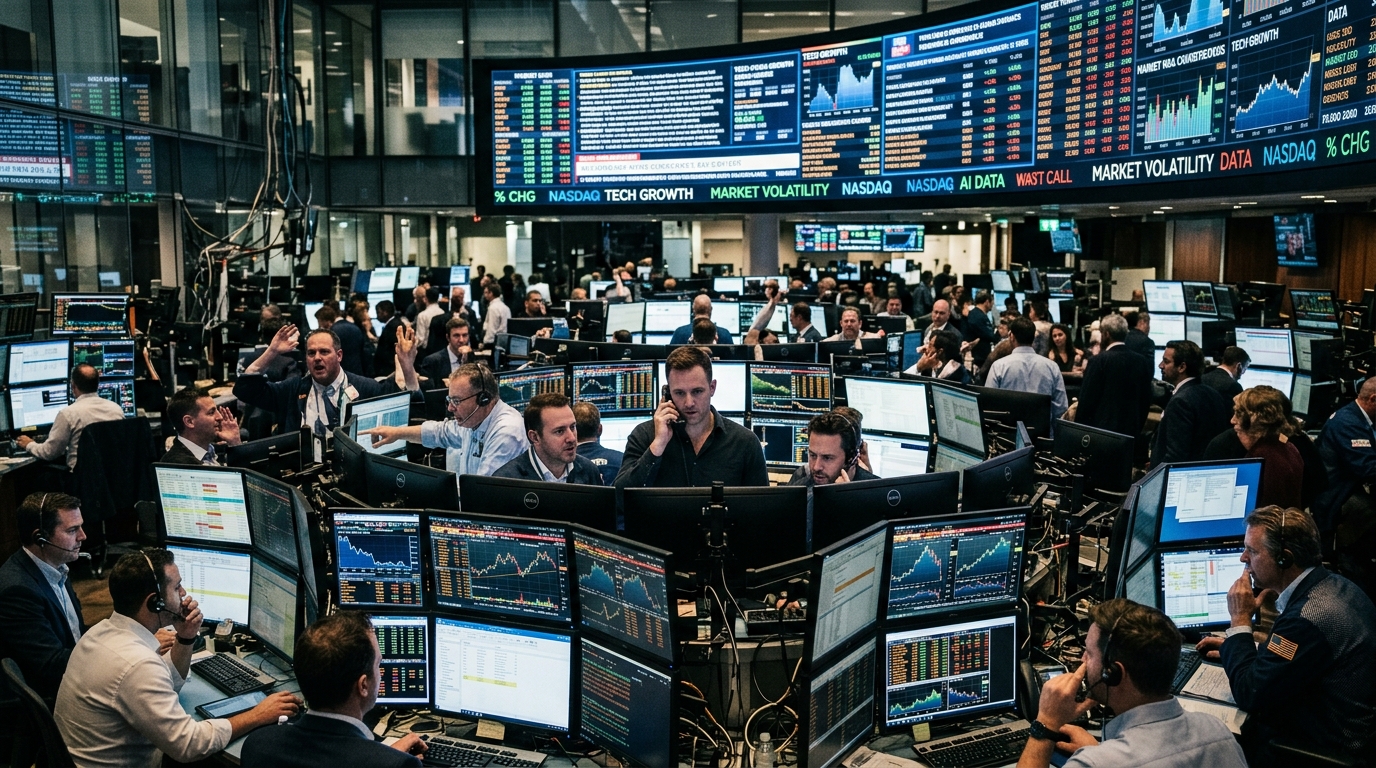
The era of "immaterial" technology is officially over. Today, in June 2026, artificial intelligence is no longer just code running in the background, but a heavy industry requiring vast tracts of land, millions of tons of steel, and, most importantly, an unprecedented amount of electrical power. The recent explosion of investment in data centers specifically designed for AI has mobilized the global academic community, which is sounding the alarm about the sustainability of this growth model.
The Physical Reality of the Digital World
For decades, the concept of "the Cloud" fostered the illusion of an ethereal, almost magical storage of information. However, the advent of Large Language Models (LLMs) and Generative AI has revealed the raw reality. The data centers required to train and run models like GPT-5 or Claude 4 look nothing like the facilities of the past. They require ten times more energy per square meter due to the density of GPUs and the advanced cooling systems needed to prevent processors from melting.
According to a recently published international academic report, global energy demand from data centers is expected to double by 2028. This creates terrifying pressure on national power grids, from Virginia in the US to Dublin and Singapore. In many cases, tech companies are forced to fund their own energy projects, including Small Modular Reactors (SMRs), to ensure the uninterrupted operation of their systems.
Economic Multiplier or Infrastructure Bubble?
From an economic perspective, we are facing one of the largest shifts of capital in history. Big Tech companies—Microsoft, Google, Amazon, and Meta—are now spending more than $100 billion annually on capital expenditures (CAPEX), with the lion's share going to AI infrastructure. This investment frenzy has created a new "golden age" for construction companies and electrical equipment providers.
- Demand for specialized chips from Nvidia and AMD remains at record levels.
- Real estate prices in areas with access to fiber optics and high-voltage power have skyrocketed.
- The market for liquid cooling systems is emerging as a dominant sector of industrial technology.
However, academic analysts warn of the "Jevons Paradox": as AI systems become more efficient, their usage increases, ultimately leading to greater total resource consumption. If the return on investment (ROI) from AI services does not materialize soon, the risk of an "infrastructure bubble" is visible, with thousands of empty data centers potentially remaining as monuments to excessive optimism.
The Geopolitics of Power and the Environment
The location of data centers is no longer just a matter of cost, but also of geopolitical sovereignty. Nations offering cheap energy and relaxed environmental regulations are becoming the new magnets for investment. However, this directly conflicts with the goals of the Paris Climate Agreement. Water consumption for cooling servers is another critical issue; during periods of drought, the priority between "training a chatbot" and a city's water supply becomes a political thorn.
"We are not just building warehouses with computers; we are building the nervous system of the future economy, but we are doing it with the materials and energy habits of the 19th century," the study notes.
In conclusion, the expansion of AI data centers requires a new social contract. Companies can no longer operate in isolation from local communities and environmental needs. The need for "Green AI" is no longer a public relations choice but a survival necessity for the industry. The challenge for the coming years will be decoupling computing power from the destruction of natural resources, which requires innovation not only in algorithms but also in thermodynamics and energy policy.





