

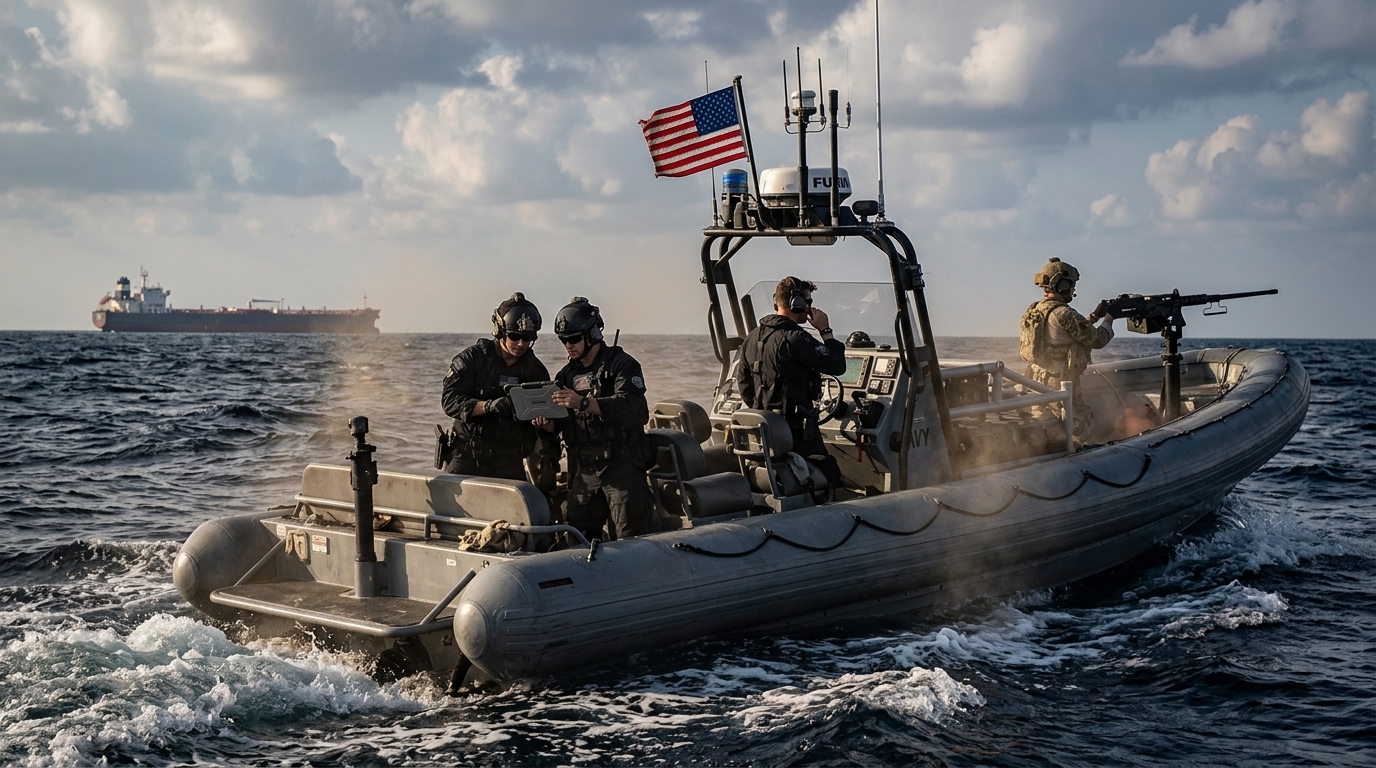
In an era where the global geopolitical chessboard resembles a minefield more than a field of diplomacy, the Strait of Hormuz remains the most critical flashpoint for the global economy. A recent analysis by Goldman Sachs, released in late April 2026, outlines a future characterized neither by total conflict nor full reconciliation, but by a state analysts term a 'sloppy peace.'
This concept, though it sounds somewhat reassuring, masks a labyrinth of half-measures, temporary fixes, and a persistent state of low-intensity friction known as 'maritime trench warfare.' In this environment, technology and artificial intelligence have taken center stage, not just for surveillance but for conducting asymmetric operations that test the resilience of international energy markets.
Maritime Trench Warfare and the Asymmetric Threat
The term 'trench warfare' historically evokes the static and exhausting conflicts of World War I. In its modern iteration in the Strait of Hormuz, we don’t see soldiers in the mud, but rather autonomous underwater drones, smart mines, and cyber-attacks on tanker navigation systems. According to Goldman Sachs, this form of conflict allows involved actors—primarily Iran and regional powers—to exert pressure without crossing the threshold of all-out war.
This 'static' conflict at sea results in a permanent increase in ship insurance costs and continuous volatility in oil prices. The use of AI to detect and intercept these threats has become indispensable, yet simultaneously, the opposing side uses AI to optimize 'saturation' attacks with drone swarms. It is a cat-and-mouse game where the stakes are the flow of 20% of global oil consumption.
The 'Sloppy Peace': Half-Measures in a Polarized World
Goldman Sachs' primary scenario, the 'sloppy peace,' is described as a series of 'half-solutions to all the big issues.' This is not a new nuclear deal or a comprehensive security treaty. Instead, it is a state where sanctions remain but are not strictly enforced, attacks on ships decrease but do not stop, and communication channels stay open only for crisis management.
- Temporary sanction waivers for specific oil volumes.
- Informal 'non-aggression' agreements for commercial vessels under certain flags.
- Limited restoration of diplomatic ties via third parties like Qatar or Oman.
- Tolerance of 'gray' energy exports to maintain global supply.
Paradoxically, this 'sloppy' state serves many players. The West avoids an energy price spike that would fuel inflation, while Iran secures the revenue streams necessary for its internal stability. However, as analysts warn, such a peace is fragile. Any accidental incident or a miscalculation by an autonomous AI system could blow everything apart.
The Role of AI in Crisis Management
At the heart of this geopolitical tension lies technological superiority. Goldman Sachs notes that the ability of the U.S. and its allies to use advanced AI models to predict movements and identify threats in the Strait has shifted the balance. The 'sloppy peace' is maintained partly because technology allows for a form of 'surgical' deterrence.
“We are no longer in the era of great naval battles, but in the era of algorithmic standoffs. Peace today is not signed on paper; it is negotiated through the limits set by surveillance technology,” the report states.
However, reliance on AI carries risks. The automation of responses to an attack could lead to escalation before diplomats have a chance to intervene. A 'sloppy peace' requires human judgment to correct machine errors—something that, in moments of crisis, is often the first thing to be sacrificed.
Conclusion: A New Normal
The Goldman Sachs analysis invites us to accept that the stability of the past in the Strait of Hormuz is gone for good. 'Sloppy peace' is the new normal. For investors and governments, this means that a 'risk premium' will remain embedded in energy prices for years to come. Geopolitics is no longer a problem to be solved, but a condition to be managed.
In this environment, nations with significant maritime interests must play the role of balancers, ensuring trade routes remain open while adapting to the new technological requirements of shipping in the digital age. The future of the Strait is a mirror of the future of our world: complex, unfinished, and constantly on edge.





