

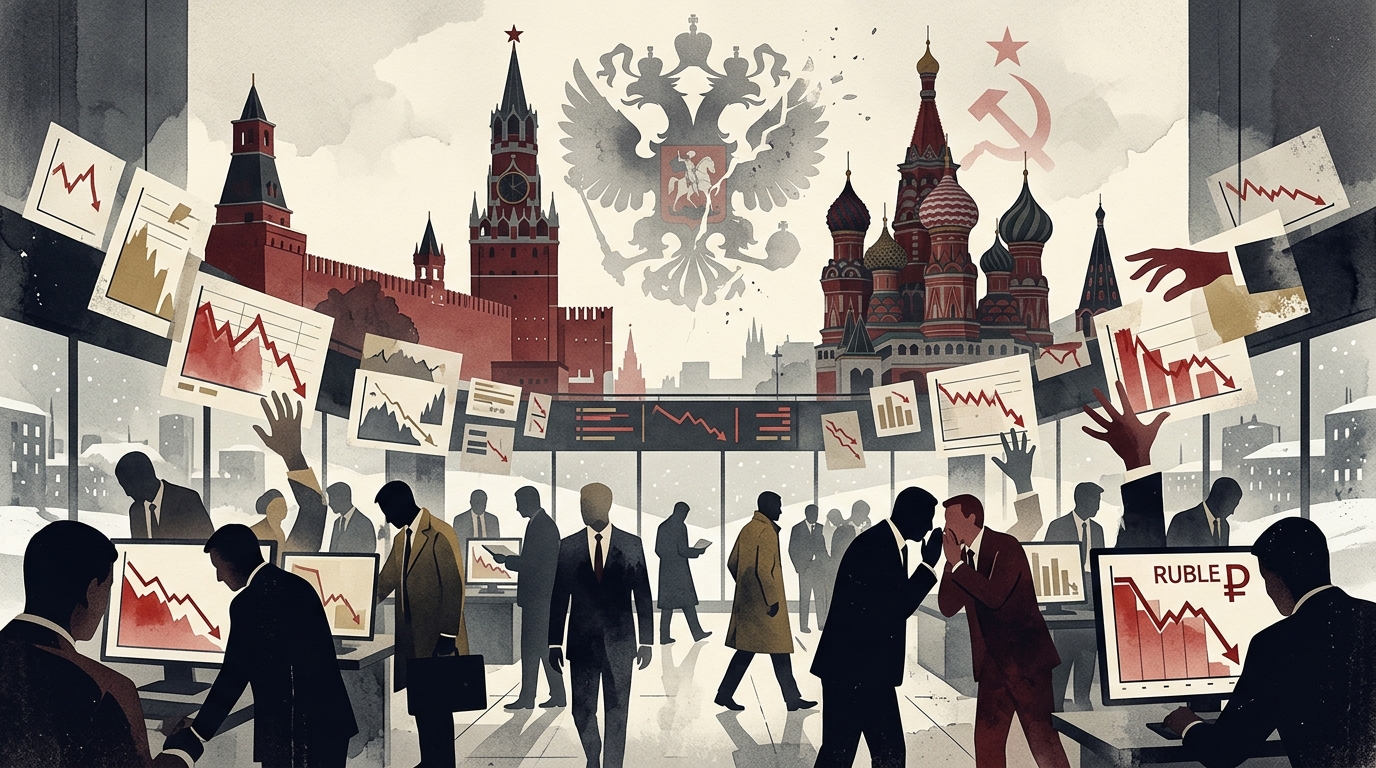
The image of 'Fortress Russia' that the Kremlin has carefully cultivated for four years appears to be crumbling under the weight of harsh reality. In April 2026, the Russian economy is not merely slowing down; it is facing a structural crisis that is forcing even the most loyal establishment figures to sound the alarm. The recent admission by the Economy Minister that liquid reserves have been 'largely used up' marks the end of an era of economic resilience and the beginning of a period of extreme volatility.
The Depletion of the National Wealth Fund
For years, Russia’s National Wealth Fund (NWF) served as the 'cushion' that allowed Moscow to absorb the shocks of international sanctions. However, the continuous bleeding of resources to finance military operations and support state-owned enterprises hit by the blockade has led to a shrinkage of liquid assets to emergency levels. Analysts estimate that the remaining assets are either frozen in the West or held in the form of illiquid shares in domestic giants.
The Economy Minister’s admission was not an accidental leak. It was a preparation of public opinion for the painful decisions ahead: cuts in social spending, tax hikes, and further devaluation of the ruble. When the state ceases to be the guarantor of stability, the social contract proposed by Putin—economic security in exchange for political passivity—effectively ceases to exist.
The 1917 Warning: Historical Irony or Prophecy?
Perhaps the most shocking intervention came from the ranks of the Communist Party. A prominent lawmaker, in a rare moment of public dissent, warned that unless urgent measures are taken, Russia will face a revolution by autumn similar to that of 1917. This reference is not coincidental. In 1917, the combination of an exhausting war, food shortages, and economic collapse led to the overthrow of the Tsar.
Today, conditions show disturbing similarities. Inflation for basic goods has surpassed 25%, while a labor shortage caused by mobilization and the flight of young talent abroad has paralyzed production. Russia is caught in a vicious cycle where the need for more weaponry deprives the economy of the very people who could build them or farm the land.
- GDP decline of 4.5% in the first quarter of 2026.
- Labor shortage reaching nearly 5 million people.
- Depletion of liquid gold and Chinese yuan reserves.
- Rising social unrest in provinces due to inequality with Moscow.
The Trap of Military Keynesianism
Moscow attempted to sustain growth through 'Military Keynesianism,' funneling trillions of rubles into the defense industry. This created an illusion of prosperity as arms factories worked overtime. However, weapons are not consumer goods. They are destroyed at the front and offer no value to the domestic market, while the inflation caused by printing money devours the wages of the citizenry.
"Our economy has turned into a machine that consumes its future to sustain a bleeding present. There is no more fat left to burn," says an independent economic analyst remaining in Moscow.
The Central Bank of Russia, under Elvira Nabiullina, is in a state of desperation. Interest rates have reached staggering heights in an attempt to curb inflation, strangling any private initiative. Without access to international capital markets and with China becoming increasingly cautious about providing credit, Russia is running out of options. The autumn of 2026 promises to be the most difficult for the country since the 1990s, with the crucial difference that this time, the geopolitical isolation is total.





