

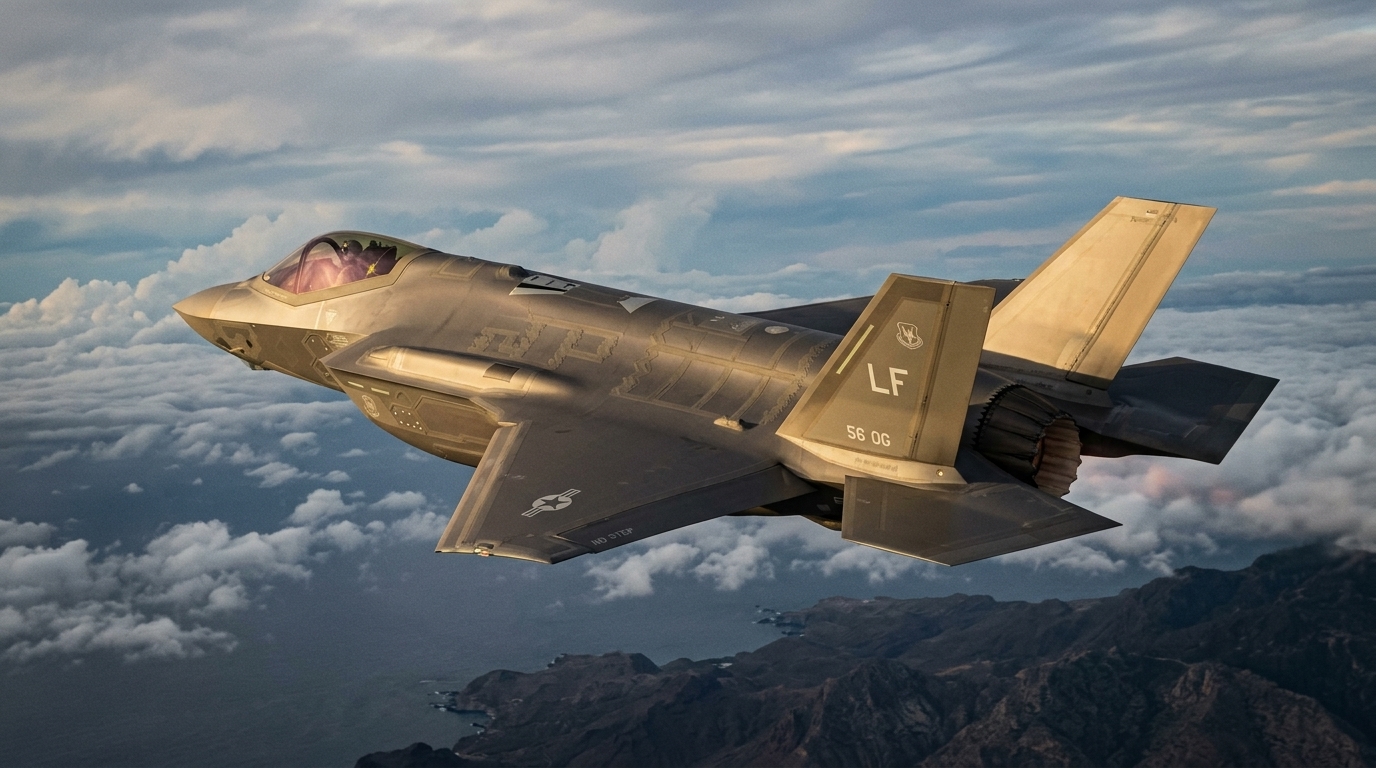
In the complex theater of American foreign policy, where balances in the Eastern Mediterranean often resemble shifting sands, the intervention of Republican Representative Mike Lawler serves as a stark reminder that certain "red lines" remain immovable. In a formal letter addressed to President Donald Trump, Lawler frames the issue of Turkey and the fifth-generation F-35 fighter jets within a new, rigorous context, linking U.S. national security directly to the sovereignty of Greece and Cyprus.
The Shadow of the S-400 and Technological Integrity
The core of Lawler’s argument, shared by many of Ankara’s critics in Congress, remains the presence of the Russian S-400 air defense system within the Turkish arsenal. For Washington, the coexistence of the S-400 and the F-35 is not merely a diplomatic thorn but an existential threat to NATO’s technological superiority. The concern that Russian sensors could "learn" the stealth characteristics of the aircraft remains the backbone of the American embargo.
Lawler emphasizes that despite Turkey's periodic attempts to project the image of a "good ally," its refusal to permanently remove the Russian system from its soil makes it an unreliable partner for the most advanced defense program on the planet. His letter to Trump is not just a reminder of CAATSA sanctions, but a strategic warning that any backtracking would send the wrong signal to both Moscow and U.S. allies worldwide. The F-35 is a privilege reserved for those who align their defense architecture with the West, not those who play both sides.
Greece and Cyprus: The Regional Stability Factor
Moving beyond the technical specifications of military hardware, Mike Lawler emphatically introduces the political dimension of Turkey's regional behavior. He explicitly cites ongoing provocations against Greece and the occupation of northern Cyprus, which has now exceeded half a century. For Lawler, providing F-35s to a nation that threatens the territorial integrity of other NATO allies would be tantamount to rewarding revisionism.
The timing of this intervention is critical. With the Trump administration often favoring a more "transactional" approach to foreign policy, Lawler is attempting to fortify the firewall protecting Hellenic interests. He aims to convince the White House that Turkey has not taken the necessary steps to be welcomed back into the F-35 "family." The mention of Cyprus is particularly poignant, highlighting that the Cyprus issue is not a localized dispute but an international violation that affects global defense partnerships.
Congress as a Bulwark and Ankara’s Strategy
Lawler’s move is not an isolated one. It reflects a broader sentiment on Capitol Hill, where both Republicans and Democrats remain deeply skeptical of Recep Tayyip Erdoğan. Turkey, for its part, has tried to leverage its role as a mediator in various crises—from Ukraine to the Middle East—to negotiate its return to the F-35 program or, at the very least, ensure the smooth delivery of F-16 Viper modernization kits.
However, Lawler’s analysis suggests that the "ticket" for the F-35 is far more expensive than Ankara hopes. It requires a radical shift in Turkey's geopolitical identity, the abandonment of Russian military ties, and a sincere respect for international law in the Eastern Mediterranean. Without these prerequisites, the F-35 will remain a weapon Turkey observes from a distance, while Greece proceeds with its own acquisition, dramatically shifting the balance of power in the Aegean skies.
Conclusion: A Test for the Trump Administration
The Lawler letter places Donald Trump at a crossroads. Will he choose the path of personal diplomacy with Erdoğan, or will he adhere to the institutional line of Congress, which demands guarantees and security? The answer to this question will define the trajectory of the Eastern Mediterranean for the next decade. Lawler’s intervention acts as a compass, indicating that the security of steadfast allies cannot be sacrificed on the altar of fleeting diplomatic maneuvers. It is a call for a principled foreign policy that recognizes the difference between a transactional partner and a strategic ally.




