The long-held assumption of American hegemony in Artificial Intelligence (AI) is facing its most significant challenge to date. According to a comprehensive new report by the Center for Strategic and International Studies (CSIS), Chinese AI models are rapidly closing the performance gap with their U.S. counterparts, such as OpenAI’s GPT-4 and Anthropic’s Claude. This development marks a pivotal moment in the technological cold war between the two superpowers, confounding predictions that Western semiconductor sanctions would leave China permanently lagging.
The DeepSeek Phenomenon and the Efficiency Paradigm
At the heart of this shift is the rise of models like DeepSeek-V3. DeepSeek, a firm originating from the quantitative trading sector, has managed to develop models that not only rival U.S. leaders in benchmarks but do so at a fraction of the training cost. The CSIS report highlights that China has adopted a strategy of "efficiency under duress." Lacking access to NVIDIA’s top-tier processors (such as the H100 and B200) due to export controls, Chinese researchers have doubled down on algorithmic optimization and Mixture of Experts (MoE) architectures.
This pivot has allowed Chinese labs to achieve results that many in Silicon Valley believed were impossible without massive computational scale. DeepSeek’s decision to release its model weights (open-weights) has acted as a catalyst, enabling a generation of developers—both in China and globally—to build upon a foundation that is now comparable to the proprietary models of the West. The report notes that the gap, once estimated at 18 to 24 months, has effectively shrunk to less than six months in critical domains like coding, mathematics, and reasoning.
Sanctions and the Innovation Paradox
One of the most compelling findings from the CSIS study concerns the unintended consequences of U.S. export controls. While sanctions have undoubtedly complicated China’s access to cutting-edge hardware, they have simultaneously forced the Chinese ecosystem to become more resourceful. Instead of relying on brute-force compute, Chinese scientists have pioneered techniques such as low-rank adaptation (LoRA) and advanced data pruning methods.
- Software optimization that compensates for hardware deficits.
- A strategic focus on specialized models for industrial applications.
- State-backed initiatives to create high-quality domestic "data lakes."
Furthermore, China appears to be winning the battle of implementation. While the U.S. remains focused on generalized AI and consumer-facing chatbots, Chinese firms are rapidly integrating AI into manufacturing, logistics, and smart city infrastructure. This "vertical" integration provides a constant stream of feedback data, which is used to refine models further, creating a self-sustaining cycle of innovation that is less dependent on the next generation of GPUs.
Geopolitical Implications and the Western Response
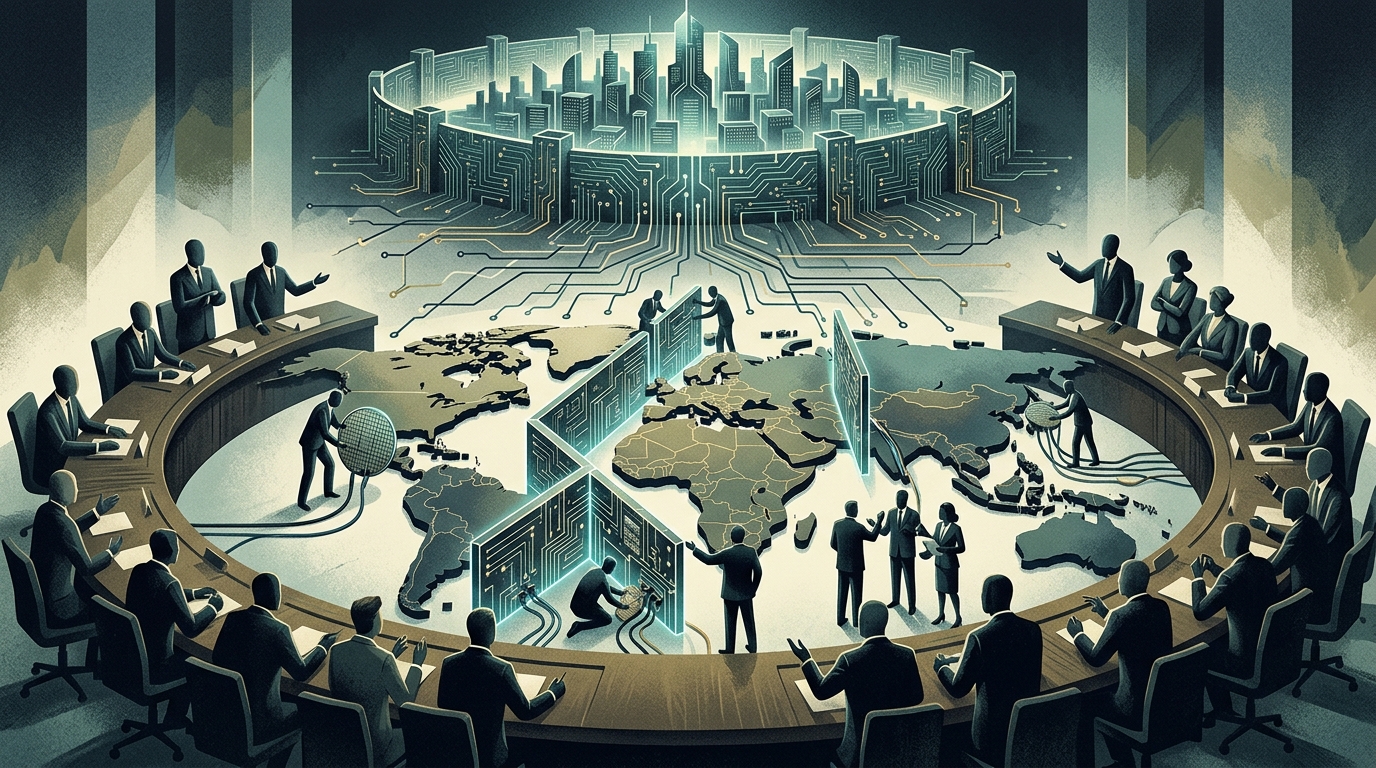
The CSIS report warns that the narrowing gap has profound geopolitical implications. If China can produce high-tier AI with fewer resources, the U.S. strategy of "chokepoint" diplomacy via chip controls may prove insufficient. We are already seeing a shift in Washington’s rhetoric, with some policymakers calling for stricter controls not just on hardware, but on open-source software contributions and cloud computing partnerships.
"The notion that China would remain permanently behind due to chip shortages was a dangerous delusion," the report states. "Innovation is not merely a function of material resources; it is a function of intellectual capital and adaptability."
Looking ahead, the battlefield is expected to shift toward international standards and ethical governance. China is promoting its own version of "sovereign AI," which emphasizes social stability and state oversight, offering it as a viable alternative to developing nations in the Global South. If Chinese models are equally capable and significantly cheaper, the West risks losing its influence over the global digital fabric. The report concludes that the U.S. must increase its investment in fundamental research and strengthen its international alliances, rather than relying solely on defensive trade measures.