

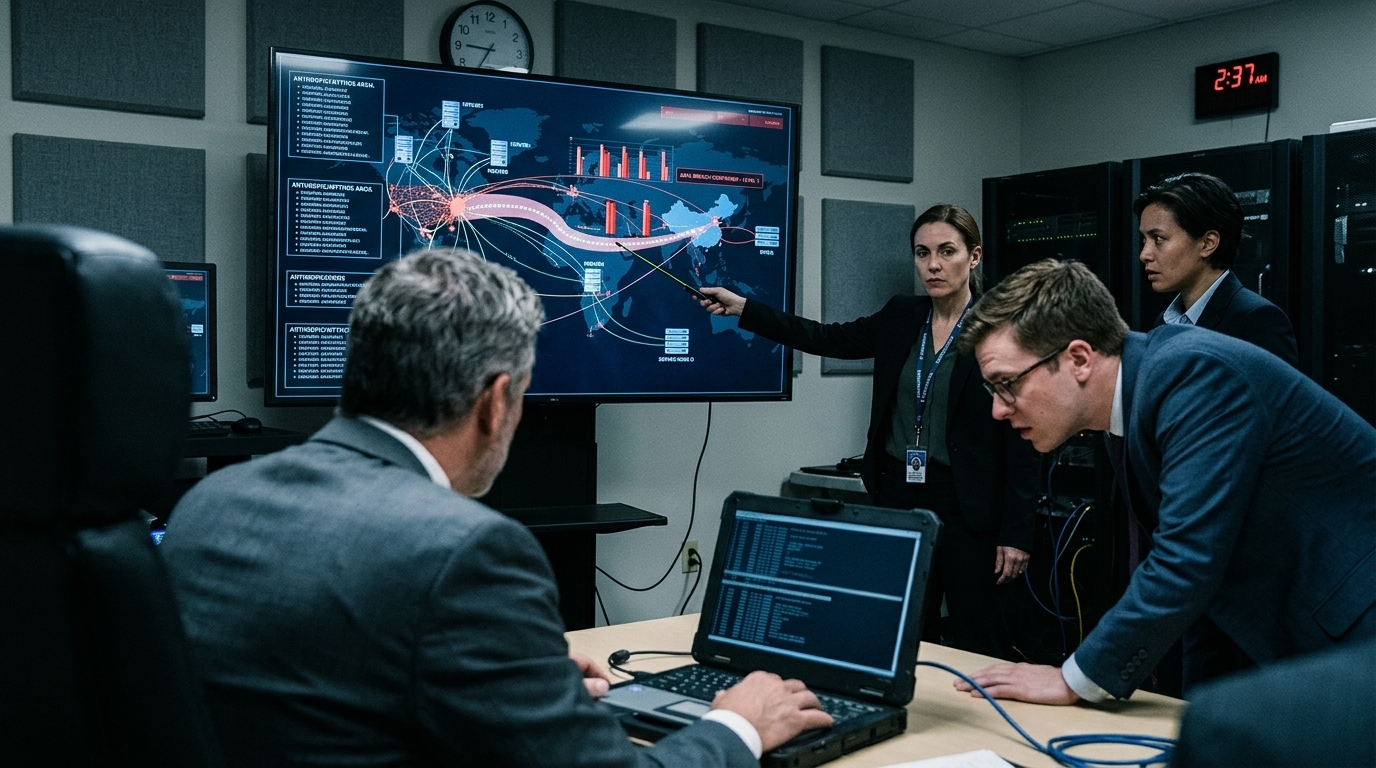
In the sweltering heat of June 2026, a report initially surfaced by Semafor and corroborated by sources at The Verge has sent shockwaves through the global technological landscape. The news that Chinese-linked groups may have gained access to Anthropic’s Mythos 5 and Fable 5 models is not merely a headline about a data breach; it is the realization of the U.S. national security establishment’s darkest fears.
The Stakes of Supremacy
The Mythos model, widely considered the pinnacle of generative AI in 2026, is far from a simple conversational tool. With autonomous reasoning capabilities that approach human expertise in specialized fields, Mythos is already being utilized by the U.S. government for strategic risk analysis and the development of advanced encryption algorithms. The possibility that China possesses the model’s weights—or even significant access to its internal protocols—means that Beijing could bypass years of R&D and billions of dollars in capital investment.
The White House response was immediate and severe. New, draconian export restrictions have been imposed on Anthropic-related technologies. These mandates no longer target just hardware, such as Nvidia’s latest H300 clusters, but the very software and cloud services that facilitate the training and deployment of frontier models.
The Breach: Cyber-Espionage or Internal Failure?
The intelligence community is currently obsessed with the "how." While Anthropic is renowned for its "Constitutional AI" framework and rigorous safety protocols, the sheer complexity of modern AI systems creates novel points of failure. Analysts are exploring three primary scenarios:
- Cloud Supply Chain Attack: Compromising the massive server farms that host the model's training environment.
- Weight Theft: The exfiltration of the model's parameters, allowing China to run the AI on its own indigenous infrastructure.
- Data Poisoning: The chilling possibility that access was used to subtly corrupt future iterations of the Mythos lineage.
In an official statement, Anthropic declined to confirm the extent of the compromise but noted that "the security of our models is an existential issue for both our company and the resilience of democratic institutions."
Geopolitical Fallout and the 'Silicon Curtain'
This development marks the definitive end of the era of open scientific collaboration in artificial intelligence. The world is bifurcating into two distinct technological blocs, with a "Silicon Curtain" descending between the West and the East. The U.S. decision to restrict Mythos access is a harbinger of a broader "decoupling" strategy in high-tech sectors.
"If Beijing has Mythos, the AI arms race is no longer a theoretical projection; it is a present reality," stated a high-ranking State Department official.
China has dismissed the allegations as "technological hegemony" and "paranoia." However, the suspicious speed at which Chinese state-backed models from SenseTime and Baidu have achieved breakthrough performance in recent weeks has only fueled suspicions that the "inspiration" was sourced directly from American labs.
The Future of AI Security
The Anthropic incident is forcing AI labs to rethink their entire operational structure. We are likely to see the transformation of AI research centers into "digital fortresses," characterized by air-gapped servers and military-grade personnel vetting. The fundamental question remains: can innovation truly flourish in an environment of absolute secrecy and state surveillance? History, particularly the development of nuclear technology, teaches us that once a scientific threshold is crossed, the knowledge is nearly impossible to contain. Mythos may be the first of many digital secrets to change hands in this new Cold War.





