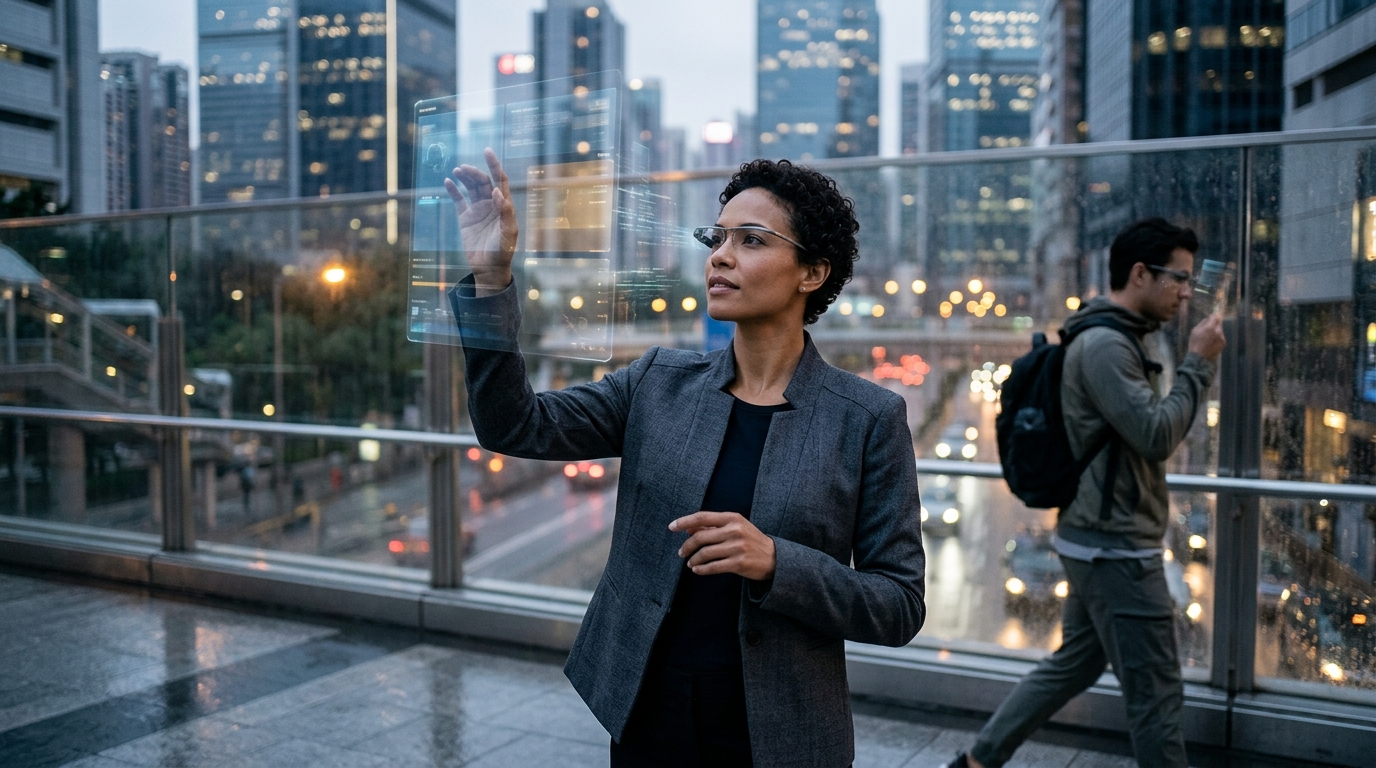
For nearly two decades, the smartphone has been the undisputed sun around which our digital universe orbits. Since the introduction of the first iPhone in 2007, humanity has migrated into a reality where access to global information required a rectangular device in our pockets and a gaze fixed downward. However, as we move through the second half of 2026, the tech industry is whispering—and now shouting—that this era is coming to an end. The prediction that mobile phones will "end" within the next five years is no longer a science fiction scenario, but a strategic direction being carved out by Silicon Valley giants.
The Transition from Device to Model
The primary cause of this tectonic shift is not a lack of hardware innovation, but the explosive evolution of Artificial Intelligence. Until today, the smartphone was essential as the "window" through which we interacted with applications. Today, the advent of Multimodal Large Language Models (LLMs) is changing the paradigm. When AI can understand our voice, see what we see through cameras, and execute complex tasks without needing us to open a specific app, the need for a physical touchscreen begins to wither.
"AI Agents"—autonomous digital programs acting on our behalf—are the next operating system. Instead of scrolling through Instagram or typing on WhatsApp, we will communicate with our digital alter egos via voice or gesture. In this context, the smartphone transforms from a control center into a secondary peripheral, until it is eventually replaced entirely by more discrete devices.
Wearables: Our New Eyes and Ears
The replacement of the phone will not come from another single device, but from an ecosystem of wearable technologies. Augmented Reality (AR) smart glasses, which we are already seeing mature from companies like Meta and Apple, offer an experience where information is projected directly into our field of vision. Imagine walking through downtown London and navigation instructions appearing as arrows on the pavement, while simultaneously receiving summaries of your emails without taking anything out of your pocket.
- Smart Glasses: The primary interface set to replace the screen.
- AI Pins and Pendants: Screenless devices operating purely on voice and laser projection.
- Neural Interfaces: The long-term promise of direct brain-computer connection, rendering any external device obsolete.
The challenge remains social acceptance and battery autonomy. However, with advances in material science and processor miniaturization, 2030 appears to be the milestone where "ambient" computing will prevail over "manual" interaction.
Social and Ethical Implications
The dissolution of the smartphone brings with it a profound change in how we connect as humans. On one hand, there is hope that we will stop being hunched over a screen, returning our attention to the physical world. On the other hand, integrating AI into our senses raises terrifying questions about privacy. If our glasses record everything to assist us, who has access to that data? The transition from "phone in pocket" to "AI in eyes" means surveillance becomes constant and uninterrupted.
"The smartphone was a parenthesis in human history. Our natural state is interacting with our environment, not with a glass rectangle," market analysts suggest.
In conclusion, the next five years will be a period of hybrid coexistence. The phone will remain the "brain" processing data in the background, while we interact with the world through wearables. But as computing power moves to the cloud and 6G network speeds eliminate latency, the physical body of the device will evaporate, leaving behind only the intelligence.