

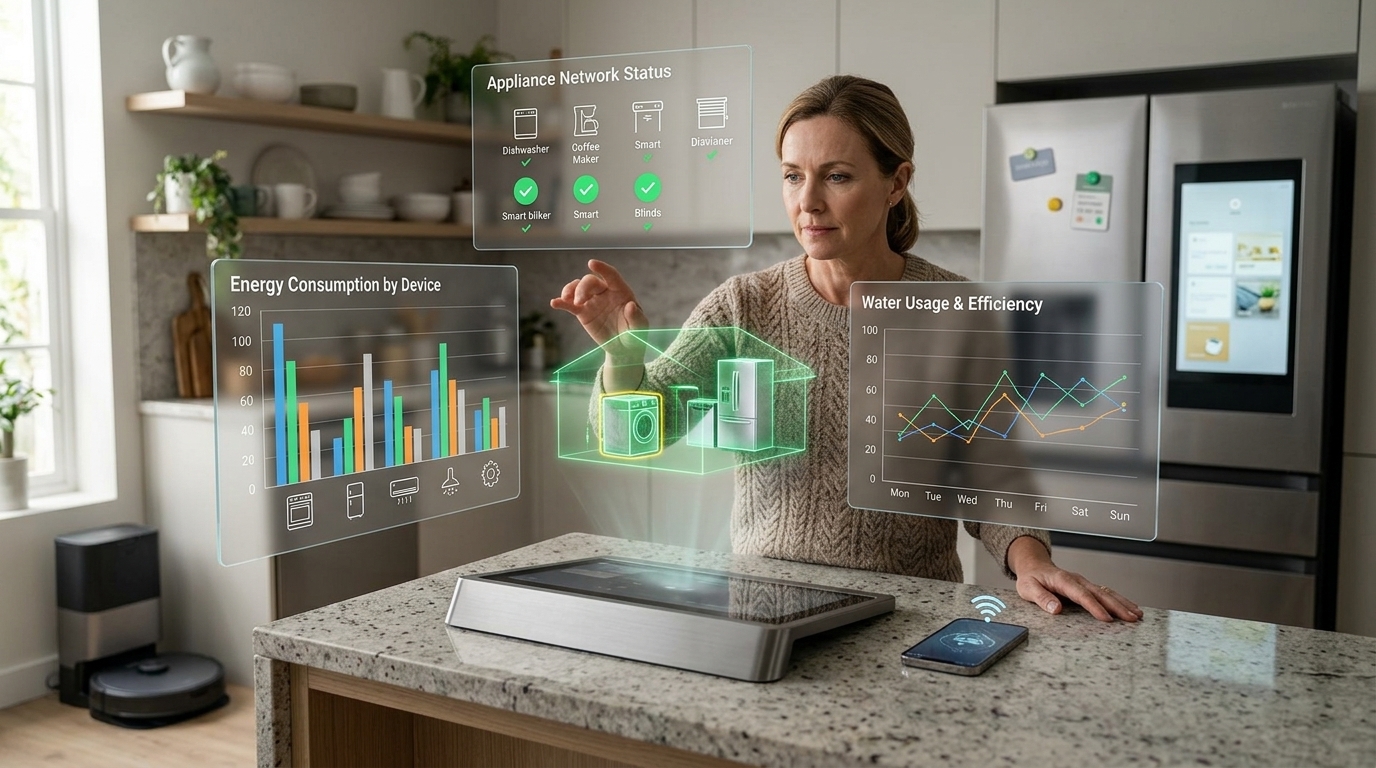
The era when a robot vacuum cleaner simply cleaned the floor is coming to an end. Canadian author Glen Dixon, writing for the Financial Times, describes a future where household appliances will not just execute commands but compose an autonomous digital ecosystem. From fridges that automatically order milk via drone to ovens that memorize culinary preferences, technology promises a frictionless life, but poses a vital question: what remains for the human element?
The Invisible Dialogue of Machines
Soon, our devices will communicate "behind our backs." A smart mattress will inform the coffee maker of a restless night to prepare a stronger brew, while a toaster will alert the fridge when bread is running low. Although current voice assistants like Alexa are limited to basic tasks, experts see super-intelligence approaching. Geoffrey Hinton places its arrival within five to twenty years, while OpenAI's Sam Altman predicts General Artificial Intelligence will be a reality before 2030.
The Value of Human Inefficiency
Dixon cites a story by Kurt Vonnegut to highlight the importance of human connection. Vonnegut preferred walking to a store to buy a single envelope rather than ordering a hundred online, simply to meet people along the way. Machines, no matter how advanced, will never understand these "pointless" yet precious wanderings that define us. The challenge of the future is to allow machines to handle the drudgery without surrendering the space required to remain our "beautiful and flawed" selves.





