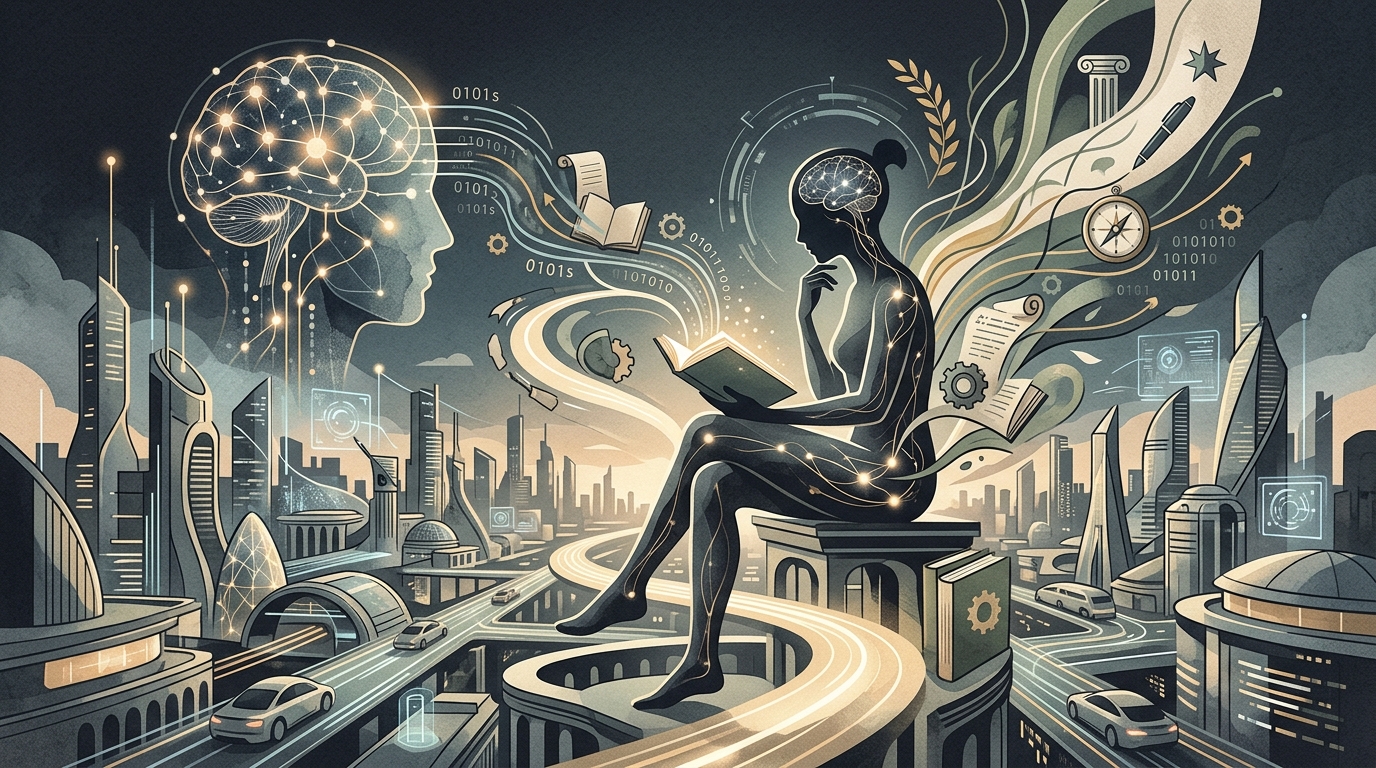
September traditionally marks a new beginning for students. However, in recent years, the return to classrooms has been accompanied by a debate that has evolved into a meme: "I graduated without ChatGPT." Behind the humor lies a fundamental question: is knowledge acquired through traditional struggle more valuable than that provided instantly by AI?
From Possession to Evaluation
For decades, the educational process was built on the possession of information. In a world where data was hard to find, remembering dates, formulas, and definitions was paramount. Today, information is ubiquitous and "cheap." Value is now shifting toward:
- The ability to identify which information is truly needed.
- The critical evaluation of AI-generated answers.
- Understanding the limitations of digital tools.
As Gerasimos Tzivras, a programmer and professor, points out, the fact that a task previously required more time does not necessarily mean it required deeper thought. The challenge is to ensure AI does not become a sophisticated "cheat sheet" to avoid thinking, but rather a tool to deepen it.
The Importance of 'Friction' in Learning
True learning requires time and the acceptance of difficulty. The process of staying with a problem without solving it immediately—making mistakes and trying again—constitutes the necessary "friction" of education. In an environment saturated with stimuli and instant gratification, the risk is losing the capacity for sustained focus.
"This friction is not a flaw of learning. It is part of it."
In a few years, using ChatGPT will likely seem as mundane as using Google does today. The goal is not to strip the new generation of its tools to prove they can work like their predecessors, but to demand more from them precisely because they have more powerful resources at their disposal.