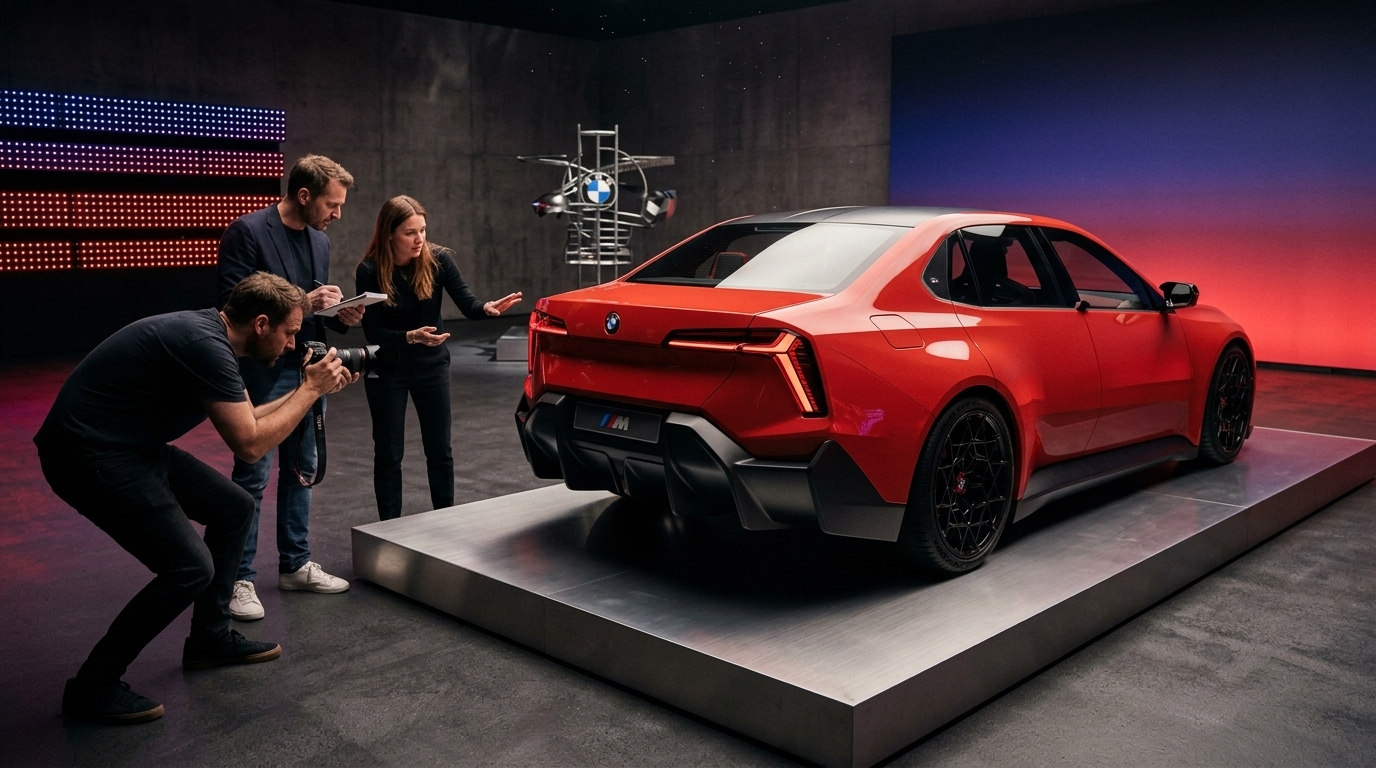
The unveiling of the BMW Neue Klasse M concept at the 2026 Le Mans marks more than just another electric vehicle launch; it is a profound declaration by a legacy automaker that the "soul" of driving can survive the post-internal combustion era. As the automotive world shifts aggressively toward electrification, BMW M—the division that for decades defined performance through its inline-six and V8 engines—is tasked with proving that speed is not merely a matter of sound, but of substance.
The Heart of Joy: A Digital Nervous System for Speed
The centerpiece of the Neue Klasse M is what BMW calls the "Heart of Joy." This is a revolutionary central control unit that replaces traditional, fragmented electronic control units (ECUs). In conventional performance cars, the engine, transmission, and suspension communicate through various channels, creating micro-delays. The Heart of Joy consolidates all vehicle dynamics into a single, high-performance processor.
According to BMW engineers, this allows the car to react in milliseconds, coordinating torque distribution across four electric motors with a level of precision previously thought impossible. The capability for individual wheel torque vectoring means the Neue Klasse M can corner in ways that seem to defy physics, effectively masking the inevitable weight penalty of its battery pack.
Aesthetic Evolution: Minimalist Aggression
Visually, the Neue Klasse M moves away from the controversial oversized grilles of recent years, returning to a more minimalist and elegant approach. The iconic BMW kidneys are now horizontal, integrated into a digital mask that houses advanced LiDAR sensors and cameras. Its silhouette is low-slung, with sharp lines reminiscent of the classic BMW M1, yet optimized for an aerodynamic efficiency that targets maximum range and high-speed stability.
- Extensive use of recycled materials in the cabin to minimize the carbon footprint.
- BMW Panoramic Vision screen projecting information across the entire width of the windshield.
- OLED lighting signatures that adapt based on the selected driving mode.
The interior is devoid of unnecessary buttons, focusing entirely on the driver's experience. BMW asserts that the Neue Klasse M is not just a fast gadget, but a precision instrument. The integration of AI allows the vehicle to "learn" the driver’s style, adjusting throttle response and suspension damping in real-time to suit the environment.
The Physics of Performance: Quad-Motors and Megawatts
The power output of the Neue Klasse M reaches one megawatt, which translates to approximately 1,341 horsepower. This figure places the concept firmly in the hypercar category. However, the greatest challenge for BMW is not top speed, but endurance. At Le Mans, durability is everything. The new 800V architecture enables ultra-fast charging, with the company promising that 10 minutes of charging can provide up to 300 kilometers of range.
"The Neue Klasse M is not a transition to electric; it is the redefinition of BMW M for the next century," stated the Head of M Division during the reveal.
The use of sixth-generation cylindrical battery cells offers 20% higher energy density compared to current models. This translates to less weight and better packaging, allowing the center of gravity to remain extremely low, which is crucial for maintaining the agile handling characteristics associated with the M badge.
Conclusion: The Munich Gamble
The BMW Neue Klasse M is a bold gamble. At a time when Chinese manufacturers like BYD and Xiaomi are threatening European dominance with more affordable and technologically advanced EVs, BMW is doubling down on heritage and emotion. If the Neue Klasse M can successfully transmit the feel of a "true" M car without the roar of a V8, the future of the German automotive giant looks secure. The battle for supremacy in high-performance electrics has only just begun, and BMW has shown it has the technological arsenal to lead the charge.