

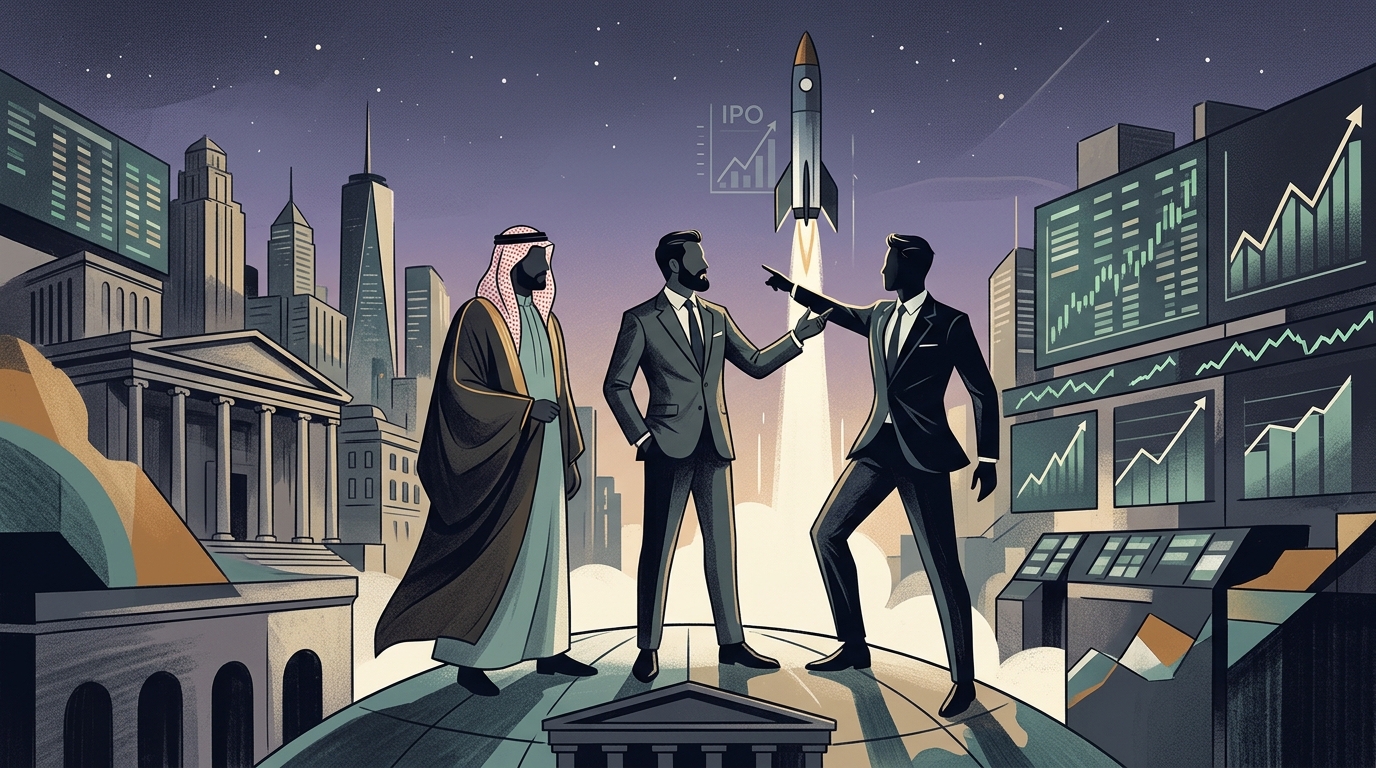
June 12, 2026, will be etched in the annals of global markets as the day space ceased to be a "frontier for the few" and became the ultimate pillar of the world economy. The long-awaited Initial Public Offering (IPO) of SpaceX was not merely financial news; it was the formalization of a new world order. With a valuation reaching an astronomical $1.8 trillion, Elon Musk’s company has surpassed giants like Amazon and Alphabet, placing its founder on the threshold of a previously unthinkable distinction: the world’s first trillionaire.
Yet, behind the headlines focused on Musk lies a network of powerful allies and strategic investors who have seen their capital multiply geometrically. From the palaces of Riyadh to the boardrooms of Silicon Valley, the success of SpaceX represents the culmination of a decade-long effort to dismantle the aerospace industry’s status quo.
Elon Musk and the Path to One Trillion
For Elon Musk, the SpaceX IPO is the ultimate vindication. Holding approximately 42% of the company and maintaining majority voting control, his personal net worth surged by hundreds of billions in a single trading session. Wall Street analysts point out that SpaceX is no longer just a rocket company; it is an infrastructure conglomerate. Starlink, the satellite internet service, serves as the "cash cow" that justifies the lion's share of the valuation, providing connectivity to every corner of the globe.
"We aren't just witnessing the rise of a company; we are seeing the creation of a next-generation monopoly," states a senior financial analyst at Goldman Sachs. SpaceX’s ability to reuse rockets has slashed the cost of access to space by 90%, creating an insurmountable barrier for competitors like Blue Origin and United Launch Alliance.
The Saudi Prince and the 'Kingdom Holding' Strategy
One of the quietest yet most significant winners is Prince Alwaleed bin Talal of Saudi Arabia. Through Kingdom Holding Company, the prince has been an early backer of Musk’s ventures, including the tumultuous acquisition of Twitter (now X). His stake in SpaceX, bolstered during previous private funding rounds, is now valued in the tens of billions of dollars.
This investment is not merely financial; it is geopolitical. For Riyadh, the connection to SpaceX is a core component of the "Vision 2030" initiative to diversify the economy away from oil. Access to SpaceX’s technology provides Saudi Arabia with a strategic advantage in the Middle East, particularly in telecommunications and national security sectors.
The Jack Dorsey Connection and the X Ecosystem
Intriguingly, Jack Dorsey, co-founder of Twitter, also appears on the list of major winners. Although his relationship with Musk has been volatile, his decision to roll over his equity during the Twitter-to-X transition and his participation in investment vehicles linked to SpaceX have paid off handsomely. The "Musk Ecosystem" functions as a closed loop where the success of one venture feeds the other.
According to sources close to the company, many of X’s original investors used their stakes as collateral to secure preferential access to SpaceX shares prior to the IPO. This web of interests has sparked debate among regulators, but for shareholders, the result is undeniable: a massive transfer of wealth to those who believed in Musk’s vision when others were skeptical.
Global Market Implications
The SpaceX IPO changes the game for institutional investors as well. Pension funds and mutual funds that managed to secure allocations are seeing their returns skyrocket. However, the concentration of such immense power and wealth in the hands of a few individuals and a sovereign state like Saudi Arabia raises critical questions regarding the control of space infrastructure.
"Space is the new Wild West, and SpaceX is the owner of the railroads," Fortune aptly notes.
With its public listing, SpaceX will now be required to disclose its financial data, offering a rare glimpse into Starlink's profitability and the development costs of Starship. This transparency may be the only "counterweight" to Musk’s dominance, as shareholders will now demand consistent results rather than just promises of colonizing Mars.





