In the heart of the North Aegean, a place historically associated with isolation and exile, Agios Efstratios (Ai Stratis), is transforming into a global beacon of the green transition. With the completion of one year of full operation of the Special Pilot Project "Ai Stratis – Green Island," the data emerging leaves no room for doubt: the island has managed to cover its energy needs at a rate reaching 98% from Renewable Energy Sources (RES). This achievement places Greece at the forefront of European energy policy, offering a realistic model for the decoupling of non-interconnected islands from fossil fuels.
The Technological Architecture of Autonomy
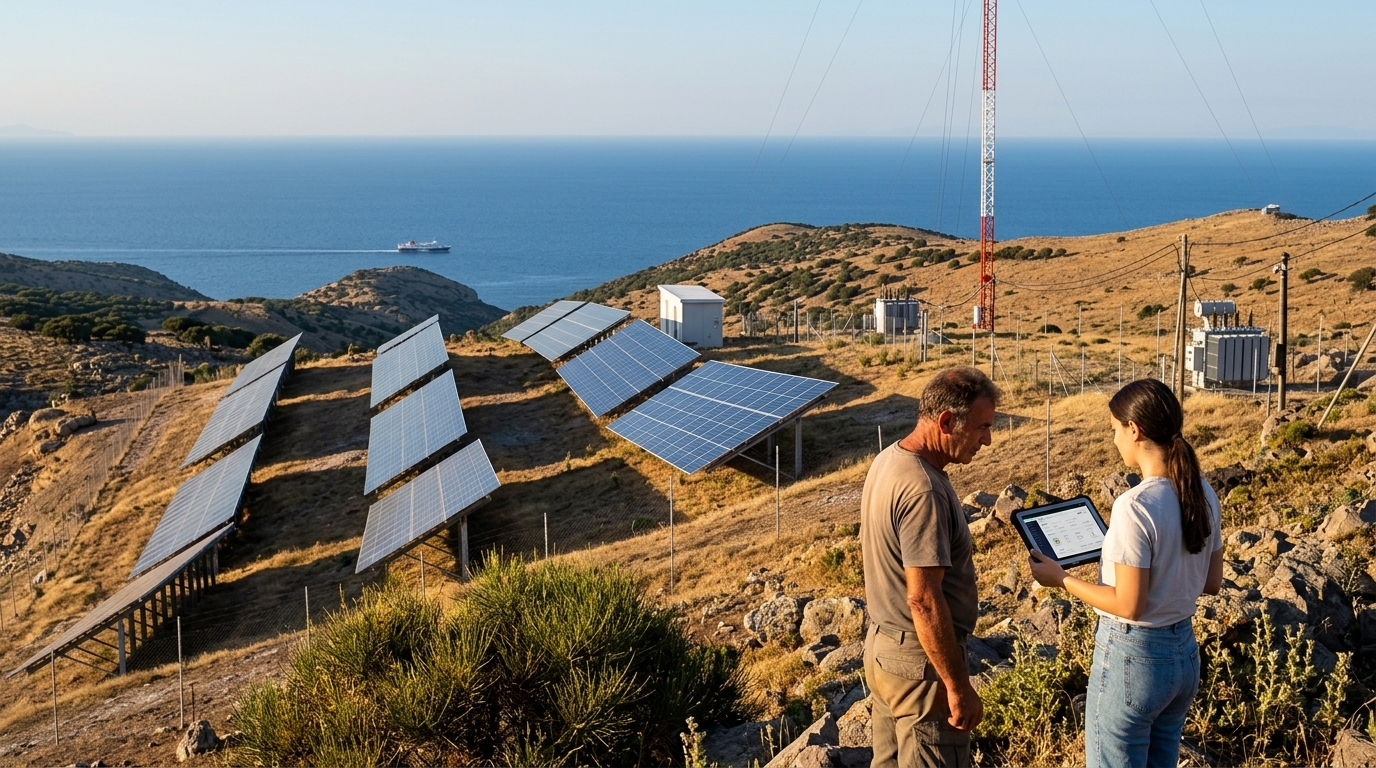
The success of Ai Stratis is not based on a single technology but on the synergistic operation of a complex hybrid system. The core of the project includes a 900 kW wind turbine and a 226 kW photovoltaic station. However, the true innovation lies in managing the intermittency of RES. To address the problem of fluctuating production (when the wind doesn't blow or the sun doesn't shine), an energy storage system with batteries with a capacity of 2.56 MWh was installed.
This system is complemented by a pioneering district heating infrastructure, which utilizes excess electricity from RES to produce heat. Through thermal storage tanks and a network of pipes running through the settlement, residents enjoy free heating and hot water. This holistic approach converts electrical energy into thermal energy, drastically reducing the need for imported heating oil, which traditionally burdened the island's cost of living and environment.
Results that Inspire: From Theory to Practice
During its first year of operation, the project proved its reliability under real-world conditions. RES penetration into the island's electrical system exceeded all expectations, reaching 98% during peak periods. This means that the diesel generators of the local PPC (DEI) station, which previously worked incessantly, now remain shut down for most of the year, operating only as a safety backup.
- Reduction of CO2 emissions by thousands of tons annually.
- Significant resource savings from the non-consumption of diesel.
- Improvement in residents' quality of life through district heating.
- Enhancement of energy security in a sensitive geographical area.
TERNA ENERGY, which implemented the project, emphasizes that Ai Stratis is now a "living laboratory." The experience gained from managing the microgrid is invaluable for expanding the model to other Aegean islands under the GR-eco Islands initiative.
Challenges and the Future of "Green Islands"
Despite the undeniable success, the transition is not without challenges. Maintaining such systems in remote areas requires specialized personnel and continuous monitoring. Furthermore, the legal and regulatory framework for hybrid systems in Greece is still evolving, which sometimes delays the replication of similar projects. However, Ai Stratis shows the way toward energy democracy: the ability of a local community to produce and consume its own clean energy.
"Ai Stratis is no longer just a point on the map, but the symbol of a Greece that can innovate and lead in addressing the climate crisis," state officials from the Ministry of Environment and Energy.
In the future, integrating technologies such as green hydrogen or the electrification of maritime transport could lead to 100% autonomy. For now, Ai Stratis's 98% is a loud message to Europe: the green transition is feasible, economically viable, and socially just, provided there is vision and technological boldness.