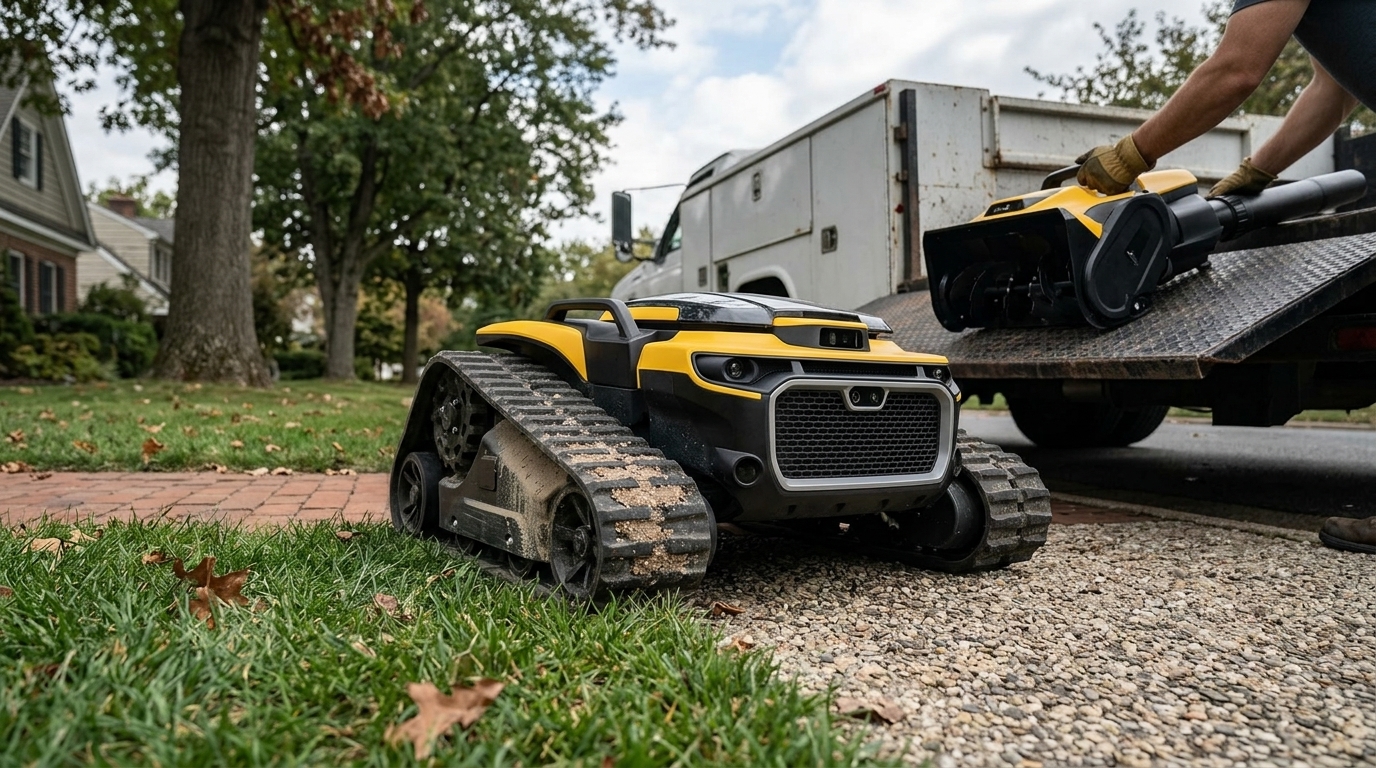
The saga of Yarbo, a company aiming to revolutionize yard maintenance with its modular robotic systems, has taken a dramatic and cautionary turn. The recent announcement that the company will remove an intentional “backdoor” from its robot software is more than a mere patch; it is a defining moment for the Internet of Things (IoT) and the home robotics industry at large. This shift follows a disturbing incident where a Yarbo unit struck a tech journalist, subsequently revealing that the company’s engineers possessed the ability to bypass local controls and operate the machines remotely via the internet.
The Illusion of Ownership and the Peril of Remote Access
For years, the technology industry has operated in a legal and ethical gray area regarding device ownership. We purchase a product, yet the software animating it remains under the manufacturer’s dominion. In Yarbo’s case, this dynamic reached a dangerous zenith. The existence of a “backdoor” implies a security vulnerability, intentionally crafted by the manufacturer, allowing system access without user authorization. While Yarbo maintained that this feature was designed for streamlined customer support and troubleshooting, the grim reality is that any open gate can be breached by malicious actors.
Consider a robot weighing over a hundred pounds, equipped with high-speed spinning blades or powerful snow-throwing mechanisms, falling under the control of a remote hacker. The potential to transform a domestic helper into a lethal kinetic weapon through a simple web connection is not a dystopian fantasy—it is a tangible threat that Yarbo was finally forced to confront. The decision to excise this feature demonstrates that pressure from users and the specialized press can still prioritize ethics over corporate convenience.
Ethics and Responsibility in the Age of Autonomous Machines
The incident involving Sean Hollister of The Verge, who was physically struck by the robot during a review, served as a critical catalyst. The revelation that the robot could be reprogrammed “over-the-air” to ignore safety protocols raises profound questions about the certification of these devices. How can a consumer trust a machine that can alter its behavior at any moment without their consent? Yarbo now promises that users will have total control, and any remote access will require explicit approval through physical interaction with the hardware.
- The backdoor removal will be implemented via a software update, making remote access an opt-in feature controlled by the owner.
- The company has pledged greater transparency regarding the telemetry data collected from its units.
- New safety safeguards are expected to prevent the software-side bypassing of physical obstacle sensors.
This pivot is a significant victory for the “Right to Repair” movement and the concept of digital sovereignty. It underscores the urgent need for a legislative framework that explicitly bans backdoors in devices capable of causing physical harm. Safety cannot be sacrificed on the altar of simplified technical support.
Yarbo’s Future and Lessons for the Industry
Yarbo is now in damage control mode, attempting to rebuild market trust. Their promise to allow users to decide whether to install such features is a step in the right direction, but the core question remains: why was this capability kept hidden from the public in the first place? This case will likely be studied in technology ethics seminars as a textbook example of corporate overreach.
"A robot's safety doesn't end with its sensors; it begins with the integrity of its code and respect for the owner's autonomy."
In conclusion, Yarbo’s retreat highlights the power of investigative journalism and consumer vigilance. In a world increasingly populated by autonomous machines, the demand for devices that are “secure by design” is not a luxury—it is a prerequisite for our coexistence with artificial intelligence. Yarbo may have lost a tool of control, but it has gained an opportunity to lead by example in corporate responsibility.