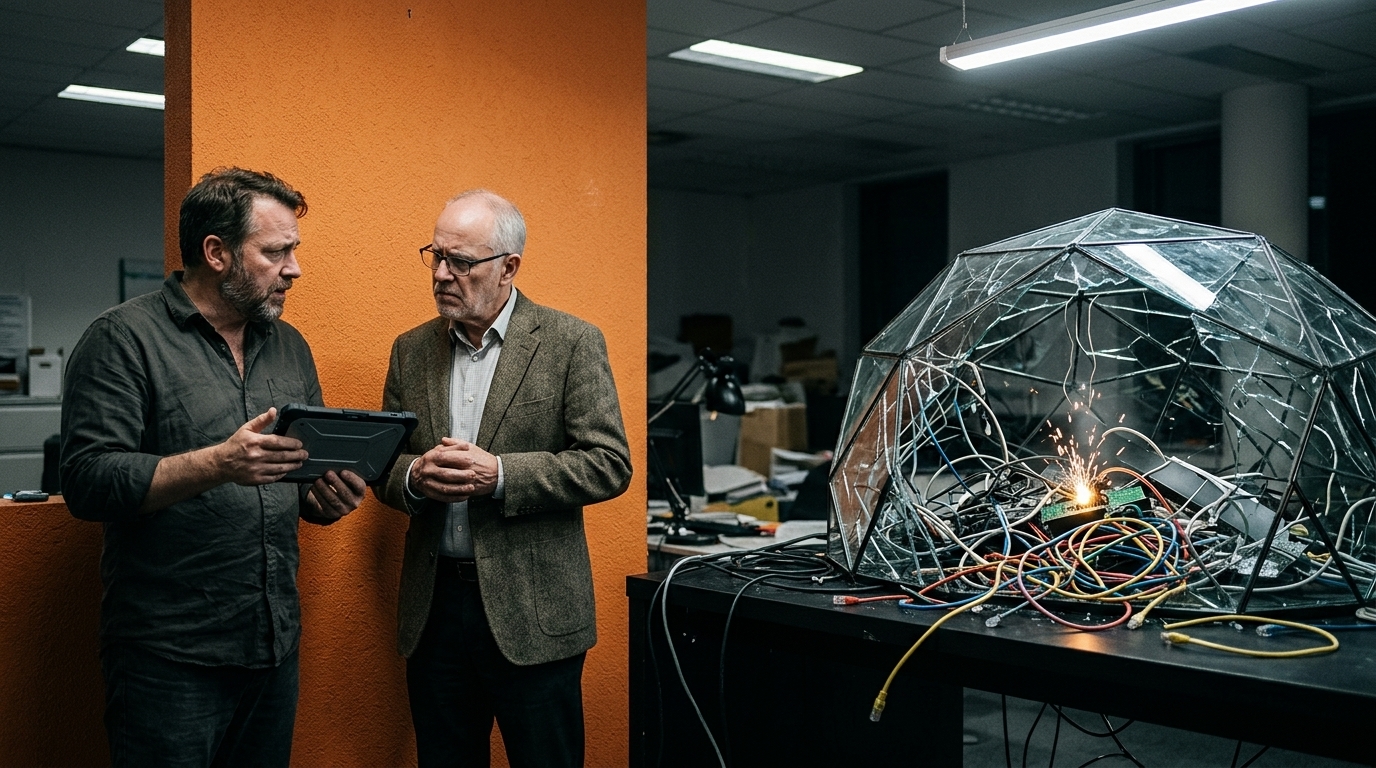
The legal profession, a field traditionally anchored in precision, historical documentation, and the indisputable validity of sources, is facing an existential crisis in the age of generative artificial intelligence. A recent U.S. Appeals Court decision to sternly rebuke a lawyer for submitting a brief containing 'fake and hallucinated' case citations is not merely an isolated incident of professional negligence; it is a clarion call for the future of jurisprudence.
The Anatomy of an Algorithmic Deception
The incident, brought to light by Reuters, involves the filing of legal documents where artificial intelligence—likely a Large Language Model (LLM)—was utilized to draft arguments. The crisis erupted when the court attempted to verify the citations to previous judicial decisions (case law), only to discover that these cases simply did not exist. They were 'hallucinations' of the algorithm, which, in its attempt to satisfy the user's request for legal substantiation, fabricated convincing case names, docket numbers, and rulings that appeared entirely plausible.
The court's response was scathing: "The submission of fabricated citations is an affront to the court and undermines the integrity of the judicial system." The attorney, who claimed ignorance regarding the AI's ability to fabricate falsehoods, now faces disciplinary proceedings that jeopardize his professional license.
The Illusion of Authority
The fundamental issue with LLMs, such as ChatGPT or Claude, is that they are not truth-seeking engines but 'stochastic parrots.' They predict the next word in a sequence based on statistical probabilities. When a lawyer asks for a ruling that supports a specific position, the AI will 'create' it if it cannot find it, because its primary objective is linguistic coherence, not factual accuracy.
- Hallucinations are not bugs in the system; they are inherent features of how these models function.
- The lack of critical human verification transforms a helpful tool into a weapon of misinformation.
- Legal liability always rests with the signing attorney, regardless of the tools employed.
"Technology may assist in drafting, but the responsibility for truth cannot be outsourced to an algorithm," stated the presiding judge.
The Urgent Need for New Ethical Frameworks
This incident accelerates the global debate on establishing strict rules for AI usage in courtrooms. Already, several U.S. federal judges have issued standing orders requiring lawyers to explicitly disclose if AI was used and to certify that every citation has been human-verified. In Europe, the conversation is moving in a similar direction, with the AI Act setting strict frameworks for 'high-risk' applications, which include the administration of justice.
Ethically, the issue touches the very core of the legal profession. If a lawyer uses AI to save time but bills the client for the same hours of labor, while simultaneously risking the case with false data, we are facing not just a technical error but a severe ethical breach. Justice requires human judgment, empathy, and, above all, truth. The automation of legal research without oversight is a path that leads to the erosion of public trust in institutions.
Conclusion
The Reuters report serves as a harsh lesson for the global legal community. Artificial intelligence is here to stay, and its capabilities in analyzing vast amounts of data are undeniable. However, blind faith in algorithmic outputs without necessary human verification is a dangerous hubris. Legal science must evolve, but never at the expense of the truth.