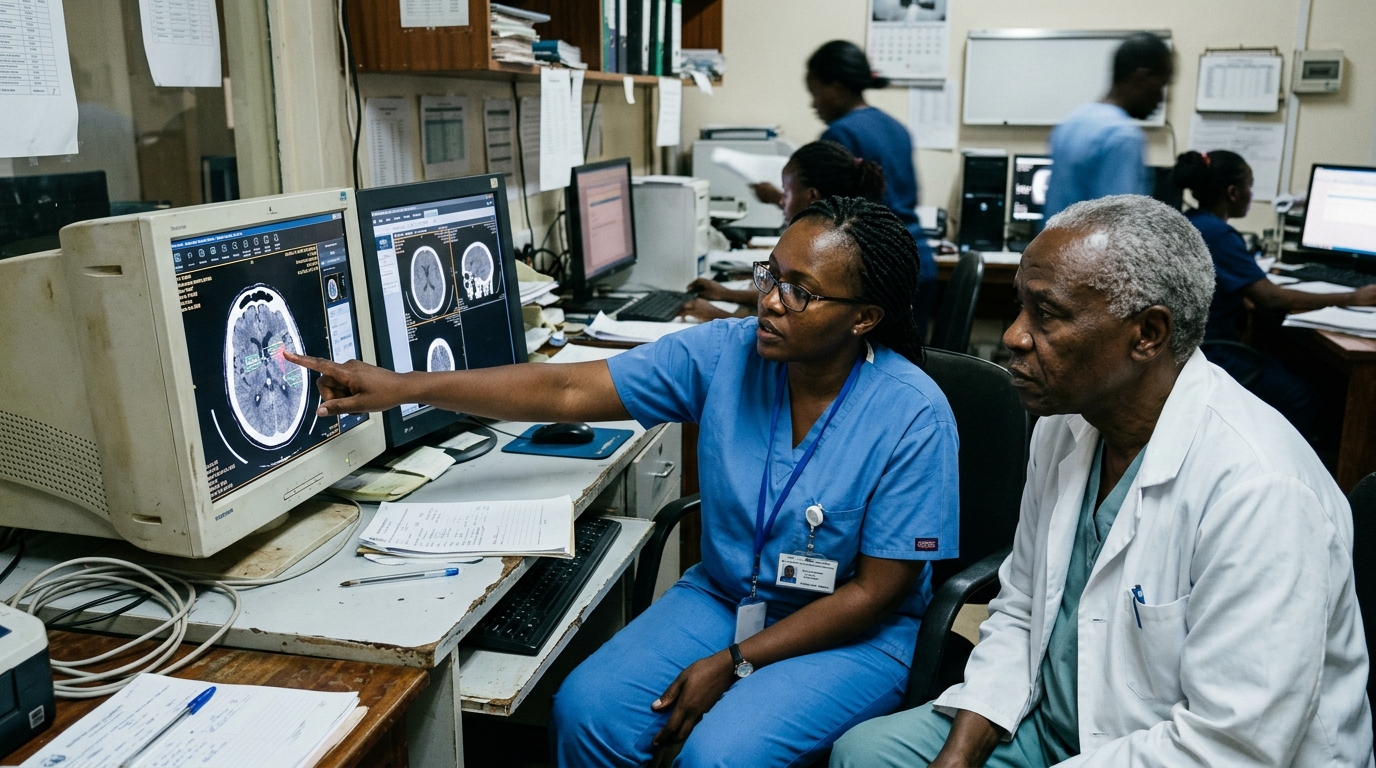
Medicine stands at a critical crossroads. As we navigate the summer of 2026, Artificial Intelligence (AI) is no longer a futuristic promise in radiology labs; it is a daily tool saving lives. However, a stark report from Radiology Business sounds an urgent alarm: access to these cutting-edge technologies is desperately uneven. Instead of acting as the great equalizer that brings world-class diagnostics to every corner of the globe, AI risks becoming a privilege of the few, deepening the chasm between wealthy urban centers and underserved rural communities.
The Cost of Innovation and the 'Digital Wall'
The primary barrier to universal AI adoption in radiology is both economic and structural. Advanced algorithmic systems capable of detecting microscopic tumors or early signs of neurodegenerative diseases require massive investments in IT infrastructure, cloud computing power, and specialized personnel. For a large university hospital in London or New York, these costs are manageable. For a small provincial hospital or a community clinic in a developing nation, the price tag is prohibitive.
This financial asymmetry creates what analysts call 'algorithmic inequality.' Patients fortunate enough to live near technologically advanced hubs benefit from faster diagnoses, fewer errors, and more personalized care. Conversely, residents of remote areas continue to rely on traditional methods which, while reliable, lag in speed and precision compared to AI-augmented systems. The result is a silent public health crisis where geography determines survival rates.
The Data Trap and Algorithmic Bias
Beyond the economic aspect lies a deeper ethical issue: data representativeness. Most radiology algorithms are trained on datasets sourced from large Western clinics. This means AI 'learns' to recognize pathologies based on specific demographic and genetic profiles. When these systems are applied to underrepresented populations—such as minorities or those in the Global South—their accuracy can drop significantly.
- Lack of diversity in training data leads to misdiagnoses for specific ethnic groups.
- Resource-poor hospitals often use older X-ray or MRI machines that produce lower-quality images, which algorithms may fail to interpret correctly.
- Reliance on cloud-based AI requires stable, high-speed internet, which remains a luxury in many rural regions.
This 'infrastructure bias' means that even if an algorithm were donated to a poor hospital, the lack of modern hardware would render it useless or, worse, dangerously inaccurate.
Pathways Toward Equitable Distribution
The solution is not to slow down technological progress, but to demand active intervention from governments and international bodies. Experts suggest implementing 'digital solidarity' policies, where profits from AI in affluent markets help subsidize the installation of systems in underserved regions. Furthermore, developing 'lightweight' AI models that can run on legacy hardware without the need for expensive cloud infrastructure is vital for closing the gap.
"Health is a fundamental human right, not a luxury subscription service. If we allow AI to become a tool of segregation, we have failed as a society," the report emphasizes.
In Europe, the EU AI Act is beginning to set strict frameworks for the ethical use of AI in healthcare, demanding transparency and bias audits. However, legislation alone is insufficient. A systemic shift is required in how we perceive medical technology: moving from a commercial product to a public good. Only then can AI-enhanced radiology fulfill its promise of healthcare without borders or exclusions.