

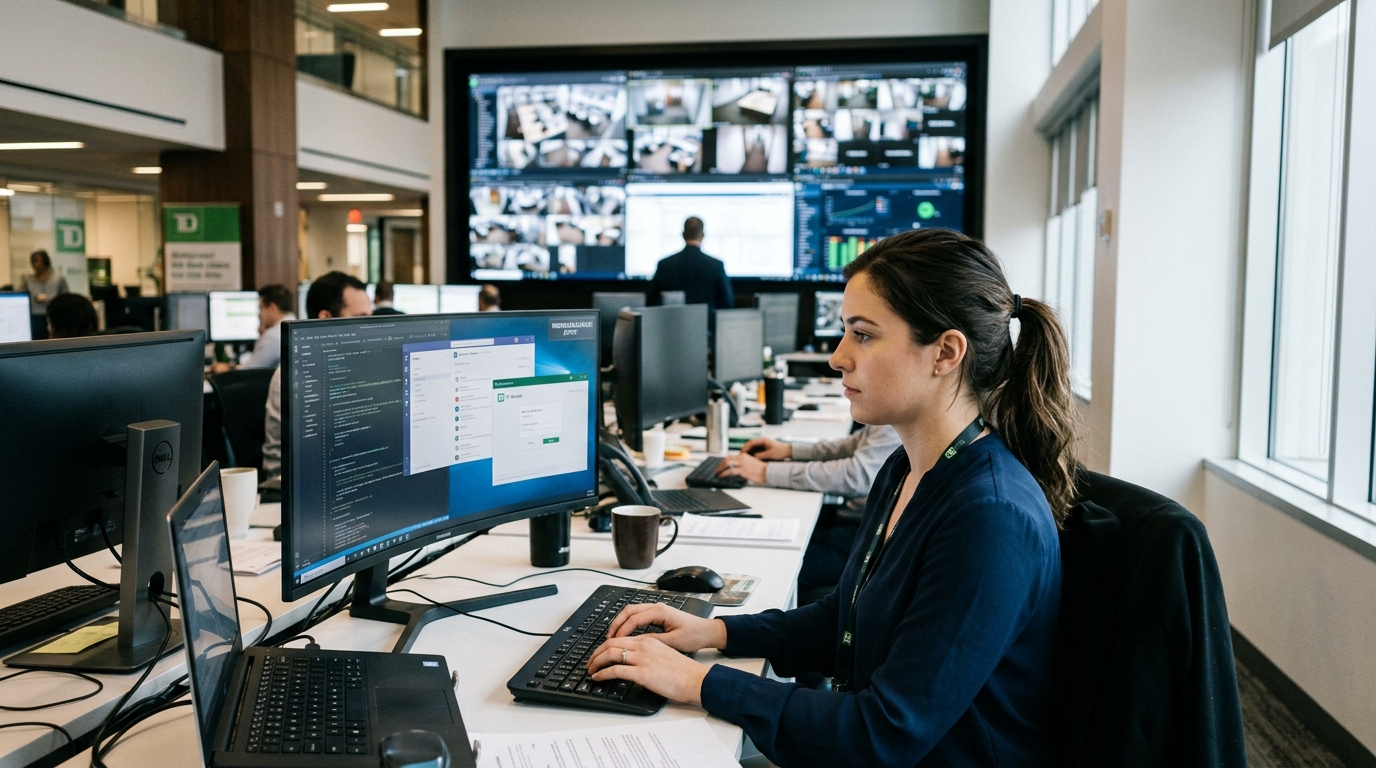
In an era where the lines between professional and personal life are becoming increasingly blurred, news that Toronto-Dominion Bank (TD), one of Canada's largest lenders, is implementing employee monitoring software is sending shockwaves through the corporate world. According to an exclusive report by Reuters, the bank has informed certain segments of its staff that their activities will now be recorded via specialized software, a move many interpret as the definitive triumph of "bossware" in the banking industry.
The Digital Shadow: What is Actually Being Tracked?
The implementation of such systems is not merely a technical upgrade but a fundamental shift in management philosophy. The software adopted by TD Bank has the capability to record not just log-in and log-out times, but also the intensity of work through mouse movements, keystrokes, and the time spent on specific applications or websites. This is a form of algorithmic management, where the employee ceases to be evaluated based on results and starts being judged based on continuous "digital presence."
Bank management argues that the goal is to improve efficiency and ensure compliance with the strict regulations of the financial sector. However, critics point out that this approach transforms the office—whether physical or digital—into a modern "Panopticon," where the sense of constant surveillance leads to increased stress and burnout. TD Bank, for its part, has attempted to downplay concerns, emphasizing that the use of the software concerns specific groups and aims for better resource allocation.
The Legal Landscape and Ontario's Policy
This move by TD does not happen in a vacuum. In Canada, specifically in the province of Ontario, legislation requires businesses with more than 25 employees to have a written policy regarding electronic monitoring. While the law does not prohibit monitoring, it obliges employers to be transparent about what they are monitoring, how they are doing it, and for what purpose. This transparency, however, does not guarantee privacy protection; it merely legalizes the intrusion into it.
- Transparency vs. Privacy: Informing employees is the first step, but the lack of an opt-out choice makes consent formal rather than meaningful.
- Algorithmic Bias: Monitoring systems often fail to understand the nature of creative or analytical work, which does not always require constant typing.
- Data and Security: Collecting vast amounts of data on employee behavior creates new risks for cyberattacks and leaks of personal information.
The Erosion of Trust and the Future of Work
The greatest victim of this trend is trust. The relationship between employer and employee, traditionally based on a silent contract of mutual respect, is being replaced by a relationship of overseer and overseen. As experts in occupational psychology note, when employees feel that every move they make is being recorded, they tend to become less innovative and more focused on meeting the "metrics" imposed by the software.
"Monitoring is the opposite of autonomy. And without autonomy, work loses its meaning and turns into a mechanical survival process," says a labor relations analyst.
As TD Bank moves forward with this plan, other banks and major corporations globally are closely watching the reactions. If the move is deemed successful in terms of productivity, it is certain that we will see a broader adoption of such practices. The stake is not just the performance of a bank, but the very quality of the human experience in the 21st century. Artificial Intelligence and Big Data offer tools that can either free the worker from routine or imprison them in a digital cage of absolute discipline.
Conclusion: A Point of No Return?
TD Bank's decision marks a milestone for the services sector. It highlights the need for a new social contract that protects the dignity of the worker in the digital age. Technology should act as an assistant, not a jailer. If monitoring becomes the norm, then the concept of "free labor" will need radical redefinition. The question remains whether employees and regulators will set limits on this indiscreet intrusion, or if we will silently accept our transformation into mere data points on a corporate dashboard.





