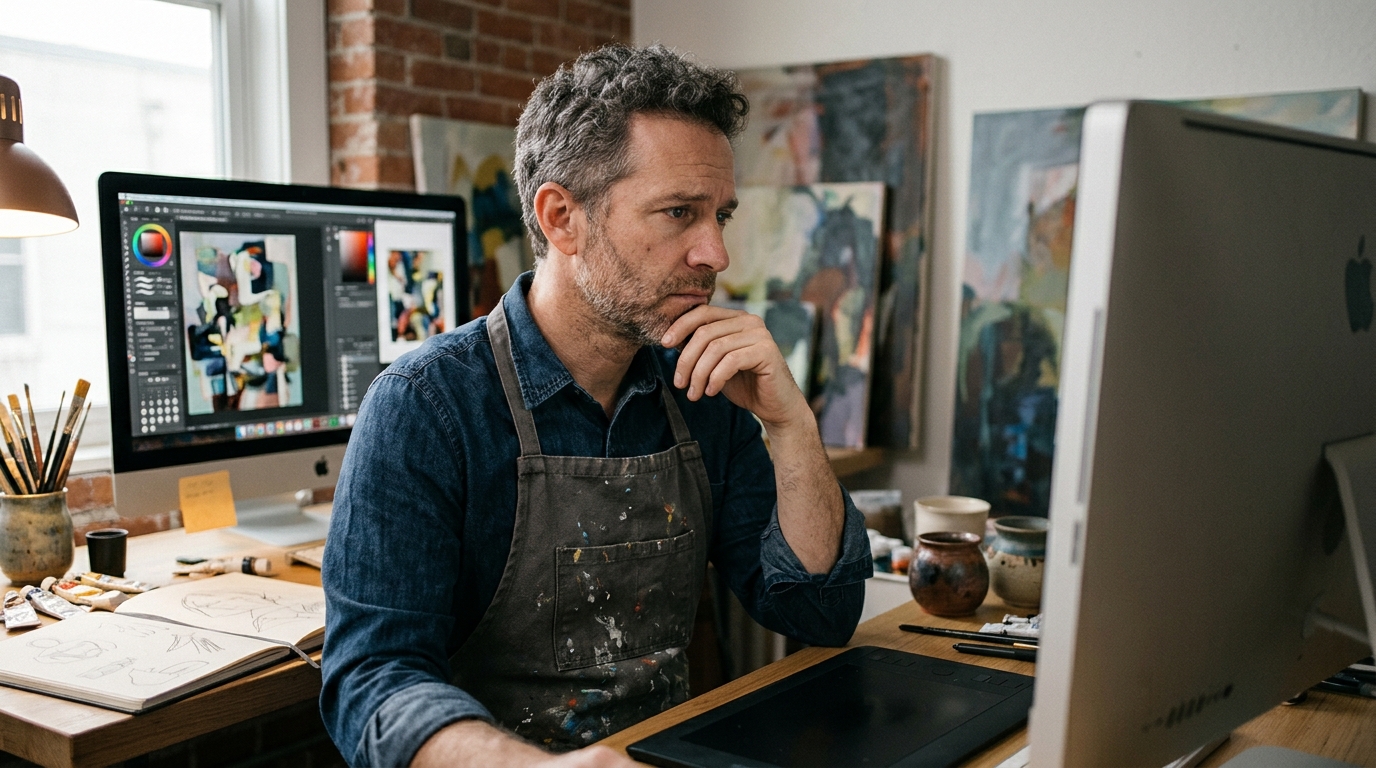
In the heart of Sacramento, where the local art scene has traditionally vibrated with life and color, a new shadow has begun to loom over the studios. This is not an economic downturn in the traditional sense, but the digital storm of Generative Artificial Intelligence (AI). Through a recent interview with CBS News, a local artistic voice highlights the existential dilemma facing the industry, posing questions that transcend technology and touch the very essence of human expression.
The Erosion of the Creative Economy
For decades, artists in Sacramento and across the globe relied on an ecosystem of commissions, illustrations, and commercial work. Today, that ecosystem is under siege. The artist points out that the ease with which someone can type a prompt and receive a visually polished result in seconds has devalued years of manual and intellectual labor. It is not just about speed; it is about economic deconstruction. When clients opt for the "good enough" solution of an algorithm over authentic creation, the professional viability of the artist evaporates.
The problem is compounded by the fact that these AI models do not create in a vacuum. They have been trained on billions of images scraped from the internet without the consent, credit, or compensation of the original creators. What the tech industry calls "training," many artists view as the largest intellectual property theft in human history. The Sacramento artist describes the sensation of seeing one’s personal style—the "soul's fingerprint"—replicated with cold precision by a machine.
The Ethics of the "Black Box"
The debate surrounding AI in art is primarily ethical. The lack of transparency in training data remains the main point of friction. Despite efforts at regulation, such as the EU AI Act, the situation in the United States remains fluid. The artist emphasizes that this technology operates as a "black box" that swallows human creativity to generate profits for Big Tech, leaving creators on the sidelines.
- The loss of control over intellectual property.
- The difficulty in distinguishing between human and synthetic work.
- The psychological toll on artists feeling "obsolete."
- The need for new licensing and payment models.
Furthermore, there is the issue of aesthetic homogenization. As AI feeds on its own outputs and dominant internet trends, there is a risk of becoming trapped in a vicious cycle of visual repetition, where true innovation and risk-taking—inherent elements of human art—will vanish.
Resistance and Adaptation
Despite the grim forecasts, the Sacramento community is not sitting idly by. There is a growing movement to promote "handmade" art as a product of luxury and authenticity. Artists are using tools like Glaze and Nightshade to digitally "poison" their works, making them unsuitable for AI training. However, as the artist notes in her interview, technological resistance is a race where corporations always have the resource advantage.
"Art is not just the final result. It is the process, the pain, the joy, and the intention behind every stroke. AI can copy the image, but it cannot copy the intention."
As we head into the latter half of the 2020s, the challenge for society is to decide what kind of culture it wants to consume. If we allow AI to replace artists for the sake of efficiency, we risk losing the mirror of our human experience. The case of the Sacramento artist is a reminder that behind every pixel and every algorithm, there is a human life demanding the right to create and to maintain dignity.