

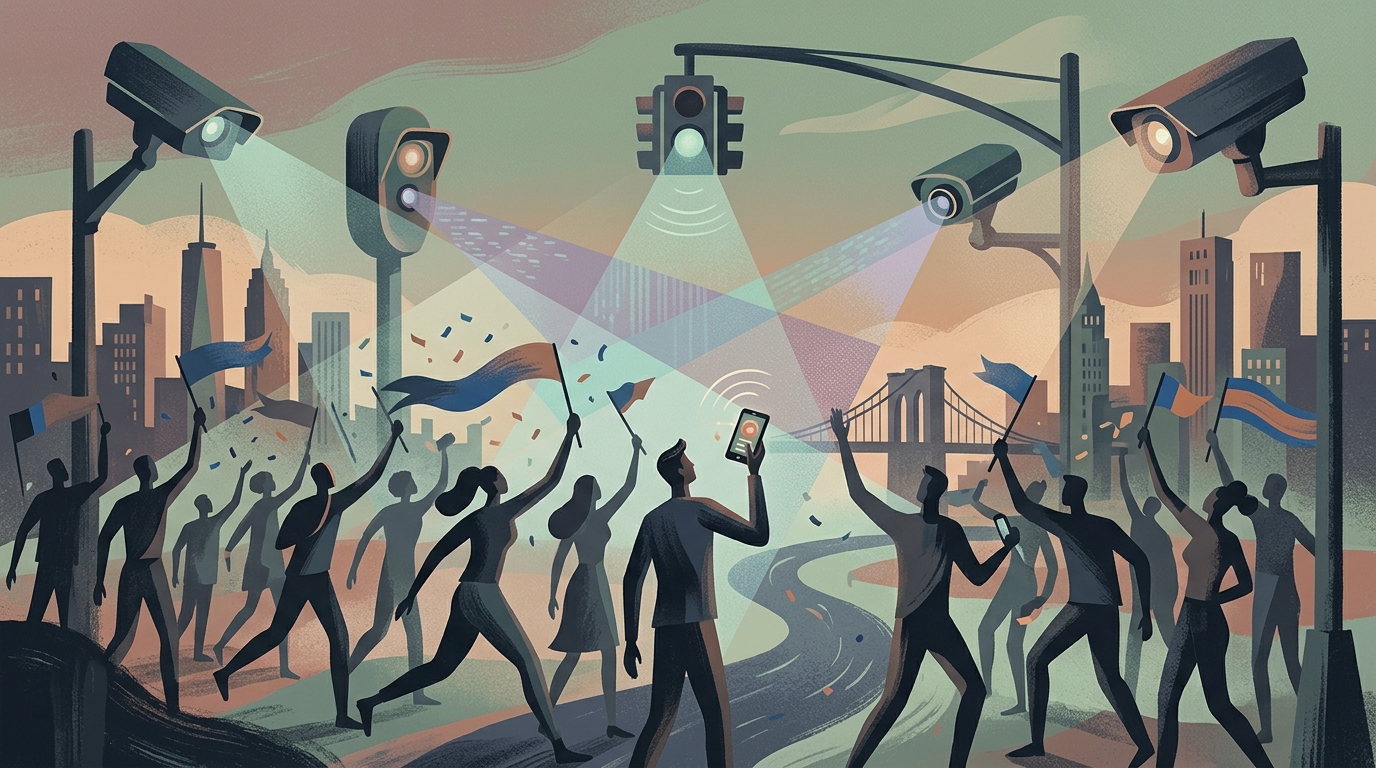
New York City is in a state of collective euphoria. After decades of heartbreak and anticipation, the New York Knicks have secured the NBA championship, and the city is preparing for a historic ticker-tape parade through the Canyon of Heroes. But for those unable to make it to the crowded streets of Lower Manhattan, technology is offering a viewing experience that is as fascinating as it is ethically complex: the New York City Department of Transportation (DOT) traffic camera network.
Artist Morry Kolman, recognized for his work at the intersection of public infrastructure and digital transparency, has announced his latest project, "Parade Cam." He plans to livestream the entire championship parade using only the data feeds from the city’s vast network of traffic cameras. This isn't just a technical feat; it’s a provocative statement on the visibility of the state and the normalization of the digital panopticon in our daily lives.
Surveillance as a Cultural Spectacle
What makes this year's parade coverage particularly noteworthy is the apparent shift in municipal policy. In previous years, the NYC DOT has been notoriously protective of its camera feeds, often issuing cease-and-desist orders to developers who tried to aggregate these streams for public apps. This time, the silence from the authorities is deafening. By allowing Kolman to proceed, the city is implicitly acknowledging a new reality: surveillance is no longer just for security; it has become a form of public utility and entertainment.
Kolman’s project utilizes over 900 cameras positioned at strategic intersections. While the image quality is often grainy and the frame rates are stuttering, there is an undeniable raw energy to the footage. It offers a perspective that professional sports broadcasts cannot replicate—a gritty, unvarnished look at the city’s pulse. However, this "democratic" access to surveillance tools brings with it a host of ethical dilemmas regarding consent and the aestheticization of state control.
The Ethics of the Joyful Panopticon
The primary concern raised by privacy advocates is the "normalization effect." When surveillance tools are used for celebratory purposes, the public’s natural skepticism toward monitoring tends to dissolve. If we enjoy being watched during a parade, we are less likely to object to being watched during a protest or in our private moments in public spaces. In the age of AI, these cameras are increasingly capable of more than just monitoring traffic flow.
"When we transform the tools of state control into instruments of spectacle, we risk losing our critical distance from the infrastructure of surveillance," notes one digital rights researcher.
With the integration of Artificial Intelligence, these feeds could theoretically be processed in real-time for facial recognition or behavioral analysis. While Kolman’s project doesn't use these advanced features, the infrastructure he is tapping into is the same one that could be used for more intrusive purposes. The Knicks parade thus becomes a high-stakes experiment in how much privacy we are willing to trade for a better view of the celebration.
The Future of the Public Commons
The "Parade Cam" also sparks a necessary debate about data ownership. Since these cameras are funded by taxpayer dollars, there is a strong argument that the data they produce belongs to the public. Kolman’s work challenges the idea that the government should have exclusive control over the "eyes" of the city. Yet, the question remains: if everyone can watch everyone, does the concept of a private life in a public space still exist?
As we move toward "Smart Cities," the integration of AI will only make these networks more powerful. Imagine an AI system that automatically switches between cameras to follow a specific person or event, creating a cinematic narrative of the city in real-time. While technically impressive, such a future requires robust ethical safeguards to prevent the descent into a total surveillance state.
As the confetti is cleared from the streets and the Knicks' victory becomes a memory, the cameras will remain. They are the permanent fixtures of our modern urban environment. Kolman’s project serves as a reminder that the line between a celebratory livestream and state surveillance is thinner than we think. We must decide if we are comfortable with a world where the price of a front-row seat to history is the permanent loss of our anonymity.




