

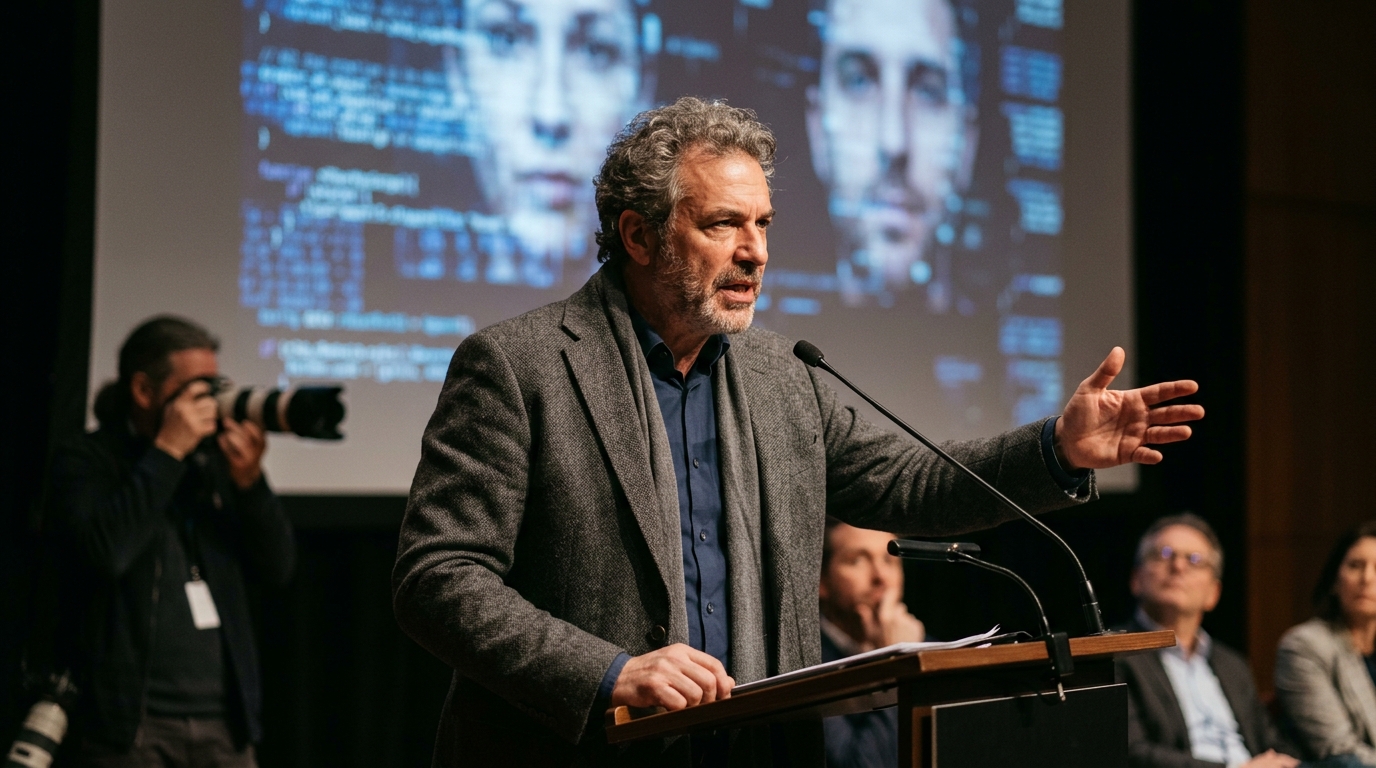
The entertainment industry stands at a critical crossroads, where the glamour of stardom meets the cold logic of algorithms. In July 2026, Hollywood finds itself in a state of perpetual flux as the agreements reached after the historic strikes of previous years are being put to the ultimate test. Artificial Intelligence (AI) is no longer a distant threat; it is a daily reality in production studios, forcing creators, actors, and technicians to redefine the very essence of intellectual property and human labor.
This issue goes beyond simple automation. It is an existential crisis for the art of cinema. From the creation of synthetic actors who never age to the use of Generative AI for scriptwriting, the lines between reality and digital simulation are becoming increasingly blurred. Major production houses see AI as an opportunity for drastic cost reduction, while guilds warn of the erosion of the creative process and the displacement of the human element.
Digital Immortality and Image Rights
One of the most contentious aspects of this confrontation involves "digital twins." Today, technology allows for the creation of hyper-realistic digital representations of actors that can be used in films without their physical presence. This raises profound ethical questions: Who owns an actor's likeness after their death? How can we ensure a performer's image isn't used in content that contradicts their personal values or legacy?
Legal battles currently raging across the US and Europe focus on the necessity of "informed consent." However, the pressure on emerging and less-established actors to sign away their digital rights for a one-time fee represents a new form of labor exploitation. AI's ability to replicate voices and expressions with terrifying accuracy means an actor could, theoretically, "work" on ten films simultaneously while staying at home—or, worse, be entirely replaced by an algorithm that synthesizes the features of ten different people to create a new, non-union "star."
The Scriptwriting Automation Paradigm
In the realm of writing, the situation is equally tense. Although screenwriters managed to secure protections against being replaced by AI, the use of these tools as "assistants" has created a significant gray area. Studios are now utilizing AI to analyze successful scripts from past decades to generate structures that guarantee commercial success, effectively turning screenwriting from an artistic act into an exercise in data optimization.
- Ethical use of training data: AI models are trained on thousands of hours of material belonging to creators, often without compensation or acknowledgment.
- The disappearance of entry-level jobs: Background actors and junior VFX artists are the first to suffer from digital replacement.
- The need for modern legislation: Current copyright frameworks are ill-equipped to handle the complexity of AI-generated art and synthetic performances.
Resistance is not only coming from the unions but also from the audience itself. There is a growing trend toward "artisanal" cinema, with viewers seeking the authenticity and the beautiful imperfections that only human nature can provide. While AI in Hollywood promises spectacular effects and lower budgets, it risks leading to cultural homogenization, where every film feels as though it was extruded from the same digital mold.
The Road Ahead: Collaboration or Collision?
The future is not necessarily bleak, provided clear boundaries are established. Artificial Intelligence can be a powerful tool in the hands of creators, allowing them to visualize worlds that were previously impossible to conceive. The key lies in control. If AI remains a tool in service of human vision, cinema could enter a new golden age. However, if it is allowed to dictate content based solely on profit margins and engagement algorithms, Hollywood risks losing what made it magical: the ability to tell stories that resonate with the human soul.
"Technology should be the brush, not the painter," a prominent director recently noted, summarizing the prevailing sentiment in the industry.
As we move through the latter half of 2026, the battle for Hollywood will continue in courtrooms, at negotiation tables, and ultimately, in movie theaters. The decision on what kind of art we choose to consume belongs to all of us.





