At the dawn of 2026, the discourse surrounding Artificial Intelligence (AI) has shifted from the theoretical capabilities of large language models to the physical reality that sustains them. For years, the tech industry promoted the image of an intangible "cloud." However, reality is much wetter and more energy-intensive. According to recent data, U.S. data centers, driven by the explosive growth of AI workloads, consumed nearly one trillion liters of water in 2025. This figure is not just a statistic; it is a warning about the limits of technological growth on a planet with finite resources.
The Illusion of the Intangible Cloud and the Harsh Reality
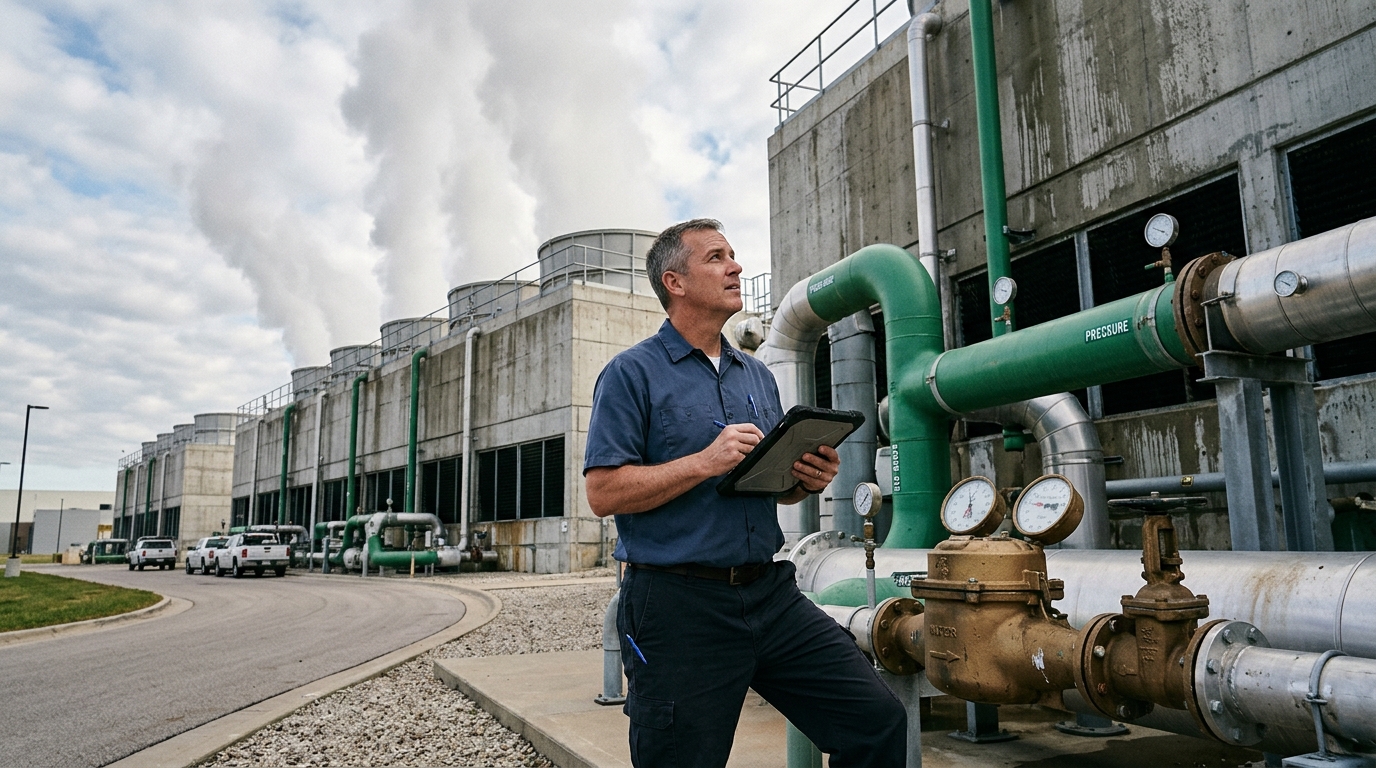
Artificial Intelligence does not reside in a vacuum. Every time a user asks a chatbot to write code or generate an image, thousands of GPUs in massive facilities are activated. These processors generate staggering amounts of heat. To prevent system meltdowns, data centers employ sophisticated cooling systems. The most prevalent of these is evaporative cooling: water is funneled into cooling towers, where it evaporates to remove heat from the air circulating around the servers.
The problem lies in the scale. While a single query might consume approximately 500 ml of water (about the size of a small bottle), multiplying these interactions billions of times leads to a water-hungry industry that competes with local communities and agriculture for access to clean water. 2025 was a turning point, as the expansion of data centers in states like Arizona and Iowa came into direct conflict with local needs during periods of drought.
Why Does AI Demand More Water Than the Traditional Web?
One might wonder why AI is so much more demanding than simple web browsing or streaming. The answer lies in the density of processing power. AI models require continuous and intensive use of GPUs, which operate at much higher temperatures than traditional CPUs. Furthermore, the process of "training" a model can last for months, requiring uninterrupted cooling on a massive scale.
- Intensive Processing: Graphics cards used for AI generate up to three times more heat per square meter compared to classic servers.
- Location: Many data centers are built in regions with cheap energy, which are often arid, making water loss through evaporation even more problematic.
- Water Quality: Cooling systems often require high-purity water to prevent pipe corrosion, diverting potable resources from the municipal grid.
Ethical Dilemmas and the Geopolitics of Water
The consumption of one trillion liters of water annually is not only an environmental issue but a deeply ethical one. As climate change makes water the "blue gold" of the 21st century, the priority given to tech companies over local ecosystems is being sharply questioned. In the Phoenix area, for instance, the construction of new facilities by tech giants has sparked protests from residents who see their water tables receding.
"We cannot drink algorithms. The progress of AI cannot come at the expense of the basic survival of our communities," environmental activists state.
Transparency remains a major hurdle. Many companies refuse to disclose exact water consumption figures per facility, citing trade secrets. However, regulatory pressure is mounting. The European Union and certain U.S. states are considering legislation that would mandate the reporting of the "water footprint" of every digital service, similar to a carbon footprint.
Toward Sustainable Computing Infrastructure
Is there a solution? The technology that created the problem may also offer the way out. Some companies are experimenting with closed-loop cooling systems, where water is continuously recycled rather than evaporated. Others are turning to direct-to-chip liquid cooling, which is far more efficient but requires expensive infrastructure. Additionally, moving data centers to colder climates or even the seabed is a subject of ongoing research.
In conclusion, AI is not a "clean" technology living in the clouds. It is a heavy industry dependent on the earth's resources. The challenge for 2026 and beyond will be balancing innovation with ecological sustainability. If we fail to quench the thirst of our machines, we risk creating a world where artificial intelligence is brilliant, but the environment that hosts it is a desert.