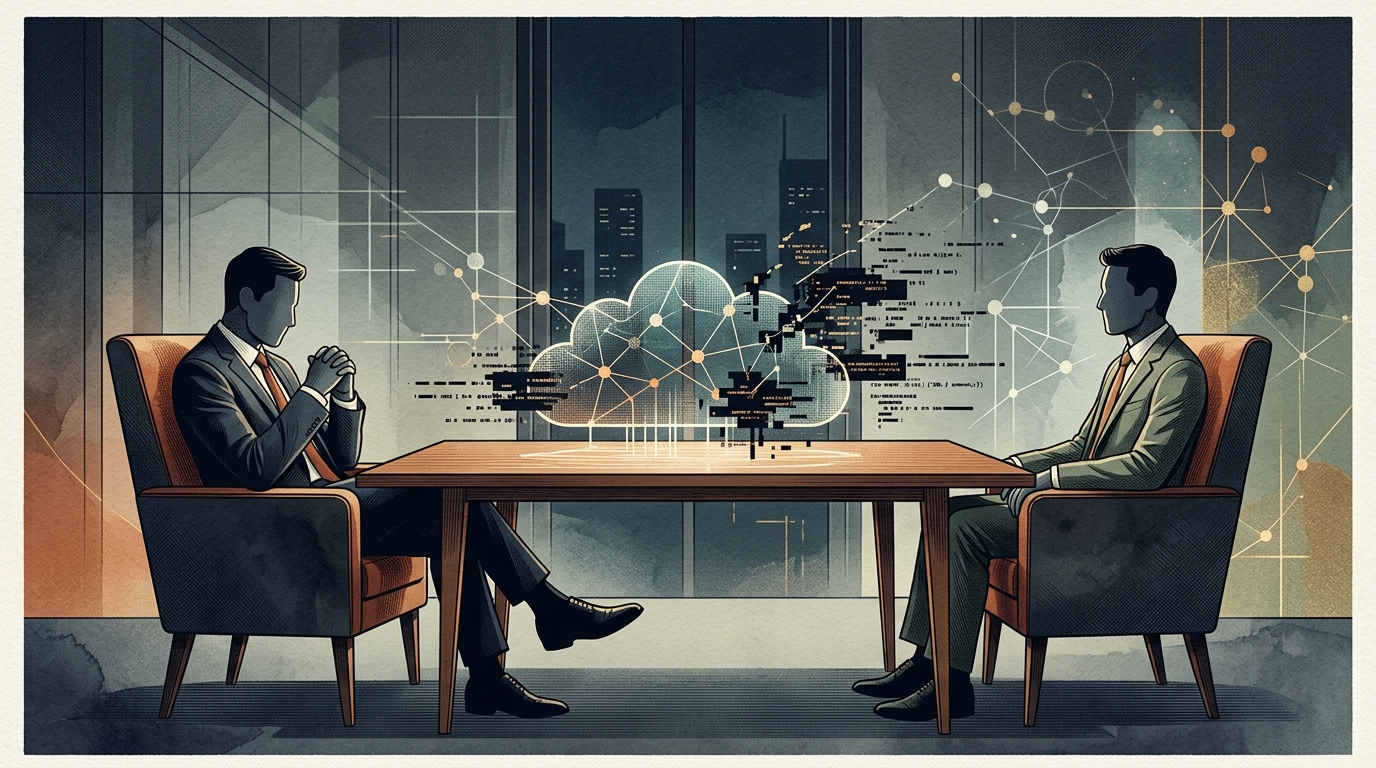
In the heart of the digital age, where the pace of innovation often outstrips our capacity for ethical and strategic fortification, a new, shadowy threat is emerging. The recent public discourse involving two of the most powerful figures on the planet—Jamie Dimon, CEO of JPMorgan Chase, and Dario Amodei, co-founder of Anthropic—has highlighted a paradox: while both acknowledge Artificial Intelligence (AI) as the ultimate transformative force of our time, the conversation regarding its ability to dismantle global cybersecurity remains disturbingly vague.
The "awkward silence" referenced in recent analysis is not a silence of absence, but a silence of avoidance. It is the inability—or unwillingness—to precisely describe how Generative AI can automate the creation of malware that evolves in real-time to bypass defenses. For Dimon, AI is the tool that will save banking; for Amodei, it is the technology that must be constrained by "constitutional" rules. However, neither seems prepared to admit that the genie is already out of the bottle.
Wall Street in the Crosshairs: Jamie Dimon's Anxiety
Jamie Dimon is no casual observer. As the head of the largest bank in the United States, he manages an organization that faces billions of cyberattacks annually. In his annual letter to shareholders, Dimon compared the advent of AI to the invention of the printing press or the steam engine. Despite his optimism regarding productivity, his concern for systemic risks is palpable. JPMorgan invests billions in AI-driven defense, but the reality is that attackers now have access to the same tools.
The problem Dimon avoids naming is asymmetry. A bank must be successful in its defense 100% of the time. A cybercriminal, empowered by models like GPT-5 or Claude 4, only needs to succeed once. The use of AI to construct sophisticated phishing attacks, which are impossible to distinguish from genuine communication, or the use of deepfakes to bypass biometric controls, is already a reality. Dimon's silence concerns the question: "What happens if the attackers' AI outpaces the defenders' AI?"
Dario Amodei: Silicon Valley Ethics and the Security Paradox
On the other hand, Anthropic's Dario Amodei represents the conscience of Silicon Valley. Anthropic was founded with safety (AI Safety) as its core mission, yet Amodei finds himself in a difficult position. The very models he develops, no matter how restricted by ethical filters, possess the inherent capability to analyze code and identify zero-day vulnerabilities in seconds. The "awkward silence" here lies in the fact that the open availability of these models—or even access via APIs—gives malicious actors a "superpower" they never had before.
Amodei has warned about the risk of AI assisting in the creation of biological weapons, but cyberattacks are a more immediate and everyday danger. Anthropic's strategy is based on "alignment," but in practice, jailbreaking techniques evolve just as fast. When asked whether AI could lead to a global infrastructure collapse through cyber warfare, his answers are often theoretical, avoiding the responsibility of AI companies themselves in creating this arsenal.
The Geopolitical Dimension and the Threat of State Actors
Beyond individual hackers, the great fear looming over the discussions of Dimon and Amodei is state actors. Russia, China, North Korea, and Iran are integrating AI into their military and intelligence capabilities. Here, the silence becomes political. Major tech companies and banks are on the front lines of an undeclared digital war. The use of AI for disinformation and the destabilization of financial markets is no longer a science fiction scenario.
The need for a "Digital Non-Aggression Pact" or an international regulatory body to oversee the offensive use of AI is urgent. However, Dimon and Amodei know that competition—both economic and geopolitical—makes such agreements extremely difficult. Their silence perhaps masks the admission that we are in an arms race where no one dares to hit the brakes, fearing the opponent will accelerate. The lack of a clear roadmap for international cooperation on AI cyber-defense is perhaps the most deafening part of this silence.
Conclusion: The Need for Radical Transparency
Addressing the risk of AI cyberattacks requires more than just software investment. It requires a radical shift in security philosophy. We must move from passive defense to active resilience. The silence of leaders must be broken and replaced by an honest discussion about the limits of technology and the need for collective protection of critical infrastructure. AI can be our greatest ally, but if we do not manage its dark side, it risks becoming the architect of our own downfall. The era of "security through obscurity" is over; only through radical transparency and global cooperation can we hope to secure the digital foundations of our civilization.