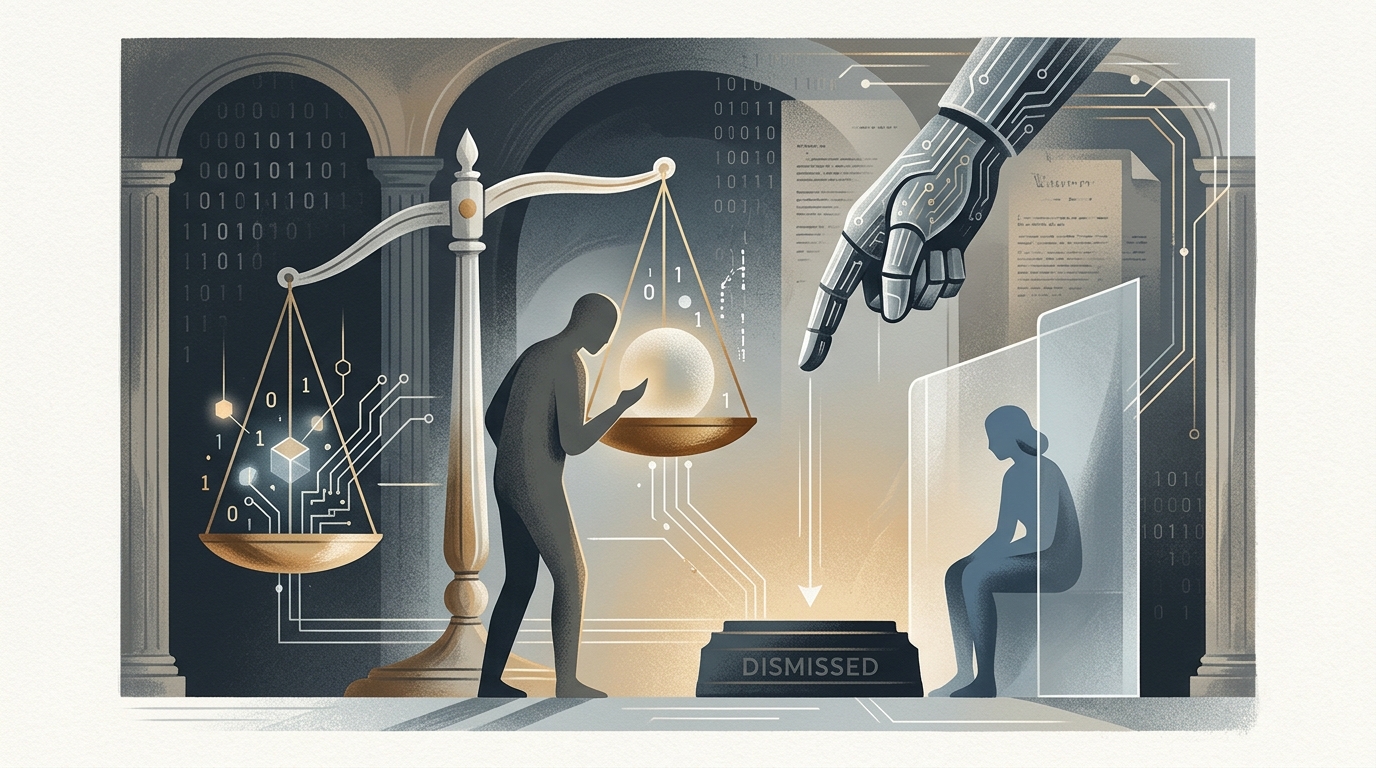
As we navigate the midpoint of 2026, the grand promise of Artificial Intelligence—a world of objective, meritocratic decision-making—is fracturing under the weight of a persistent reality. As highlighted by a recent Forbes analysis, AI’s “assault” on the Black body is not merely a theoretical concern for academic journals; it is an urgent consumer protection crisis. This crisis threatens the physical safety, economic mobility, and fundamental rights of millions. Instead of dismantling human bias, technology is increasingly codifying it into opaque algorithms, creating a digital mirror that reflects the darkest chapters of our history.
Biometric Surveillance: The Body as a Target
The most visceral form of this assault is found in biometric surveillance systems. Despite years of warnings from civil rights advocates, the deployment of facial recognition by law enforcement and private security firms continues to show catastrophic failure rates for individuals with darker skin tones. The issue is not just a technical glitch; it is structural. The datasets used to train these systems are historically skewed, leading to what experts call “algorithmic invisibility” for some and “hyper-surveillance” for others.
When an algorithm fails to correctly identify a Black face, the stakes are far higher than an inconvenience at a turnstile. They manifest as wrongful arrests, unjustified police encounters, and a pervasive sense of being a permanent suspect. Consumer protection in this context is not about a faulty appliance; it is about the right to navigate public space without being flagged by a biased machine. The assault is physical because the consequences of these digital errors are often met with state-sanctioned force.
Algorithmic Neglect in Healthcare
Beyond the streets, the assault penetrates the clinical setting, where the implications are literally a matter of life and death. Medical data has historically centered on white populations, and AI is scaling this bias at an unprecedented rate. Algorithms used to prioritize patients for intensive care or to diagnose skin conditions have been found to be systematically less accurate for Black patients.
- Pulse oximeters, now augmented by AI to filter noise, often provide inaccurate readings for highly melanated skin, leading to delayed oxygen therapy.
- Resource allocation systems often use "past healthcare spending" as a proxy for need, ignoring that Black patients have historically had less access to expensive care due to systemic barriers.
- Dermatological AI models frequently fail to detect malignancies on dark skin because they were trained almost exclusively on images of Caucasian skin.
This “algorithmic neglect” represents a new frontier of medical malpractice, one shielded by the perceived neutrality of software. Regulators are now forced to redefine what a “safe product” means in healthcare when that safety is not distributed equitably across the population.
Economic Exclusion and Digital Redlining
The crisis extends into the financial realm, where AI-driven credit scoring, loan approvals, and insurance premiums operate as “black boxes.” While using race as a direct variable is illegal, AI can easily infer racial identity through proxies like zip codes, spending patterns, or even social network connections.
“We no longer need a biased loan officer to deny a mortgage; we simply need an algorithm that has learned that poverty and geography are convenient proxies for race,” the report notes.
This “digital redlining” traps Black communities in a cycle of economic stagnation. When consumers cannot understand why they were rejected or how to improve their standing, the concept of consumer protection becomes a hollow promise. The lack of transparency allows corporations to evade accountability, claiming the algorithm is merely “optimizing for efficiency” while it effectively reinforces segregation.
The Call for a New Regulatory Architecture
To repel this assault, moral appeals to Big Tech are insufficient. We require a radical overhaul of consumer protection frameworks. Regulators must mandate “algorithmic impact assessments” that explicitly test for racial bias before any system is deployed in the public or private sector.
Furthermore, the concept of “product liability” must be expanded. If a vehicle had brakes that only worked for certain drivers, it would be recalled immediately. Why do we allow algorithms that systematically fail Black consumers to remain in operation? Justice in the age of AI is not a technical bug to be patched; it is a political choice that must be made now, before the digital infrastructure of the future cements the injustices of the past into code.