

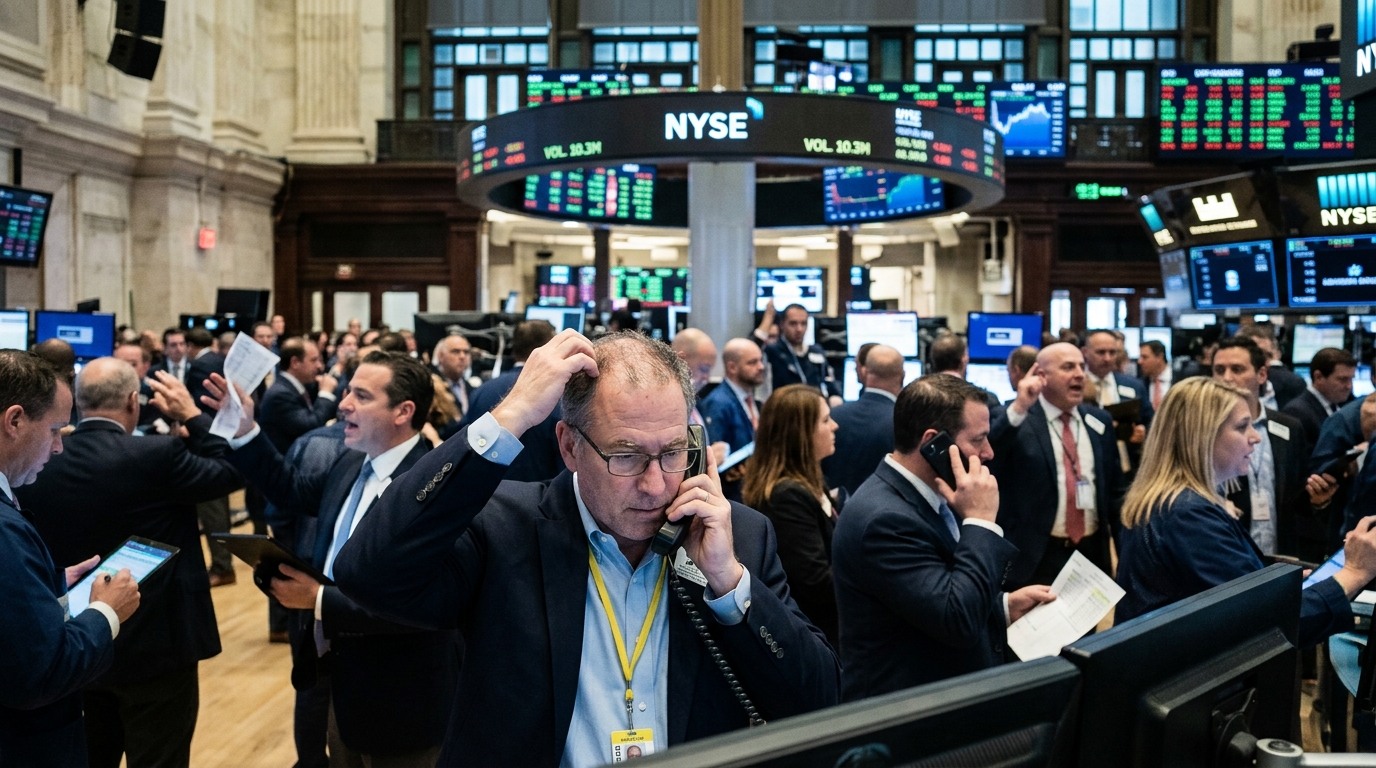
The history of Wall Street is a chronicle of euphoria followed by gravity-defying crashes, but what we are witnessing in the summer of 2026 is unprecedented in the annals of modern finance. According to recent analyses that have sent shockwaves through the investment community, the concentration of power and market capitalization among the top S&P 500 companies has shattered a record that stood for 155 years. Never before, not even before the Great Crash of 1929 or the height of the dot-com bubble in 2000, has the market been so heavily reliant on such a small group of entities—all of them inextricably linked to Artificial Intelligence.
The Anatomy of a Historical Concentration
The phenomenon of market "breadth"—or rather, the lack thereof—has reached a breaking point. The so-called "Magnificent Seven" have evolved into an even tighter elite, where Nvidia, Microsoft, and Apple rotate at the apex of global valuation, often surpassing the GDP of entire G7 nations. The statistical representation is staggering: the share of total market value held by the top 10 companies is now higher than at any point since 1870, the era of the great railroads and oil barons.
This hyper-concentration suggests that investors have placed all their bets on a single narrative: that Artificial Intelligence will fundamentally transform global productivity. However, history teaches us that when the market becomes this "top-heavy," the slightest deviation from expectations can trigger a localized tremor that transforms into a global earthquake.
The "Bubble" Nightmare vs. Fundamental Reality
Critics and analysts warning of an impending collapse point to valuation metrics that are flashing bright red. The CAPE (Cyclically Adjusted Price-to-Earnings) ratio, which smooths out earnings over a decade, is at levels that have historically preceded major corrections. The core concern isn't whether AI is useful—it clearly is—but whether these corporations can generate the astronomical cash flows required to justify their current valuations.
- Infrastructure Costs: Capital expenditure on data centers and specialized semiconductors is reaching trillions, yet consumer-facing AI revenue has not yet scaled proportionally.
- Market Saturation: There is a growing risk that tech giants are merely cannibalizing their existing high-margin services to fund AI initiatives that offer lower immediate returns.
- Regulatory Headwinds: Increasingly stringent antitrust and data privacy laws in the EU and the US threaten to curb the unbridled growth of AI monopolies.
Unlike the 2000 bubble, today's giants possess massive cash reserves and actual, multi-billion dollar profits. However, as the Bankingnews report highlights, excessive optimism has created a "perfection-priced" market. If a bellwether like Nvidia issues even slightly conservative guidance, the resulting liquidation could be systemic.
The Counter-Narrative: A Structural Shift
On the flip side, market bulls argue that the comparison to 1870 is apt for the right reasons. Back then, railroads built the physical infrastructure for a century of industrial growth. Today, AI is building the cognitive infrastructure for the future digital economy. The capital concentration is simply a reflection of the immense scale required to compete in this new paradigm.
"We are not looking at a bubble, but at a re-indexing of the world," says a senior strategist at a major investment bank. "The companies controlling AI are essentially building the operating system for 21st-century civilization."
The question remains: can the real economy keep pace with algorithmic expectations? While stock prices soar, wages and traditional consumption in many sectors remain sluggish, creating a disconnect that historically leads to social and economic friction. Wall Street may be breaking 155-year records, but the higher the climb, the more treacherous the descent becomes if the foundations prove to be made of hype rather than hardware.





