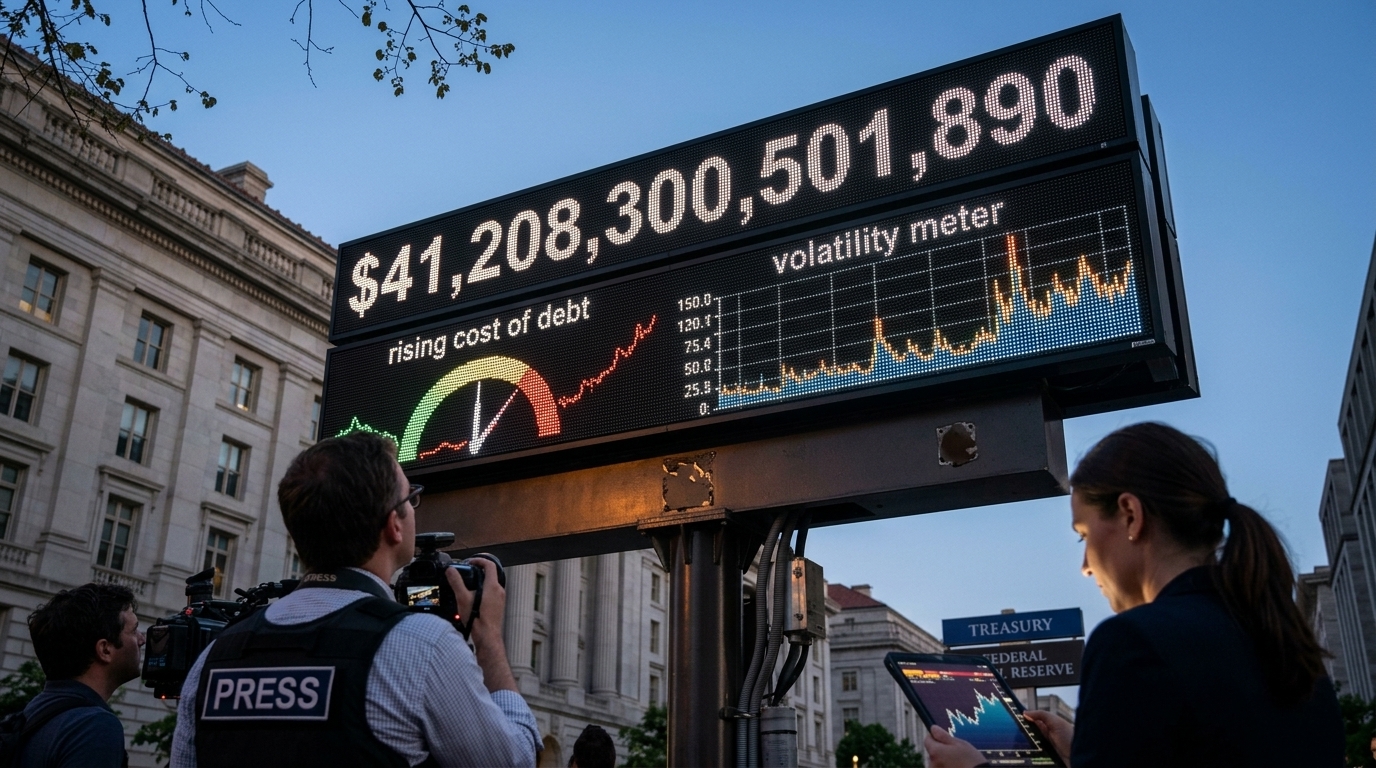
The United States' fiscal stability is at a crossroads as surging Treasury yields highlight the nation's increasing vulnerability to bond market sentiment. A new report from Scope Ratings warns that the current debt trajectory points to an "unsustainable medium-term fiscal path," leaving the sovereign exposed to shifting financing conditions.
Ratings and Fiscal Pressures
The Europe-based agency Scope maintained the U.S. sovereign credit score at AA-, which sits three notches below the top rating and trails the grades assigned by Moody’s, Fitch, and S&P. While the agency acknowledges U.S. strengths—including the dollar’s status as the world’s reserve currency and deep capital markets—it points to "structural expenditure pressures" and limited political will for reform as primary risks.
Debt-servicing costs are now the main driver of fiscal deterioration. While primary deficits (excluding interest) remain stable at approximately 3.5% of GDP, the 10-year Treasury yield at 5.27% has already surpassed the Congressional Budget Office’s long-term forecasts. If yields remain roughly 1 percentage point above projections, an estimated $3.5 trillion could be added to the debt over the next decade.
The Debt Ceiling Threat
Scope expects the current debt limit of $41.1 trillion to be reached by early 2027. Although the Treasury Department can employ "extraordinary measures" to delay default, the post-midterm political landscape may foster prolonged partisan standoffs. The agency noted that repeated debt-ceiling episodes highlight weaknesses in fiscal governance and contribute to market volatility.
“This trajectory points to an unsustainable medium-term fiscal path and leaves the sovereign increasingly exposed to shifts in market sentiment and financing conditions,” Scope stated.
Strategic Shifts and Market Volatility
Treasury Secretary Scott Bessent has doubled down on a strategy to rebalance U.S. debt toward short-term maturities. While intended to manage costs, this approach makes rolling over debt more expensive when yields spike. Furthermore, the Treasury market is seeing a shift in ownership; price-sensitive hedge funds are increasingly replacing stable foreign central banks, adding further volatility to the $32 trillion market.
Fiscal 2026 concluded with a $2 trillion budget deficit. Notably, debt-interest costs reached a record high of $1.1 trillion (3.4% of GDP), becoming the second-largest line item in the federal budget, surpassing both defense spending and Medicare.