

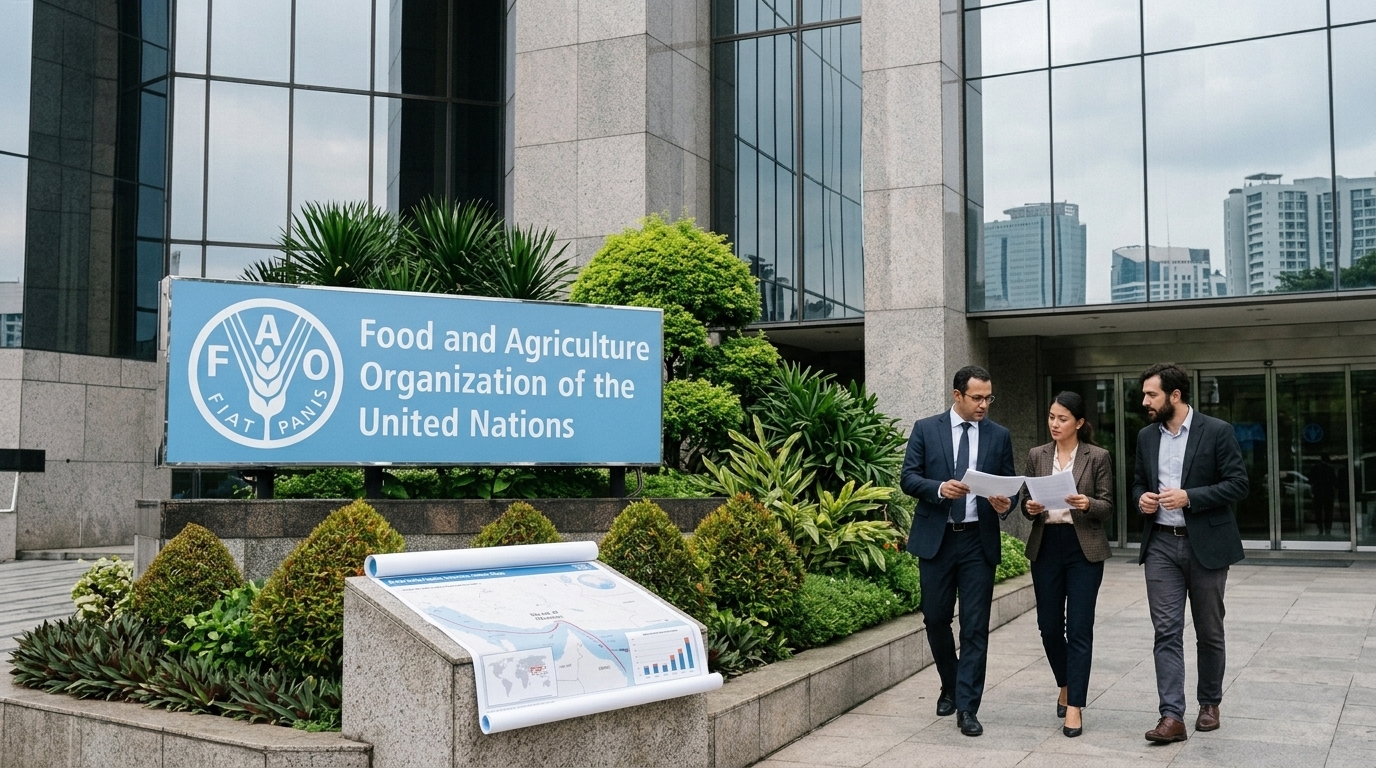
The global economy is once again facing the specter of food inflation, as the latest data from the Food and Agriculture Organization of the United Nations (FAO) reveals a concerning trend. For the third month in a row, international prices for essential food commodities have risen, reversing the brief period of optimism regarding market stabilization following the pandemic and the initial shock of the war in Ukraine. This time, the focus of concern shifts southward to the Strait of Hormuz and the broader Middle East, where geopolitical tensions are brewing a volatile cocktail for the global supply chain.
The FAO Index and the Upward Trajectory
According to the latest FAO report, the Food Price Index—which tracks monthly changes in the international prices of a basket of food commodities—showed an increase primarily driven by cereals and vegetable oils. Despite production levels in several parts of the world remaining adequate, transportation costs and uncertainty in maritime routes are pushing prices higher. Analysts emphasize that this is not merely a supply-and-demand issue but a structural crisis inextricably linked to energy costs.
Vegetable oils, for instance, saw prices rise due to limited output in Southeast Asia and robust demand for biodiesel. Simultaneously, cereal prices are being influenced by adverse weather conditions in key exporting nations. However, the most significant burden remains logistics costs, which are ballooning due to the flare-up in the Middle East. When the cost of moving goods increases, the price of the goods themselves inevitably follows.
Ground Zero: The Strait of Hormuz
The Strait of Hormuz is perhaps the most critical maritime artery on the planet. Approximately 20% of the world's oil consumption and a vast percentage of liquefied natural gas (LNG) pass through this narrow waterway. The link between Hormuz and the consumer's dinner plate is direct and multi-layered. Firstly, rising energy prices automatically increase the cost of producing fertilizers, which are highly energy-intensive. Without affordable fertilizers, agricultural yields drop or become economically unviable, leading to higher prices at the grocery store.
Secondly, insecurity in the Strait leads to a vertical spike in insurance premiums for commercial vessels. When ships carrying wheat or sugar are forced to divert their routes or pay exorbitant war-risk insurance, these costs are passed on to the end consumer. The crisis in the Strait of Hormuz is not just a military confrontation; it is an economic strangulation that primarily affects developing nations, which are heavily dependent on food imports. The fragility of the "just-in-time" delivery model is laid bare when a single chokepoint is threatened.
Food Security and Social Stability
History has repeatedly shown that spikes in food prices are often precursors to social unrest. The "Arab Spring" of 2011 was largely fueled by the rising cost of bread. Today, with inflation remaining persistent in many Western nations and galloping across the Global South, the new rise in prices creates a dangerous environment. Governments are forced to balance fiscal discipline with the urgent need to support vulnerable households. When people can no longer afford basic nutrition, the social contract begins to fray.
Furthermore, the climate crisis acts as a force multiplier for these issues. Droughts in Brazil and floods in China have already taken a toll on corn and rice harvests. When geopolitical blockades are added to these natural phenomena, the global food system reaches its breaking point. The international community, through the UN, warns that without a de-escalation in the Middle East, the world could face a new food crisis exceeding the intensity of the one seen in 2022. The interconnectedness of modern trade means that a conflict in one region can lead to hunger in another.
Conclusions and Future Outlook
The dependence of global nutrition on a few strategic passages and the price of fossil fuels is proving to be the Achilles' heel of globalization. The solution cannot be merely short-term or reactive. A structural shift toward localized production, resilient agriculture, and a transition away from fossil-fuel-based fertilizers is required. Until then, however, consumers will remain hostages to the geopolitical games played in the Strait of Hormuz and the decisions made in power centers far removed from the fields and food markets. The coming months will be a critical test for international diplomacy and the resilience of our global food systems.





