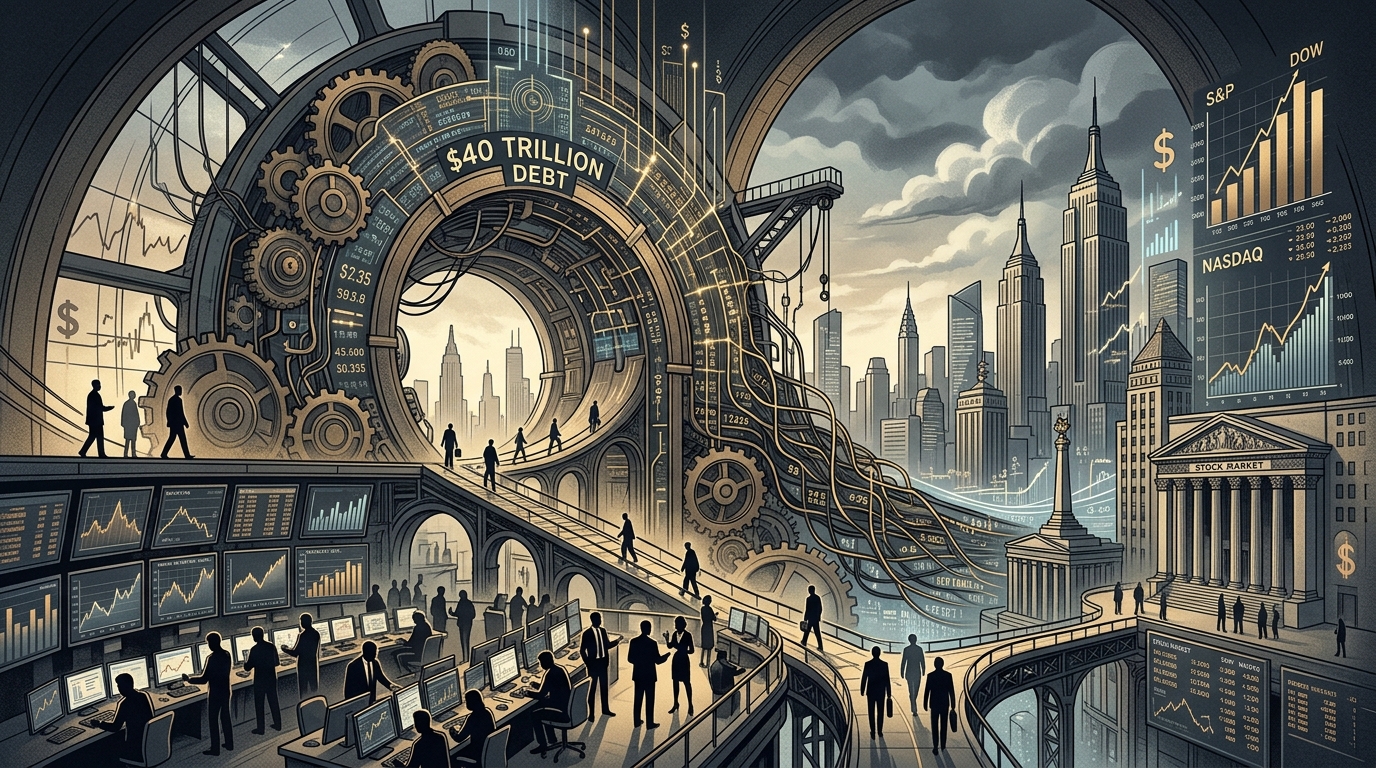
As we navigate the second half of 2026, the discourse surrounding Artificial Intelligence (AI) has shifted from futuristic speculation to raw economic reality. It is no longer a theoretical technology but a structural force reshaping GDP, labor markets, and corporate power dynamics. Like every major technological transition, AI’s impact can be categorized into three pillars: the 'Good' of increased efficiency, the 'Bad' of job insecurity, and the 'Ugly' of extreme wealth and power concentration.
The Good: A Productivity Renaissance
The most optimistic side of AI lies in its potential to solve the 'productivity paradox' that has plagued Western economies for decades. By integrating Large Language Models (LLMs) and Agentic AI into daily business operations, we are witnessing an unprecedented acceleration in intellectual labor output. Recent data suggests that automating routine tasks in the service sector has boosted efficiency by up to 25% in certain industries, allowing workers to focus on strategic and creative endeavors.
Furthermore, AI acts as a catalyst for scientific research. In pharmaceuticals and materials science, the time required to discover new molecules or more efficient semiconductors has been drastically reduced. This 'innovation acceleration' promises long-term benefits that could add trillions to global GDP, offering a way out of the stagnation caused by aging populations in developed nations.
The Bad: Middle-Class Erosion and Labor Displacement
However, the coin has a darker side. The 'Bad' of AI’s economic impact is found in the violent redistribution of roles within the labor market. Unlike previous industrial revolutions that replaced manual labor, AI directly targets 'white-collar' jobs. Analysts, legal consultants, programmers, and administrative staff are seeing their skills devalued as algorithms perform their tasks faster and cheaper.
The issue is not just unemployment, but the 'devaluation of labor.' We are observing a trend where newly created jobs are often of lower quality or involve 'maintaining' AI systems, leading to wage stagnation for the middle class. The need for massive reskilling is urgent, yet government programs worldwide are struggling to keep pace with the exponential rate of technological evolution, creating a skills gap that threatens social cohesion.
The Ugly: Monopolies and Systemic Risks
The most concerning aspect—the 'Ugly'—concerns the concentration of economic power. Developing cutting-edge AI systems requires vast resources in computing power and data, resources held by only a handful of tech giants. This creates a new form of 'digital feudalism,' where small and medium-sized enterprises and entire nations become dependent on the infrastructure of 3-4 corporations.
At the same time, the economy is becoming more vulnerable to 'black swan' events caused by algorithmic errors. The increased use of AI in financial markets can lead to flash crashes, while the reliance of supply chains on automated systems means that a single code error could trigger a global economic heart attack. Finally, the environmental cost of operating massive data centers adds a 'hidden debt' that the global economy has yet to properly value.
Conclusion: The Need for a New Social Contract
The economic impact of AI is not deterministic; it depends on the policy choices made today. To maximize the 'Good' and limit the 'Ugly,' regulatory intervention is required to ensure competition and tax the super-profits of automation to support displaced workers. The challenge for 2026 and beyond is to transform technological abundance into shared prosperity, avoiding a world where intelligence is the ultimate commodity in the hands of a few.