Alibaba's narrative over the past few years has been one of profound reinvention. Following a period of intense regulatory scrutiny from Beijing and a massive internal restructuring, the group founded by Jack Ma has found its new 'North Star': Artificial Intelligence. According to recent reports from Futubull (富途牛牛), Alibaba (09988.HK) has achieved what few thought possible three years ago: recording paper gains exceeding five times its initial investments in core segments of the AI industry chain.
The Strategic Pivot: From Cloud to MaaS
The new leadership under Eddie Wu and Joe Tsai has made it clear that Alibaba is no longer just an e-commerce platform. The 'Cloud-first, AI-driven' strategy is not a hollow slogan but a deep business reconfiguration. The company has invested billions of dollars into what we call 'Model as a Service' (MaaS), positioning Alibaba Cloud as the foundational infrastructure upon which all future Chinese Large Language Models (LLMs) will be built.
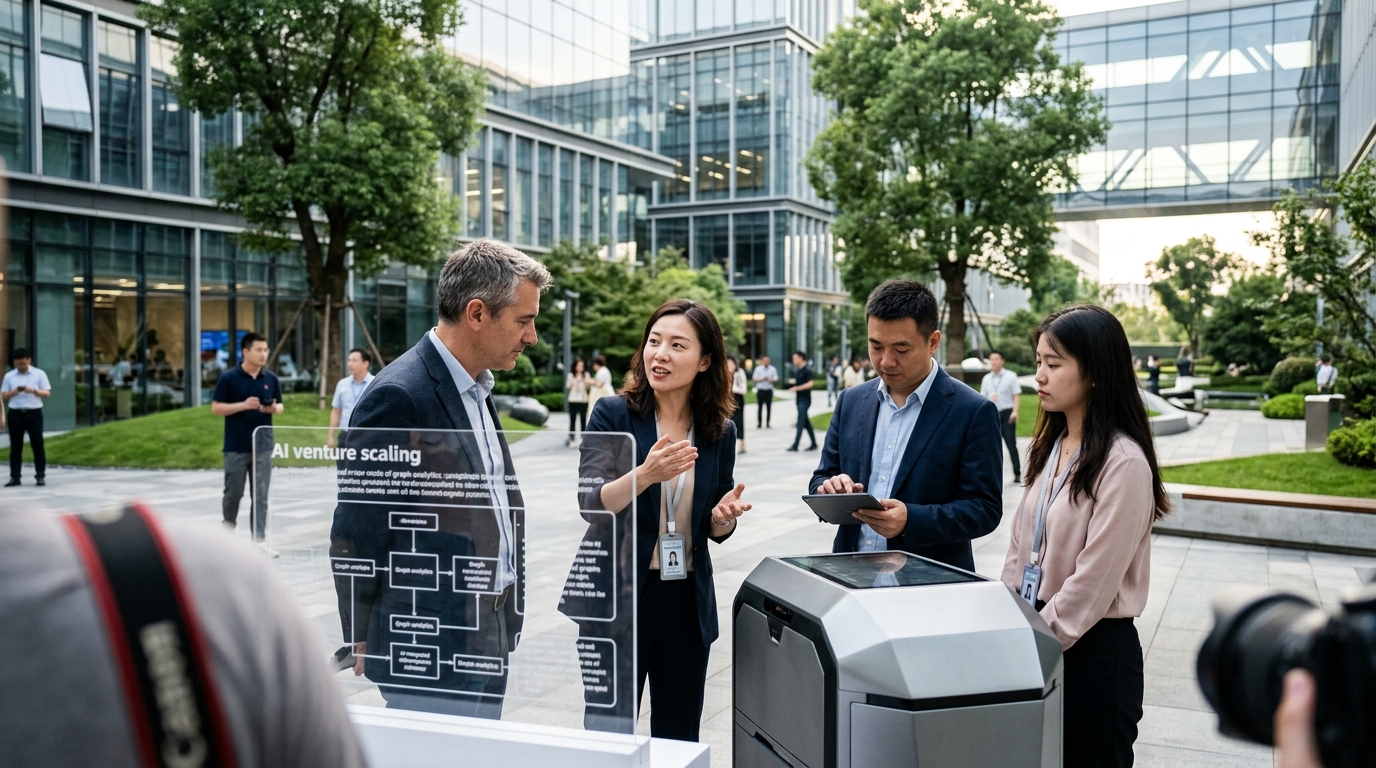
This approach has created a virtuous cycle: Alibaba invests in promising AI startups, which in turn utilize Alibaba Cloud’s computing power to train their models. This not only inflates the valuation of Alibaba's investment portfolio but also guarantees a steady revenue stream for the company’s cloud division, creating a synergistic moat that competitors find hard to breach.
The 'Four New Tigers' of Chinese AI
Alibaba’s success is rooted in its early identification of the top players in the domestic market. The group has strategically positioned itself within the so-called 'Four New Tigers' of Chinese AI: Moonshot AI, MiniMax, Zhipu AI, and Baichuan AI. These companies are widely regarded as China's answers to OpenAI, and Alibaba has participated in almost all of their major funding rounds.
- Moonshot AI: Known for its Kimi model, the company saw its valuation soar to $2.5 billion, with Alibaba leading a recent $1 billion funding round.
- Zhipu AI: A spin-off from Tsinghua University, representing the cutting edge of academic and applied AI research in China.
- MiniMax: Focuses on social interaction and digital character creation, a sector with immense potential within the Chinese digital ecosystem.
Alibaba’s ability to enter these companies at early stages is the primary reason for the staggering 5x returns. At a time when global venture capital liquidity is constrained, Alibaba is leveraging its massive cash reserves to buy a front-row seat to the future.
Geopolitics and Technological Sovereignty
One cannot analyze Alibaba’s investment strategy without considering the geopolitical backdrop. With US restrictions on the export of advanced semiconductors (such as Nvidia’s H100s) to China, the need for domestic software optimization and AI model efficiency has become a matter of survival. Alibaba is not just investing in models; it is investing in the entire stack, including its own chip development (via T-Head) and optimizing algorithms to run efficiently on less powerful hardware.
"The battle for AI in China will not be decided solely by who has the most GPUs, but by who controls the ecosystem of applications and data," market analysts suggest.
Alibaba, with data from hundreds of millions of users across Taobao, Tmall, and DingTalk, possesses the 'fuel' these models need to evolve. Integrating AI into its existing services—from automated customer support to generative advertising content—creates immediate value for shareholders while providing a real-world testing ground for its invested startups.
The Future: From Paper Gains to Real-World Dominance
While 'paper gains' are impressive, the challenge for Alibaba in 2026 and beyond is the monetization and realization of this value. In a Chinese market where IPOs remain complex due to regulatory oversight, Alibaba may choose the path of strategic acquisitions or deep integration. What is certain is that the company has established itself as the undisputed 'king' of AI investments in Asia, shedding its image as a mere retailer and adopting the profile of a tech conglomerate that dictates the pace of the fourth industrial revolution.