

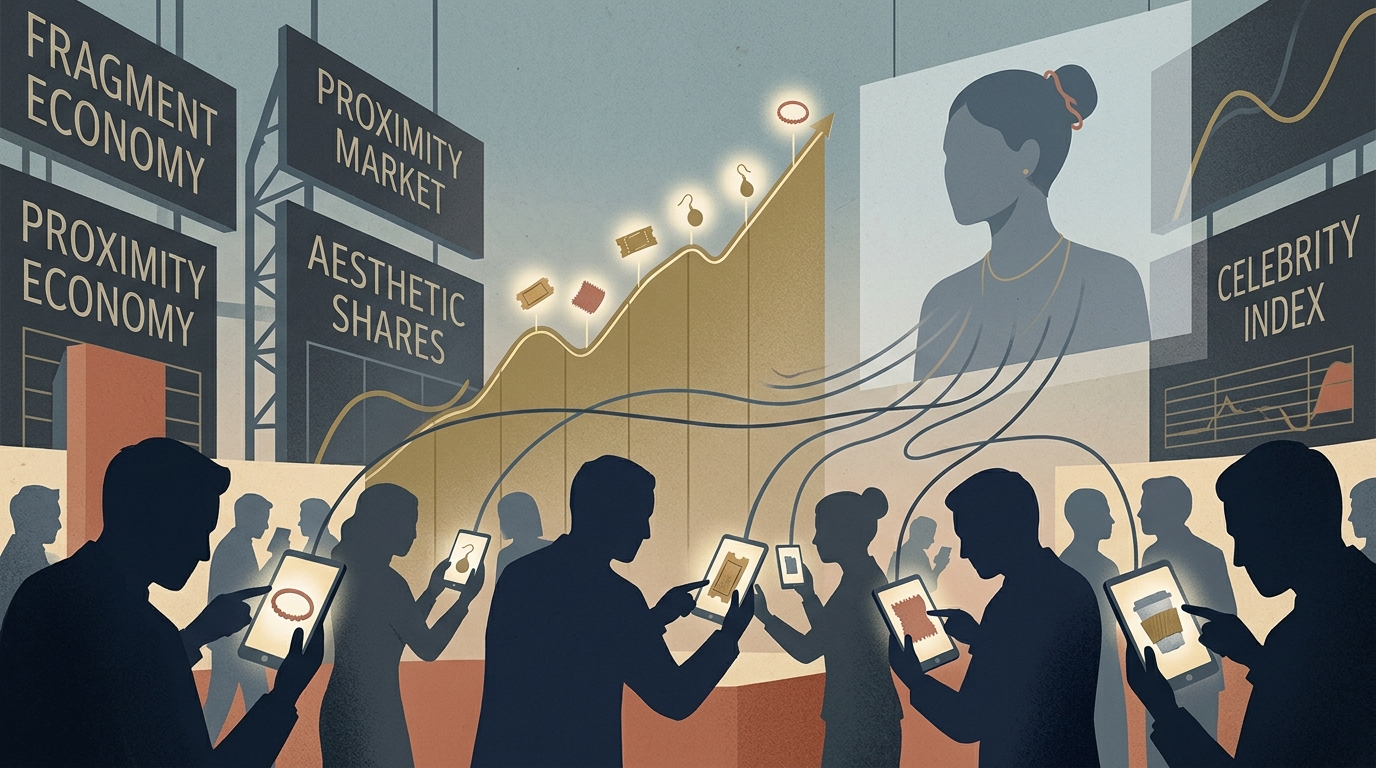
In the global economy of 2026, the traditional concept of celebrity endorsement is undergoing a radical transformation. It is no longer enough for a football star or a pop sensation to pose in front of a professional lens holding a product. Today, true commercial power lies in the "accidental" moments—the small, affordable items they use in their daily lives. A $5 hair tie worn by Erling Haaland, a dress that sells out in minutes because Taylor Swift wore it to dinner, or a fast-food order that goes viral: these are the new currencies of the "proximity economy."
The Psychology of Parasocial Connection
This phenomenon is rooted in what sociologists call "parasocial interaction." Fans develop one-sided relationships with their idols, feeling as though they know them personally through social media. When Erling Haaland, Manchester City’s premier striker, appears with a simple, cheap hair tie, a fan purchasing it isn't just buying an accessory. It is an attempt to capture a fragment of the idol's aura. Unlike luxury watches or supercars, a $5 hair tie is accessible to everyone. It allows the consumer to say, "I have something in common with Haaland."
This "democratization" of celebrity mimicry has created a massive secondary market. Brands often find themselves blindsided, watching their inventory vanish without having spent a single euro on marketing. It is the ultimate organic growth, yet it brings supply chain challenges, as demand can skyrocket within hours of a single post on Instagram or TikTok.
From the Red Carpet to Street Style: Breaking the Walls
Historically, the relationship between celebrity and consumer was one of distance. Idols wore haute couture creations that were unattainable for the general public. However, in 2026, authenticity is the dominant requirement. Taylor Swift, for instance, has perfected the art of appearing "one of us," even as her net worth reaches billions. When she chooses a dress from a mid-range brand, she doesn't necessarily do it as part of a deal. She does it because it fits her aesthetic. The result? The brand experiences the so-called "Swift Effect," where their website crashes from traffic and the specific item becomes a resale commodity at double the price.
- Information Velocity: "Style Tracker" accounts on social media identify every garment within seconds.
- The Shift to Affordability: Consumers prefer buying ten small items seen on celebrities rather than one large designer product.
- The Power of Food: Fast-food orders (like the Travis Scott meal at McDonald's) prove that connection even extends to the palate.
Economic Implications and the Future of Branding
For businesses, this trend means that traditional influencer budgets must be reallocated. Instead of grand campaigns, companies are now investing in AI tools that monitor in real-time which celebrities are using their products organically. A company's ability to react instantly—for example, offering a "Haaland" discount the moment the hair tie trends—is the key to profitability.
"They aren't buying the product; they are buying proximity. In a world that is becoming increasingly digital and distant, owning a physical object touched or used by your idol provides a sense of reality," says a luxury market analyst.
In conclusion, the $5 economy proves that a product's value is no longer determined by its production cost or brand name, but by the story it carries. As we move toward the end of the decade, the ability of celebrities to influence daily consumption through their simplest choices will continue to reshape retail, making every public appearance a potential commercial revolution.





