

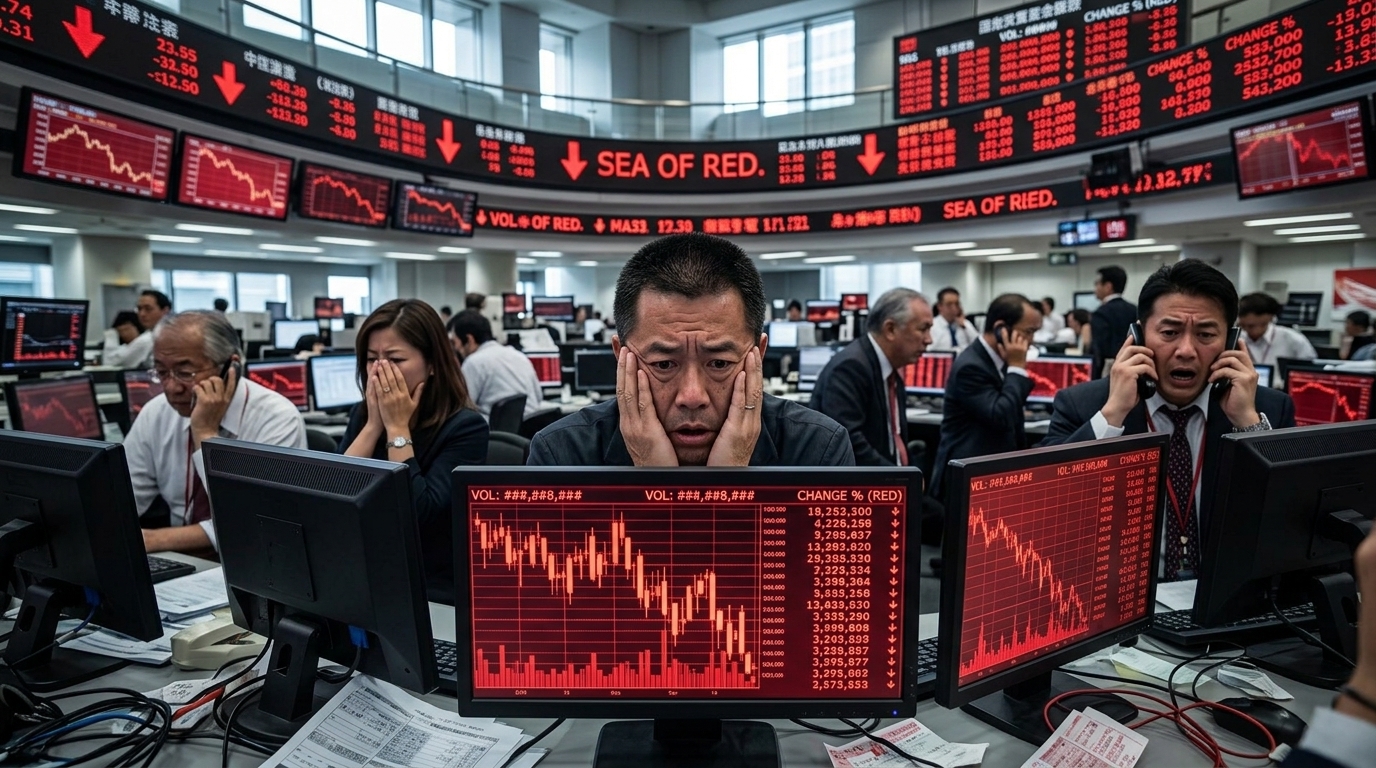
The euphoria that defined the first half of 2024 and early 2025, fueled by the promise of a new industrial revolution through Artificial Intelligence (AI), seems to be giving way to a harsh reality. Global markets are experiencing a period of intense volatility, with sell-offs starting at the close of Wall Street and cascading like dominoes through Asian and European exchanges. The question now looming over Bloomberg terminals is no longer 'if' AI will change the world, but 'when' and at what cost to shareholders.
The Questioning of the 'Magnificent Seven'
For months, the so-called 'Magnificent Seven' (Nvidia, Microsoft, Alphabet, Amazon, Apple, Meta, Tesla) were the sole pillars supporting the indices. However, recent corporate earnings reports have opened Pandora's box. Despite impressive revenues, capital expenditures (CAPEX) for developing AI infrastructure have skyrocketed to dizzying levels. Investors are beginning to realize that the return on these billions will be neither immediate nor guaranteed. Nvidia, the 'standard-bearer' of the rally, saw its market capitalization face heavy pressure, dragging down the entire semiconductor sector.
The situation was exacerbated by the realization that many businesses adopting AI have yet to translate the technology into a significant increase in productivity or profit margins. This 'expectations gap' is what fuels the current wave of selling. When the market prices in perfection and receives merely 'good' results, a correction is inevitable.
The Domino Effect in Asia and Europe
The night in Asian markets was nightmarish. The Nikkei 225 index in Tokyo recorded one of its worst sessions in years, as a strengthening yen—combined with the tech retreat—forced many traders to close 'carry trade' positions. In South Korea, the Kospi index was hit by losses from Samsung and SK Hynix, both directly linked to the AI chip supply chain.
In Europe, indices opened in the red, with the technology sector (Stoxx Europe 600 Technology) leading the decline. Analysts point out that the volatility is not just due to internal market factors but also to broader macroeconomic uncertainty. Although inflation shows signs of cooling, the fear of a potential US recession has returned to the forefront, making the high valuations of tech stocks even more vulnerable.
Is it a Bursting Bubble?
Many observers are quick to compare the current situation to the dot-com bubble of 2000. However, there are significant differences. In 2000, many companies had no revenue at all. Today, tech giants possess massive cash reserves and dominate the global economy. The problem is not the viability of the companies, but the excessive optimism that had been baked into stock prices.
- Valuations had strayed far from any historical average.
- Risk concentration in a handful of stocks made the system unstable.
- Interest rates remain at levels that do not favor risk without immediate returns.
The current correction can be seen as a 'cleansing' of speculative positions, allowing the market to find more rational support levels. However, investor psychology has been bruised, and confidence is not restored overnight.
Conclusion: The Day After
Artificial Intelligence remains a transformative force, but the market now demands proof, not just promises. The coming months will be critical, as companies must demonstrate how their AI investments translate into real value. Until then, volatility will remain the primary characteristic of Wall Street and international markets. The era of 'easy money' through AI hype has ended, giving way to a time where selectivity and fundamental analysis will take center stage.
"In the short run, the market is a voting machine, but in the long run, it is a weighing machine. Right now, the AI scale shows that the weight of expectations was too heavy for the shoulders of the real economy."





